The short version
- The Democratic National Committee has reduced its list of potential host cities for the 2028 presidential convention to Boston, Denver, and Philadelphia.
- Party officials eliminated Atlanta and Chicago from contention after evaluating logistical capabilities and fundraising prospects during site visits earlier this year.
- A final decision on the location is anticipated later in 2026, with the event scheduled for early August 2028.
The Democratic National Committee has significantly reduced the pool of candidates hosting its 2028 presidential nominating convention, leaving only Boston, Denver, and Philadelphia in contention. This development marks a pivotal step in the party’s long-term planning as it looks toward a general election cycle that will feature an open primary to succeed President Donald Trump. The narrowing of options reflects a deliberate effort by party leadership to balance logistical feasibility with strategic political messaging.
DNC Chairman Ken Martin acknowledged the strength of the remaining bids, describing them as compelling proposals that promise to serve as an inspiring platform for introducing the party’s future nominee. While the committee did not provide specific reasons for eliminating Atlanta and Chicago from consideration, officials indicated that their evaluation process involved extensive site visits conducted in April and May. These assessments focused heavily on practical factors such as infrastructure capacity and the ability of each city to support substantial fundraising efforts.
The three finalists share distinct geographic and political characteristics that align with current Democratic electoral strategies. Each city is situated within a region known for liberal voting patterns, yet they are all surrounded by suburban areas that have become increasingly critical to the party’s success in recent national elections. This suburban adjacency offers a symbolic backdrop that may resonate with voters outside traditional urban strongholds, potentially aiding efforts to broaden the coalition necessary for victory.
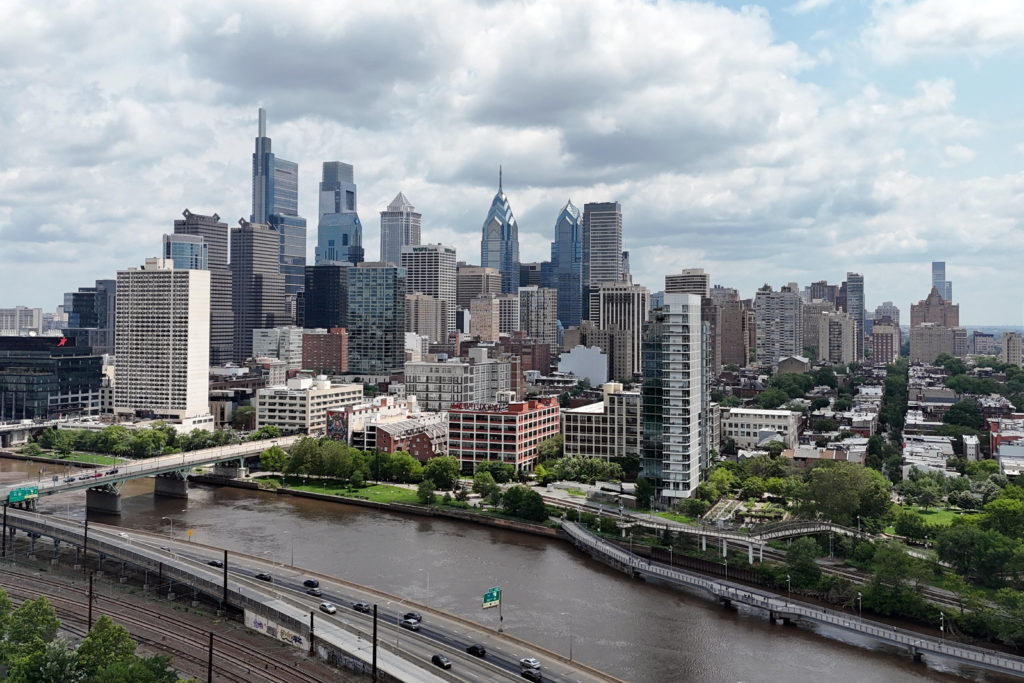
Philadelphia presents a unique strategic advantage due to its location in Pennsylvania, a state that has emerged as one of the most competitive battlegrounds in modern American politics. Although Colorado and Massachusetts have consistently voted Democratic in recent presidential contests, Pennsylvania’s status as a swing state makes it a high-value target for campaign attention. President Trump secured victory in Pennsylvania during the 2024 election, highlighting the importance of maintaining a strong presence in regions where electoral outcomes remain uncertain.
Historical precedent also plays a role in the selection process, with each finalist having hosted the convention previously. Philadelphia last served as the venue in 2016, Denver in 2008, and Boston in 2004. These past events provide a framework for understanding how each city might handle the logistical demands of a large-scale political gathering. The DNC’s decision to revisit these locations suggests confidence in their ability to manage complex operations while offering fresh opportunities for engagement.
The timing of the convention, set for August 7-10, 2028, is designed to maximize its impact on the campaign trail. Traditionally, such events serve as a formal introduction of the nominee to the national audience, a rallying point for the party base, and a catalyst for the intense period of campaigning that follows. By selecting a date in early August, the party aims to kick-start momentum ahead of the general election while allowing sufficient time for organizational preparation.
This planning phase occurs against a backdrop of internal challenges for the Democratic Party. Facing financial disadvantages compared to their Republican counterparts and dealing with lingering debt, Democrats are under pressure to demonstrate fiscal responsibility and strategic acumen. Chairman Martin has faced criticism regarding his management of the party’s resources, prompting calls for unity as the organization navigates both immediate midterm election goals and long-term presidential ambitions.
As the final decision approaches later this year, the choice among Boston, Denver, and Philadelphia will likely hinge on a combination of symbolic resonance and practical utility. Each city offers distinct advantages in terms of access to key demographic groups, labor union support, and fundraising networks. The ultimate selection will signal not only where the party plans to gather but also how it intends to frame its message in an election year defined by uncertainty and competition.
Meanwhile, Republicans have already secured Houston as the site for their 2028 convention, providing a clear contrast in planning timelines. While Democrats deliberate over their options, the Republican Party has moved forward with certainty, potentially influencing how Democrats perceive the competitive landscape. The upcoming decision will thus carry weight beyond logistics, serving as an early indicator of strategic priorities in a cycle where every advantage matters.
With the midterm elections approaching later this year, Democrats are also focused on flipping control of the narrowly divided House and possibly regaining the Senate. These immediate objectives intersect with long-term planning for 2028, creating a dual mandate for party leaders to address current vulnerabilities while building toward future success. The convention site selection process, therefore, represents more than a logistical exercise; it is a reflection of broader efforts to unify and energize the base ahead of a critical political juncture.
Sources behind this briefing
Go to the original reporting
- PBS NewsHour↗Philadelphia, Boston or Denver? Democrats narrow their list of 2028 presidential convention sites

