The short version
- Democrats have taken full control of state governments in at least five states, including a historic flip of the Texas House of Representatives.
- The party retains or wins trifectas in Michigan, Minnesota, Pennsylvania, Wisconsin, and Nevada, breaking long-standing Republican majorities in several chambers.
- New Democratic leadership faces immediate scrutiny over cost-of-living concerns, with voters demanding action on housing, healthcare, and inflation.
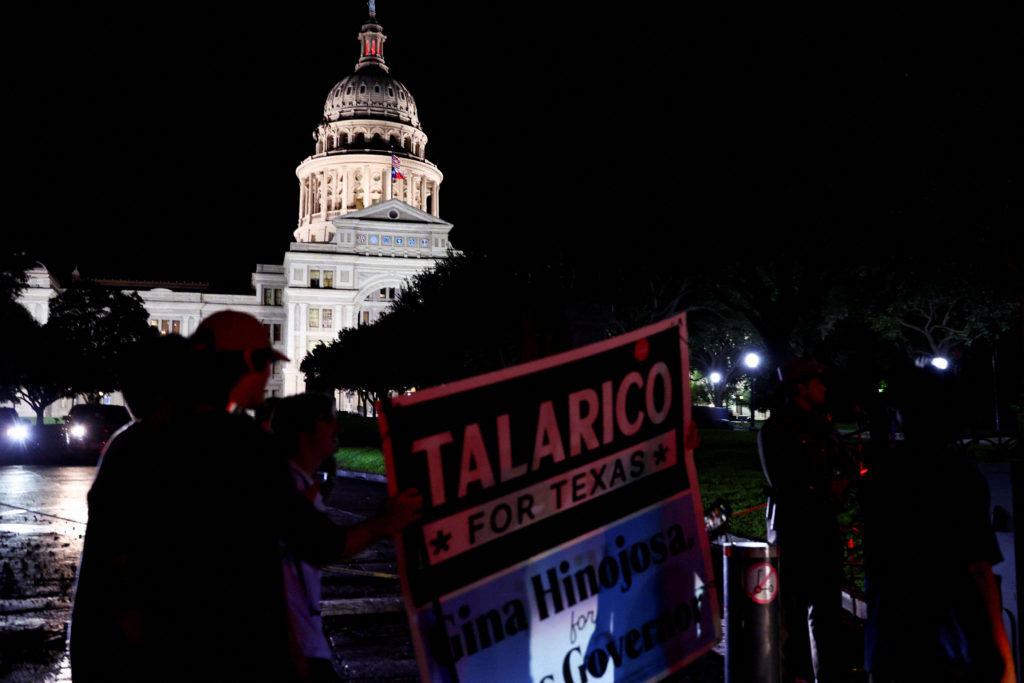
Democrats achieved a significant reversal of political fortunes in Tuesday’s midterm elections, securing full control of state governments in at least five states where they previously shared power. The most striking development occurred in Texas, where Democrats captured the state House for the first time since Republicans assumed control following the 2002 election cycle. This victory coincides with the election of Gina Hinojosa as governor, marking the first Democratic gubernatorial win in the state since Ann Richards was ousted by George W. Bush in 1994. Despite these gains, Republicans maintained their hold on the Texas Senate, ensuring a divided government that will likely shape legislative outcomes for the next two years.
The scope of Democratic expansion extends well beyond Texas. The party secured or retained trifectas—control of both legislative chambers and the governor’s office—in Michigan, Minnesota, Pennsylvania, and Wisconsin. In Wisconsin, Democrats broke a sixteen-year Republican majority in the state Legislature while retaining the governorship. Nevada also saw a shift as Democrats gained control by winning the governor’s seat and keeping their legislative majorities. These victories represent the most substantial single-election change in partisan power at the state level since 2010, according to Katie Owens Hubler, director of elections and redistricting at the National Conference of State Legislatures.
Political analysts attribute these gains largely to voter dissatisfaction with the current federal administration. Mark Jones, a political science professor at Rice University, suggested that President Donald Trump and his policies were central to the Democratic success. In Texas, Republican-led congressional redistricting efforts may have inadvertently mobilized additional Democratic voters in certain regions, contributing to the statehouse flip. Similarly, in Wisconsin, Democrats managed to pick up two congressional seats despite maps that favored Republicans, resulting in an evenly divided congressional delegation for 2027. The backfiring of Republican redistricting strategies appears to be a recurring theme, as targeted seats often remained Democratic or flipped unexpectedly.
The implications of these shifts are immediate and far-reaching. State governments wield significant authority over policies that directly impact daily life, including tax rates, abortion rights, education funding, school choice programs, and regulations surrounding data center development and artificial intelligence use. With Democrats now holding at least twenty-eight governorships in 2027, including pickups in Georgia, Iowa, Ohio, and Texas, the party has expanded its influence into states long considered Republican strongholds. Additionally, Democrats broke or prevented Republican supermajorities in nine legislative chambers across eight states, meaning Republicans will need Democratic support to override gubernatorial vetoes in places like Iowa, Ohio, and North Carolina.
However, the victories come with heightened expectations and potential vulnerabilities. The electorate remains deeply concerned about economic pressures, including rising grocery costs, high gas prices, inflation, and a persistent shortage of affordable housing. Devin Remiker, chairman of Wisconsin’s Democratic Party, acknowledged that the time for campaigning has passed, stating that it is now necessary to deliver on promises. Greta Neubauer, currently the minority leader of state Assembly Democrats in Wisconsin, echoed this sentiment, noting that constituents will be counting on new leadership to address these pressing issues effectively.
Heather Williams, president of the Democratic Legislative Campaign Committee, described the results as historic levels of power not seen since the 1980s. She emphasized that the mandate from voters is focused on kitchen-table issues rather than abstract political battles. The party’s future success will likely depend on its ability to improve educational opportunities and increase access to healthcare, particularly in rural areas that have felt left behind by economic trends. Legislative sessions in recent years were packed with bills aimed at making life more affordable, reflecting the campaign talking points that resonated with middle-class voters.
The broader context of these gains includes a long-term effort to reverse a decline that began during President Barack Obama’s tenure, when Democrats lost nearly one thousand state legislative seats. The current cycle marks a pivotal moment in that recovery, shifting the balance of power across several battleground and Republican-leaning states. As the new session approaches, lawmakers must navigate the complexities of governing while addressing the specific grievances that drove voters to the polls. The ability to translate electoral success into tangible policy improvements will define the next chapter for Democratic state leadership.
Looking ahead, the redrawing of congressional maps in Wisconsin and other battleground states will be a critical task for the newly empowered Democrats. Just as President Trump urged Republican-led states to redraw maps ahead of this election, Democrats now face similar opportunities and challenges. The outcome of these redistricting efforts could influence federal representation for years to come. Meanwhile, the divided government in Texas and the need for bipartisan cooperation in states like Iowa and Ohio suggest that legislative gridlock may persist in some areas, even as Democrats expand their overall footprint.
Sources behind this briefing
Go to the original reporting
- PBS NewsHour↗Democrats win full control of more state governments and the Texas House


