The short version
- Democrats capture both chambers of Congress with significant margins, ending two years of unified Republican control.
- Key victories include flipping Texas and Michigan, marking the first Democratic wins in those states in decades or nearly a century.
- President Trump acknowledges the defeat while asserting his veto power, as Republicans debate whether the Iran war caused the electoral collapse.
The 2026 midterm elections concluded with a decisive shift in Washington’s political landscape, as voters delivered substantial victories to Democrats across the nation. This outcome marks a dramatic reversal from the previous two years of unified Republican governance, effectively placing President Donald Trump into a lame-duck period for the remainder of his second term. The scale of the Democratic gains suggests a fundamental realignment of voter priorities, driven by dissatisfaction with the current administration’s policies and leadership.
President Trump has responded to the results with a mix of defiance and pragmatism. While he maintains that many races would have yielded different outcomes had he been on the ballot himself, he has also stated his willingness to collaborate with the new Democratic majority. However, he simultaneously emphasized his intention to utilize his veto power extensively, signaling that legislative gridlock may persist despite the change in congressional control. This dual approach highlights the tension between accepting electoral reality and maintaining executive authority.
The Republican Party is grappling with explanations for the magnitude of their defeat. Vice President J.D. Vance attributed the losses primarily to the ongoing conflict in Iran, arguing that the war led to higher consumer prices and fueled voter desire for change. In contrast, President Trump downplayed the direct impact of the military engagement, suggesting instead that economic costs were the primary driver of discontent. This internal disagreement underscores a broader struggle within the GOP to identify the root causes of their electoral vulnerability.
Historic breakthroughs occurred in several key states, most notably Texas and Michigan. In Texas, Democrats won both the Senate seat held by James Talarico and the governorship secured by Gina Hinojosa, ending a nearly forty-year streak of Republican dominance in the Lone Star State. These victories challenge long-held assumptions about the state’s political identity and demonstrate the effectiveness of Democratic organizing efforts in traditionally conservative regions.
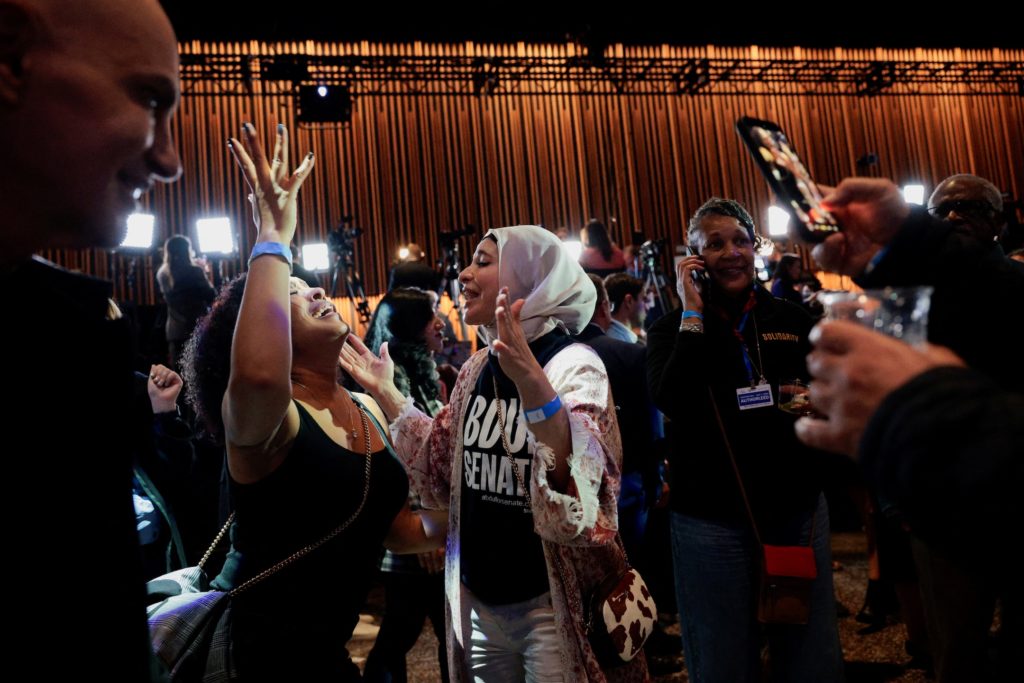
Michigan also saw a significant shift with Abdul El-Sayed’s election to the Senate, making him the first Muslim member of that body. His victory came despite intense scrutiny and attacks on his faith, including derogatory remarks from the President. El-Sayed’s win reflects changing demographics and voter attitudes in the Midwest, where economic concerns and social issues have increasingly influenced electoral outcomes. The defeat of Republican Mike Rogers further illustrates the erosion of traditional party strongholds.
Other notable losses for Republicans included Susan Collins’ concession in Maine to Troy Jackson and Adam Hamilton’s victory in Kansas, which marks the first Democratic Senate win there in almost a century. In South Carolina, Darline Graham, sister of the late Senator Lindsey Graham, failed to secure election despite receiving endorsement from President Trump. These results indicate that personal connections and party loyalty were insufficient to overcome broader voter dissatisfaction.
Democratic leaders have framed the results as a mandate for change, emphasizing themes of unity and economic fairness. Hakeem Jeffries, poised to become the first Black Speaker of the House, highlighted the significance of this moment in American political history. The new Democratic majority is expected to prioritize legislation addressing cost-of-living concerns and government accountability, reflecting the issues that resonated most strongly with voters.
As the lame-duck session begins, the focus will turn to how effectively Democrats can advance their agenda amidst potential executive resistance. President Trump’s assertion of veto power suggests that legislative progress may be limited without bipartisan compromise. The coming months will test whether the new congressional majority can navigate these challenges and deliver on the promises made during the campaign.
The electoral landscape has been fundamentally altered, with Republicans facing what some describe as an extinction-level event in certain regions. This setback forces a reevaluation of strategy and messaging within the party, particularly regarding foreign policy and economic management. The path forward for both parties will depend on their ability to address voter concerns and adapt to the new political reality.
Ultimately, the 2026 midterms represent a clear rebuke of the Trump administration’s record, driven by a combination of economic anxiety and dissatisfaction with foreign policy decisions. The resulting shift in power dynamics will shape Washington’s legislative agenda for the remainder of the term, setting the stage for continued political contestation and potential realignment in future elections.
Sources behind this briefing
Go to the original reporting
- PBS NewsHour↗Midterm voters rebuke Trump, handing Democrats both chambers of Congress


