The short version
- The Senate Majority PAC has committed $1.2 million to television and digital advertising in Mississippi, the first such national investment in the state this election cycle.
- Democratic efforts aim to capitalize on perceived vulnerabilities for Senator Cindy Hyde-Smith, who underperformed the presidential ticket in 2020 despite the state's strong Republican lean.
- The race remains statistically unlikely to flip given historical voting patterns, but the spending signals a broader Democratic strategy to test conservative strongholds amid economic and foreign policy discontent.
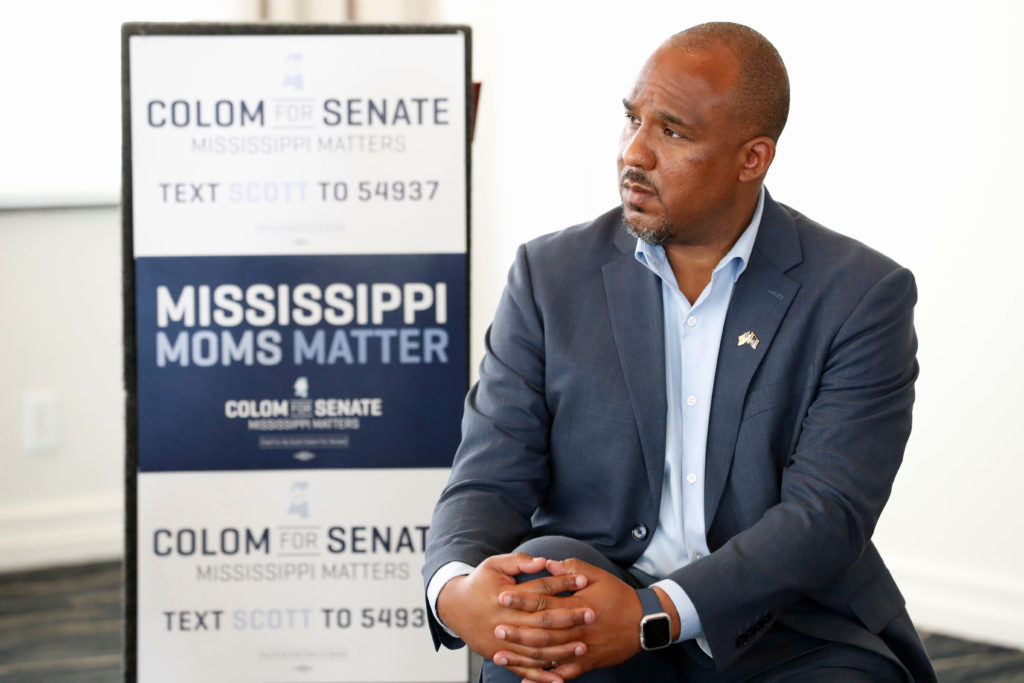
Senate Democrats have initiated their first national advertising campaign in Mississippi’s U.S. Senate race, deploying $1.2 million through the Senate Majority PAC to support challenger Scott Colom. This financial injection marks a notable departure from previous cycles, as the party-aligned group targets a state that has not elected a Democratic senator since 1982. The move reflects a growing confidence within the Democratic Party that electoral conditions may favor aggressive play in traditionally Republican territories.
The advertising push begins with television spots airing statewide through Election Day, alongside a coordinated digital effort. The content of the advertisements focuses on Colom’s background as a district attorney while criticizing incumbent Senator Cindy Hyde-Smith for legislative inactivity and her voting record regarding Medicaid. Campaign officials describe the investment as a response to what they view as a competitive contest that has pressured the sitting senator.
Despite the late timing of the national intervention, local campaign dynamics have already shown significant activity. Colom has outspent Hyde-Smith by a considerable margin during the general election period, with total spending in the race reaching approximately $8 million. Campaign managers for both sides acknowledge the intensity of the final weeks, though they differ sharply on the likely outcome. Hyde-Smith’s team maintains that voters will reject the Democratic agenda, while Colom’s operatives cite volunteer engagement and fundraising momentum as indicators of viability.
The strategic decision to invest in Mississippi aligns with a broader pattern of Democratic spending in conservative states. The Senate Majority PAC has also announced expenditures in Kansas, where another Democratic nominee is challenging an incumbent Republican senator. This approach suggests that national party leaders are attempting to exploit dissatisfaction with high costs, rising gas prices, and an unpopular war in Iran under the current Republican administration.
Historical context makes the Mississippi race an uphill battle for Democrats. In the 2024 presidential election, Donald Trump won the state by nearly 23 percentage points over Kamala Harris. However, some party strategists point to Hyde-Smith’s performance in 2020, when she trailed Trump by six percentage points, as evidence of potential vulnerability. This underperformance relative to the top of the ticket has fueled speculation that targeted messaging could narrow the gap further.
High-profile Democratic figures have begun to engage with the race, signaling its importance beyond local politics. Senator Raphael Warnock of Georgia recently campaigned alongside Colom, and former Vice President Kamala Harris is scheduled to hold a rally in support of the challenger. These appearances underscore the national party’s interest in testing the waters in the South, even if the probability of victory remains low.
Critics within the Democratic Party have long argued that insufficient resources were dedicated to Southern states in previous years. Warnock recently expressed concern that Democrats missed opportunities to build sustained influence in the region. The current spending in Mississippi and Kansas can be viewed as an attempt to address this gap, though it comes late in the election cycle with limited time for ads to shift voter behavior.
If Colom were to win, he would become the first Black senator from Mississippi since Reconstruction. This historical significance adds symbolic weight to the campaign, even if the practical impact on Senate control is uncertain. Republicans currently hold a 53-47 majority and face fewer seats to defend this year, making every potential upset highly consequential for both parties.
The effectiveness of the $1.2 million ad buy remains unclear given the short timeframe before the November election. Political analysts note that late spending in deep-red states rarely changes outcomes unless there is significant underlying volatility. Nevertheless, the decision to invest reflects a calculated risk by Senate Democrats, who are leveraging favorable national trends to challenge entrenched Republican power bases.
As the race enters its final phase, attention will focus on whether the new advertising can mobilize enough voters to overcome the state’s strong partisan lean. Both campaigns are likely to intensify ground operations in the coming days, with each side seeking to maximize turnout among their respective bases. The Mississippi contest serves as a bellwether for Democratic ambitions in the South, regardless of the final result.
Sources behind this briefing
Go to the original reporting
- PBS NewsHour↗Senate Democrats launch first ad in Mississippi as their midterm optimism spreads in the South