The short version
- Defense Secretary Pete Hegseth approved the use of tactical vehicles, patrol boats, and rifles for National Guard troops operating in Washington, D.C., while maintaining a cap on total personnel.
- The expanded authority includes support for anti-gang operations and protection of federal facilities, though requests for helicopter use and tire cleanup assistance were denied.
- The District of Columbia continues to litigate the deployment, arguing it violates laws against using the military for domestic law enforcement, with a federal appeals court reviewing the case.
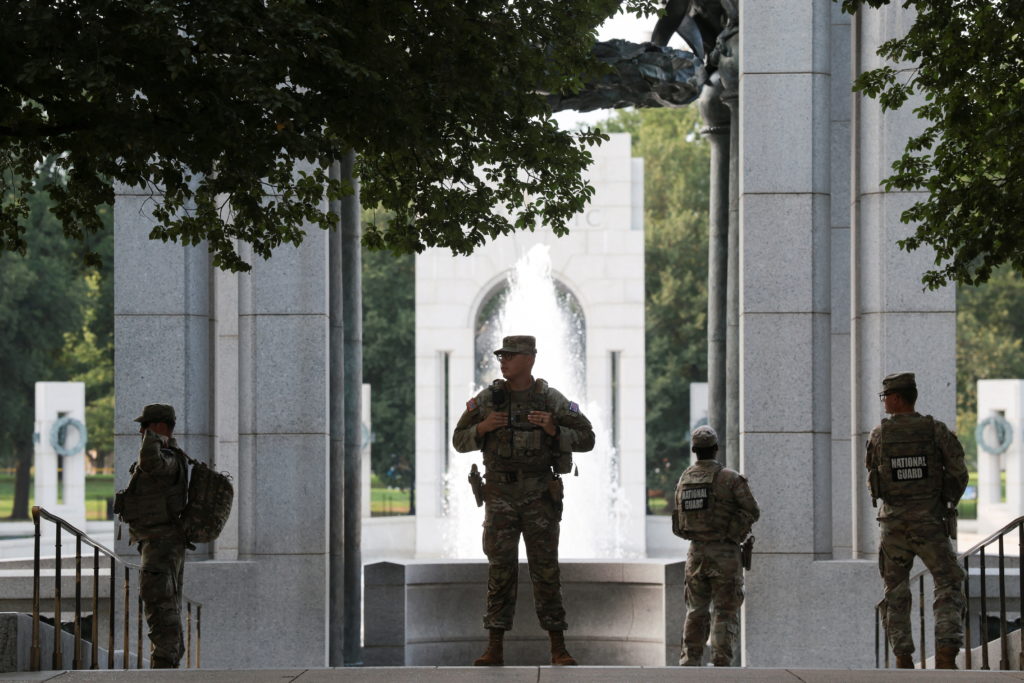
Defense Secretary Pete Hegseth has authorized a significant expansion of the National Guard’s operational capabilities in Washington, D.C., permitting the use of military-grade vehicles, patrol boats, and rifles during specific missions. The decision, detailed in two memos signed on October 29 and obtained by The Associated Press, marks a deepening integration of troops with local law enforcement efforts. This move comes as the federal government continues its 'Make D.C. Safe and Beautiful' initiative, which has drawn sustained legal and political scrutiny since President Donald Trump first deployed forces to the capital in August 2025.
Under the new directives, Guard units are permitted to deploy sixty military police cars, tactical vehicles, and portable light towers to enhance visibility and force protection during patrols. The memos specify that these vehicles must be clearly marked as 'National Guard' and operated by troops in uniform. Additionally, two patrol boats will provide maritime support. However, the authorization includes strict limitations; troops are explicitly forbidden from engaging in high-speed chases, and the use of rifles is restricted to certain operations, notably excluding Metro rail stations where only traditional pistols are permitted.
The strategic shift appears aimed at targeting organized crime and drug trafficking networks within the city. Hegseth’s office confirmed that six analysts will continue to address organized drug distribution, while troops supporting anti-gang operations may now carry rifles alongside their standard sidearms. One memo also grants the U.S. Marshals Service access to the D.C. National Guard’s 260th Special Purpose Brigade, a unit functioning as a quick reaction force. This brigade will assist in protecting key federal leaders and securing critical government facilities, further blurring the lines between military support and domestic security.
Despite the expanded tactical toolkit, the total number of deployed personnel remains capped at 3,500. This figure is lower than the peak deployment of approximately 5,000 troops seen during the summer celebrations for America’s 250th anniversary. As of early November, nearly 3,100 Guard members from various states were stationed in Washington. Georgia provided the largest contingent with over 500 members, followed closely by the District of Columbia itself, which contributed 514 personnel. The presence of these out-of-state troops has been a central feature of the administration’s strategy to bolster local policing resources.
The deployment has not been without incident or controversy. Recent reports highlight several issues involving Guard members assigned to the city, including the arrest of a Georgia serviceman for pointing a firearm at a fellow Guardsman and another arrest for carrying an unauthorized weapon. Additionally, one Guardsman was shot while attempting to break up a fight. These events have fueled concerns about the safety and discipline of troops operating in a complex urban environment, particularly as they are equipped with increasingly potent weaponry and vehicles that resemble those used on battlefields rather than city streets.
Legal challenges to the deployment continue to mount. The District of Columbia filed a lawsuit in September 2025, arguing that the mobilization constitutes an illegal use of the military for domestic law enforcement purposes. A lower court initially sided with the city, prompting an appeal. A federal appeals court panel heard arguments on October 14 regarding the legality of the presence and activities of the National Guard in Washington. The outcome of this litigation could have far-reaching implications for the balance of power between federal authorities and local jurisdictions in matters of public safety.
Not all requests for military assistance were granted. A separate memo dated November 4 denied a request from the U.S. Marshals Service for National Guard helicopters or troops to assist with cleaning up abandoned tires in specific areas of D.C. This denial suggests a selective approach to the scope of military involvement, focusing resources on high-priority security and anti-crime operations rather than general municipal maintenance tasks. The Pentagon confirmed that Hegseth’s authorizations are intended to support the ongoing mission objectives without exceeding established legal or operational boundaries.
The visual impact of the deployment remains a point of contention for residents and observers alike. The sight of tactical vehicles and armed troops patrolling neighborhoods, dispersing homeless camps, and participating in citywide cleanup efforts has evoked memories of the initial August 2025 rollout. While proponents argue that these measures are necessary to combat rising crime and restore order, critics maintain that the militarization of street-level policing undermines civil liberties and community trust. The coming months will likely see continued tension between federal enforcement strategies and local governance priorities.
As the legal proceedings unfold and operational adjustments take effect, the situation in Washington remains fluid. The integration of military assets into domestic policing raises complex questions about accountability, oversight, and the appropriate role of armed forces in civilian spaces. With the appeals court decision pending and new tactical protocols in place, stakeholders on all sides are watching closely to determine how this unprecedented deployment will shape the future of public safety in the nation’s capital.
Sources behind this briefing
Go to the original reporting
- PBS NewsHour↗Hegseth allows National Guard to boost DC patrols with military vehicles, boats and patrol cars


