The short version
- The defense concluded its presentation of evidence, focusing on mental illness as a mitigating factor rather than disputing the act itself.
- Family members and experts testified that Clancy exhibited severe psychological distress and expressed fears about harming her children prior to the incident.
- Prosecutors are now introducing rebuttal witnesses to challenge the insanity defense and argue that the killings were premeditated acts.
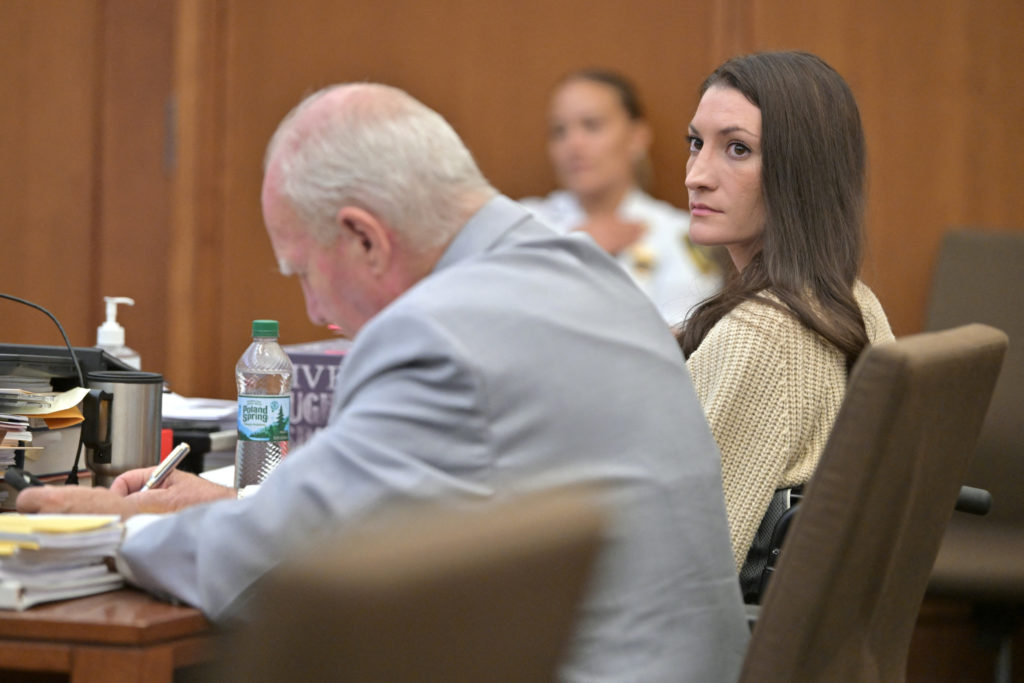
The legal proceedings in the murder trial of Lindsay Clancy have entered a critical phase as the defense rested its case on Friday. The jury has now heard the full scope of arguments suggesting that severe mental illness, specifically postpartum psychosis, impaired Clancy’s ability to understand the wrongfulness of her actions. With the defense presentation complete, prosecutors began calling rebuttal witnesses, signaling that the trial is likely approaching its final days before closing arguments are delivered.
Clancy, 36, faces murder charges for the deaths of her three children: Callan, Dawson, and Cora, who were between eight months and five years old at the time. The victims were discovered in the basement of their family home in Duxbury, Massachusetts, in January 2023. Clancy, a former labor and delivery nurse, has pleaded not guilty. She remains paralyzed from the waist down after jumping from a second-story window following the killings.
Defense attorney Kevin Reddington did not contest that Clancy was responsible for the deaths of her children. Instead, his strategy centered on establishing that she should not be held criminally liable due to her mental state at the time. Reddington argued that Clancy suffered from postpartum psychosis, a rare condition associated with hormonal shifts, sleep deprivation, and stress following childbirth. He further contended that she also had bipolar disorder and was overmedicated, which compounded her psychological instability.
To support this narrative, the defense called several family members to describe the deterioration of Clancy’s mental health in the months leading up to the tragedy. Paula Musgrove, Clancy’s mother, testified that her daughter was a devoted parent whose condition began to decline in October 2022. Musgrove shared a text message sent by Clancy in which she described herself as sick and indicated that something was seriously wrong, asking her mother to come stay with her.
Musgrove also recounted a disturbing conversation from December 2022 involving Clancy, her husband Patrick, and herself. During this kitchen discussion, Clancy reportedly disclosed that she was having thoughts of harming her children. This admission underscores the severity of her distress and provides context for the defense’s assertion that she was not in control of her actions due to a mental defect.
Additional testimony came from Susan Clancy, Lindsay’s former mother-in-law, who described receiving desperate pleas for help. Text messages displayed to the jury revealed Lindsay’s fears regarding benzodiazepine dependence and her inability to sleep without medication. In one message from late November 2022, she expressed terror about taking her prescribed drugs, highlighting a period of intense anxiety and confusion roughly two months before the killings occurred.
Paul Zeizel, a psychologist who treated Clancy in the hospital after the incident, provided expert testimony regarding her mental capacity. He stated that Clancy was unable to conform her behavior to legal standards and lacked appreciation for the wrongfulness of her acts. Zeizel noted that psychological testing conducted by a government doctor found no evidence that Clancy was feigning or exaggerating her psychiatric symptoms, lending credibility to the defense’s claim of genuine mental disease.
Prosecutors have presented a contrasting view, arguing that Clancy planned the killings and deliberately arranged for her husband to be absent from the home on the day of the tragedy. They contend that while Clancy was receiving treatment for anxiety, depression, and insomnia, she was not suffering from psychosis at the time of the murders. The rebuttal phase aims to challenge the defense’s characterization of her mental state and establish premeditation.
As the trial moves toward its conclusion, the jury must weigh conflicting interpretations of Clancy’s actions and mental health history. The outcome will hinge on whether they accept the defense’s assertion that postpartum psychosis rendered her legally insane or side with prosecutors who view the events as a calculated crime. Closing arguments are expected to follow shortly after the current witness testimony concludes.
This case has drawn significant attention due to the tragic nature of the crimes and the complex medical questions surrounding postpartum mental health. The proceedings highlight the difficulties in distinguishing between severe psychiatric illness and criminal intent, particularly when family members report prior warnings of distress. The legal system’s handling of such cases often sets precedents for how mental health defenses are evaluated in similar circumstances.
Sources behind this briefing
Go to the original reporting
- PBS NewsHour↗Lindsay Clancy's defense rests at trial over whether postpartum psychosis drove her to killings

