The short version
- Defense psychologist Paul Zeizel testified that Clancy suffered from postpartum psychosis and bipolar disorder, rendering her unable to appreciate the criminal nature of her actions.
- Prosecutors maintain that Clancy planned the killings by sending her husband away, pointing to her ability to perform daily tasks as evidence against a total psychotic break.
- The trial centers on whether Clancy’s mental state at the time of the incident qualifies for an insanity defense, which would result in commitment rather than life imprisonment.
A psychologist testifying for the defense argued that Lindsay Clancy was not criminally responsible for the deaths of her three children because severe mental illness prevented her from understanding the wrongfulness of her actions. Paul Zeizel, who treated Clancy at a state psychiatric hospital after the January 2023 incident, stated that she suffered from bipolar disorder and postpartum psychosis. He asserted that these conditions constituted a mental disease or defect that impaired her ability to conform her behavior to legal standards.
Zeizel’s testimony represents the most direct evidence supporting the defense’s insanity claim. He reported spending more than 35 hours with Clancy across numerous visits and reviewing her medical history. According to Zeizel, Clancy expressed profound despair in December 2022, telling caregivers that her brain was damaged and that she should kill herself. She also exhibited paranoia, fearing that others could hear her thoughts and that she would permanently lose custody of her children.
The prosecution has presented a contrasting narrative, alleging that Clancy meticulously planned the killings. Prosecutors argue that the former labor and delivery nurse orchestrated the events by sending her husband out to retrieve medication for a child and order dinner for the family. This sequence of actions, they contend, demonstrates premeditation and awareness rather than the chaotic behavior associated with acute psychosis.
During cross-examination, prosecutors challenged Zeizel’s objectivity and the accuracy of his report. They highlighted that Clancy was capable of performing routine tasks on the day of the killings, such as driving her daughter to a medical appointment, playing in the snow, and searching online for local businesses. The prosecution suggested that these actions indicate a level of cognitive functioning inconsistent with the defense’s portrayal of total mental incapacitation.
Zeizel acknowledged that Clancy could manage everyday activities but maintained that this did not negate her psychotic state. He explained to the court that the absence of overt, stereotypical symptoms—such as slurred speech or visible hallucinations—does not prove sanity. He emphasized that Clancy’s internal experience was dominated by fear and delusion regarding her children’s safety and her own worthlessness.
The dispute also extends to Clancy’s current behavior at Tewksbury Hospital, where she is held while paralyzed from the waist down after jumping from a second-story window in an apparent suicide attempt. Prosecutors cited daily reports indicating that Clancy has not engaged in specific acts of remembrance for her children on significant dates, such as their birthdays or the anniversary of their deaths. They used this to question the depth of her remorse and the validity of her mental health claims.
Defense attorney Kevin Reddington countered by asking Zeizel if there was any record of Clancy celebrating or behaving inappropriately during her hospitalization. Zeizel stated that Clancy experiences varying degrees of emotional distress, describing her days as ranging from bad to worse. He testified that she frequently discusses her children, expressing deep love and missing them constantly, which he argued contradicts the prosecution’s implication that she is indifferent to their loss.
The outcome of the trial will determine whether Clancy faces life in prison without the possibility of parole or is committed to a state mental health facility. Postpartum psychosis, while rare, affecting approximately one to two women per 1,000 births, is a serious condition linked to hormonal changes and sleep deprivation following childbirth. The jury must weigh the medical testimony against the circumstantial evidence of planning to decide if Clancy possessed the requisite mental state for murder.
As the trial continues, the focus remains on reconciling the clinical diagnosis of severe mental illness with the logistical steps taken before the killings. Zeizel’s assertion that Clancy lacked appreciation for the wrongfulness of her acts stands in direct opposition to the prosecution’s timeline of events. The resolution of this conflict will define the legal precedent for how postpartum psychosis is evaluated in capital cases involving maternal-infanticide.
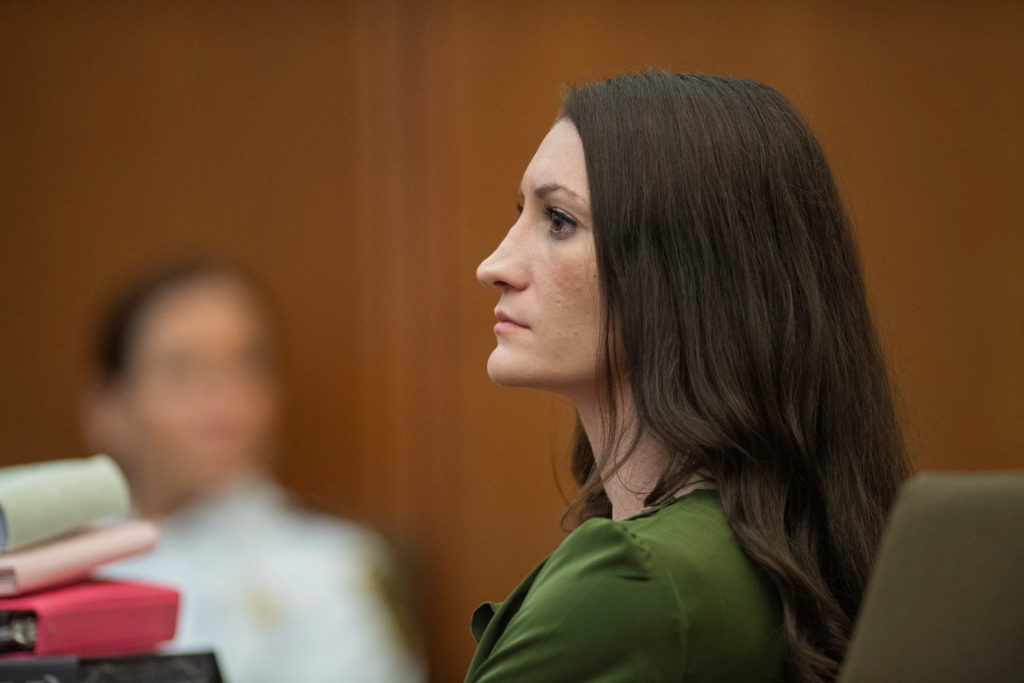
Clancy, 36, has pleaded not guilty to murder charges related to the deaths of Callan, Dawson, and Cora Clancy, who were between eight months and five years old at the time. The case has drawn attention to the complexities of diagnosing mental illness in the immediate postpartum period and the legal thresholds for criminal responsibility. Witnesses continue to provide testimony regarding Clancy’s declining mental state in the weeks leading up to the tragedy.
Sources behind this briefing
Go to the original reporting
- PBS NewsHour↗Psychologist testifies Lindsay Clancy was not criminally responsible in killing of her 3 children

