The short version
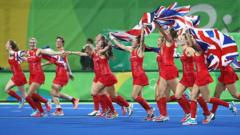
- Great Britain's women's hockey team won Olympic gold in Rio 2016, defeating the Netherlands in a penalty shootout that drew royal attention at Balmoral.
- Since that victory, the women's program has struggled to maintain elite status, failing to win an Olympic medal since 2024 and missing major tournament podiums.
- Former players and officials debate whether governing bodies failed to build the necessary infrastructure to sustain long-term growth after the historic win.
The tenth anniversary of Great Britain’s women’s hockey team winning Olympic gold in Rio de Janeiro has arrived amid a stark contrast between past glory and present struggles. On August 19, 2016, the squad defeated the Netherlands in a penalty shootout to secure the nation’s first Olympic hockey gold since 1988. The victory was a cultural moment in Britain, drawing nine million viewers on the BBC and capturing the attention of the royal family at Balmoral Castle.
Sophie, Duchess of Edinburgh, recalled the tension of that evening during a recent radio interview. She described leaving dinner to watch the final penalties from the library, noting that Queen Elizabeth II briefly entered the room before retreating due to the pressure. The match ended 3-3 after regulation time, with Helen Richardson-Walsh and Hollie Pearne-Webb converting decisive strikes. For the players, including captain Kate Richardson-Walsh, the win felt like a culmination of years of effort against a Dutch side that had dominated the sport for nearly a decade.
However, the decade following Rio has been defined by inconsistency and decline for the women’s program. While the team secured bronze at the Tokyo Olympics, they returned from Paris in 2024 without a medal, marking the first Games since 2008 where the British women did not podium. In international competitions outside the Olympics, such as the FIH Pro League, the team has not finished higher than seventh place in the last three editions. This stands in sharp contrast to the men’s team, which has reached multiple medal positions in recent years.
The gap between expectation and reality has sparked internal criticism regarding how the sport managed its post-2016 trajectory. One former international player, who requested anonymity, argued that England Hockey was unprepared to leverage the Olympic success into sustainable growth. She claimed the organization lacked the commercial, marketing, and participation infrastructure needed to convert a one-time victory into long-term development. This perspective suggests that the peak performance in Rio was an anomaly rather than the foundation of a new era.
Rich Beer, the chief executive of England Hockey appointed in 2025, offers a different view. He acknowledges the fluctuations in performance but points to underlying data indicating progress. Beer highlighted efforts made after 2016, including hosting the 2018 Women’s World Cup in London, as evidence of attempts to build on the momentum. He maintains confidence that the current strategies are yielding results, even if immediate podium finishes have been elusive.
The current state of play reflects these broader challenges. At the ongoing World Cup in Belgium and the Netherlands, England’s men have won their pool matches, while the women secured a victory against South Africa but lost to China. This divergence highlights the uneven development across the national programs. The women’s team, which once boasted superstitions and intense focus under coach Danny Kerry, now faces the task of rebuilding its competitive edge in a highly globalized sport.
For the Rio 2016 squad, the memory of that victory remains vivid. Most members have retired from international play, with Lily Owsley being the notable exception. The group continues to commemorate the date annually, exchanging messages to celebrate their achievement. Kate Richardson-Walsh described the win as a dream-like experience that inspired them to create history and influence the future. Yet, for the sport as a whole, the question remains whether that inspiration has translated into structural strength.
As British hockey looks toward the next Olympic cycle, the lessons from the past decade are clear. The initial surge of popularity and success did not automatically guarantee sustained excellence. Without robust infrastructure and consistent high-level performance, even historic victories can fade into memory rather than serve as a springboard for future dominance. The coming years will test whether the governing bodies can bridge the gap between potential and podium finishes.
The anniversary serves as both a celebration of past achievement and a sobering assessment of current realities. While the 2016 team achieved what many thought impossible, the subsequent years have revealed the fragility of sporting success without systemic support. The challenge now lies in transforming the legacy of Rio into a foundation for renewed competitiveness, ensuring that future generations can match the heights reached by their predecessors.
Fans and officials alike await signs of recovery from the women’s program. The contrast between the electric atmosphere of 2016 and the quiet struggles of recent tournaments underscores the importance of long-term planning in elite sports. Whether England Hockey can reverse its fortunes remains uncertain, but the stakes are high for a nation that once stood atop the Olympic podium.
Sources behind this briefing
Go to the original reporting
- BBC Sport↗Even the Queen could not watch - 10 years since Olympic hockey gold
