The short version
- An Israeli airstrike on a residential building in Ansar killed seven people, including three children and two women, marking one of the deadliest incidents since the June ceasefire framework was announced.
- Lebanese officials condemn the attacks as violations of the agreement, while Israel maintains it is targeting Hezbollah infrastructure in response to earlier threats against its soldiers.
- The violence underscores the fragility of the current truce, with Hezbollah criticizing the Lebanese government's handling of the situation and negotiators preparing for another round of talks in September.
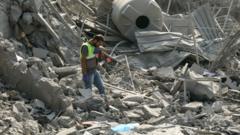
A significant escalation in violence has erupted in southern Lebanon, where an Israeli air strike killed seven people early Saturday morning. The attack targeted a house on the outskirts of Ansar in the Nabatieh district, an area where displaced families had been living. According to state media reports, the victims included three children and two women, making this one of the deadliest single incidents since an agreement aimed at reducing hostilities was announced in June.
The Israel Defense Forces stated that the strike was a response to an earlier action against its soldiers near the Ali al-Taher Ridge. This strategic high ground overlooks much of southeastern Lebanon and has been one of the most fiercely contested positions during the conflict. Israeli officials described the target as 'Hezbollah terror infrastructure,' asserting their right to remove threats within the security zone they occupy.
Lebanese authorities have strongly condemned the attack, with Prime Minister Nawaf Salam arguing that the civilians killed were not military targets. He called for an immediate halt to the escalation, emphasizing that the security and right to life of Lebanese people are not subject to negotiation. President Joseph Aoun also criticized the strikes, describing them as repeated violations of the framework and a clear message to the US-led negotiations.
The violence did not end with the strike on Ansar. Later that morning, another round of attacks hit the town of Deir al Zahrani, killing two more people and injuring nine others, according to the Lebanese ministry of health. Social media footage from the area showed large plumes of grey smoke rising through the streets as sirens wailed in the background. Near the border, several homes were reportedly destroyed in Bint Jbeil, while Israeli forces opened heavy machine gun fire toward residential areas.
This surge in violence occurs against a backdrop of ongoing tension despite a reduction in fighting following the June agreements. The ceasefire framework calls for Hezbollah to disarm, Israeli forces to withdraw gradually from southern Lebanon, and the Lebanese army to deploy across the vacated areas. However, Hezbollah was not involved in the agreement and has rejected direct negotiations, complicating the implementation process.
Hezbollah leader Naim Qassem criticized the Lebanese authorities on Friday, accusing them of failing to protect the Lebanese army from bombardment and Israeli pressures. He questioned how the government could accept what he termed the ongoing humiliation of the military instead of acting as its protector. This internal friction highlights the challenges in enforcing the ceasefire without full cooperation from all armed factions.
The conflict has drawn Lebanon into a broader regional war involving Israel, the US, and Iran since March 2, when Hezbollah launched rockets into Israel in retaliation for a strike that killed Iran's supreme leader. In response, Israel launched a bombing campaign across Lebanon and invaded a significant part of the country's south. Israeli forces continue to occupy roughly five percent of Lebanese territory, maintaining a ten-kilometer-deep military buffer zone.
Despite the recent violence, diplomatic efforts are set to continue. Lebanese and Israeli negotiators are scheduled to meet for an eighth round of talks in September, although a final date has not yet been determined. The outcome of these negotiations will be critical in determining whether the fragile peace can hold or if further escalation is inevitable.
The situation remains volatile, with both sides holding firm to their respective narratives. Israel insists on its right to defend its citizens and soldiers from perceived threats, while Lebanon demands an end to what it views as unlawful attacks on civilians. The international community watches closely, hoping for a de-escalation that could prevent further loss of life and regional instability.
Sources behind this briefing
Go to the original reporting
- BBC World↗Seven killed in Israeli strike on southern Lebanon, country's PM says

