The short version
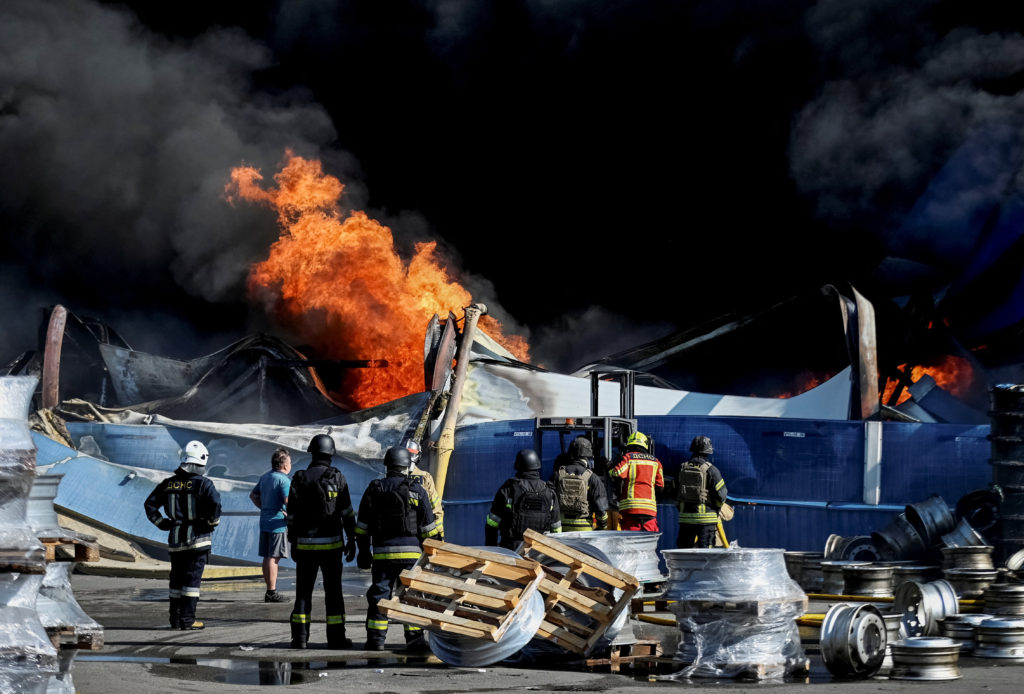
- A Russian drone strike on a warehouse in Myla killed 37 people and injured dozens, marking one of the deadliest single incidents this year.
- Ukrainian officials have launched criminal proceedings alleging that military munitions were illegally stored near residential buildings, including a care home for the elderly.
- The incident occurs during a period of intensified Russian aerial bombardment, with Kyiv reporting nearly constant drone attacks over three days.
A Russian drone strike on a warehouse west of Kyiv has killed at least 37 people, marking one of the deadliest single incidents in Ukraine this year. The attack occurred in Myla, a village within the Bucha district, and triggered massive explosions and fires that damaged dozens of nearby structures. Ukrainian officials state that the facility was storing munitions in close proximity to residential areas, a practice they describe as illegal and negligent.
The blast severely impacted surrounding neighborhoods, damaging at least 50 homes and buildings. Among those affected was a care home for elderly and disabled residents, where local authorities report that 34 of the fatalities occurred. More than 370 people have been evacuated from the immediate vicinity as emergency services continue to manage the aftermath. Regional military administration head Tymur Tkachenko confirmed the extent of the structural damage and the ongoing evacuation efforts.
Ukrainian President Volodymyr Zelenskyy addressed the nation, describing the event as a terrible situation resulting from severe negligence by those who stored explosives near populated zones. He noted that Ukrainian law strictly prohibits keeping ammunition close to homes and announced that criminal proceedings have been initiated against those responsible for the storage decisions. Zelenskyy emphasized that accountability is necessary to prevent such tragedies from recurring.
Prime Minister Serhii Koretskyi echoed these sentiments, drawing parallels to a similar incident in July when a strike on an ammunition depot in Vyshneve killed 22 people. He criticized the failure to learn from previous mistakes, labeling the repeated errors as criminal negligence during the fifth year of full-scale invasion. Koretskyi insisted that all individuals found guilty of violating safety regulations must face severe punishment.
Russian Defense Ministry officials claimed they targeted a warehouse in Myla storing components and launch boosters for long-range drones. Moscow also reported striking ports in Mykolaiv and Izmail, as well as logistics facilities in the Kyiv region allegedly holding parts for Ukrainian Flamingo cruise missiles. The Russian military stated that its forces destroyed 313 Ukrainian drones overnight, highlighting the intensity of the aerial conflict.
The strike on Myla was part of a broader escalation in Russian aerial activity. Over the past three days, Ukraine has faced nearly round-the-clock drone attacks, severely disrupting daily life in and around the capital. Kyiv officials indicate that Russia is building up missile stocks to launch major assaults every few days, aiming to exhaust Ukrainian air defenses through sheer volume rather than precision alone.
Ukrainian defense analysts note a significant increase in the use of jet-powered drones by Russian forces. Pavlo Palisa, deputy head of the presidential office, acknowledged that offensive capabilities currently outpace defensive measures. He stated that interceptor drones available to Ukraine have not yet demonstrated expected effectiveness against these faster threats, though work is underway to adapt and improve defensive systems.
In response to the intensified pressure, Kyiv has accelerated its own long-range strike campaigns against Russian military industries and energy infrastructure. Zelenskyy revealed plans to increase daily drone launches from an average of over 300 to a target of 1,000 per day. These operations aim to disrupt Moscow’s war funding sources and demonstrate the consequences of continued aggression on Russian soil.
Violence has also persisted in other regions. In the southern Kherson region, Russian attacks damaged homes and apartment blocks, killing two people and wounding 27 others, including a child. Local administration head Oleksandr Prokudin reported that Russia has intensified strikes on critical infrastructure in the area, which is largely under Russian control. He urged tens of thousands of residents to relocate to safer areas due to the risk of prolonged power and heating outages this winter.
As investigations into the Myla warehouse incident proceed, the focus remains on determining why military supplies were placed in such close proximity to civilian populations. The tragedy underscores the complex challenges of balancing military logistics with civilian safety during a protracted conflict. Ukrainian authorities maintain that strict adherence to storage regulations is essential to protect residents from collateral damage during enemy strikes.
Sources behind this briefing
Go to the original reporting
- NPR↗Russian strike near Kyiv kills 37, in one of the year's deadliest attacks
- PBS NewsHour↗Russian strike on warehouse near Kyiv kills 37 in one of the war's deadliest attacks this year
- The Guardian World↗Russian drone strike on Kyiv warehouse storing weapons kills at least 37

