The short version
- Three attackers opened fire at a funeral service in Karak, resulting in seven to eight deaths and approximately forty injuries.
- Jordanian officials have classified the incident as a terrorist act by extremists, though specific group affiliations remain unconfirmed.
- Security measures have been heightened across the country, including at embassies and public venues, as leaders vow harsh retaliation.
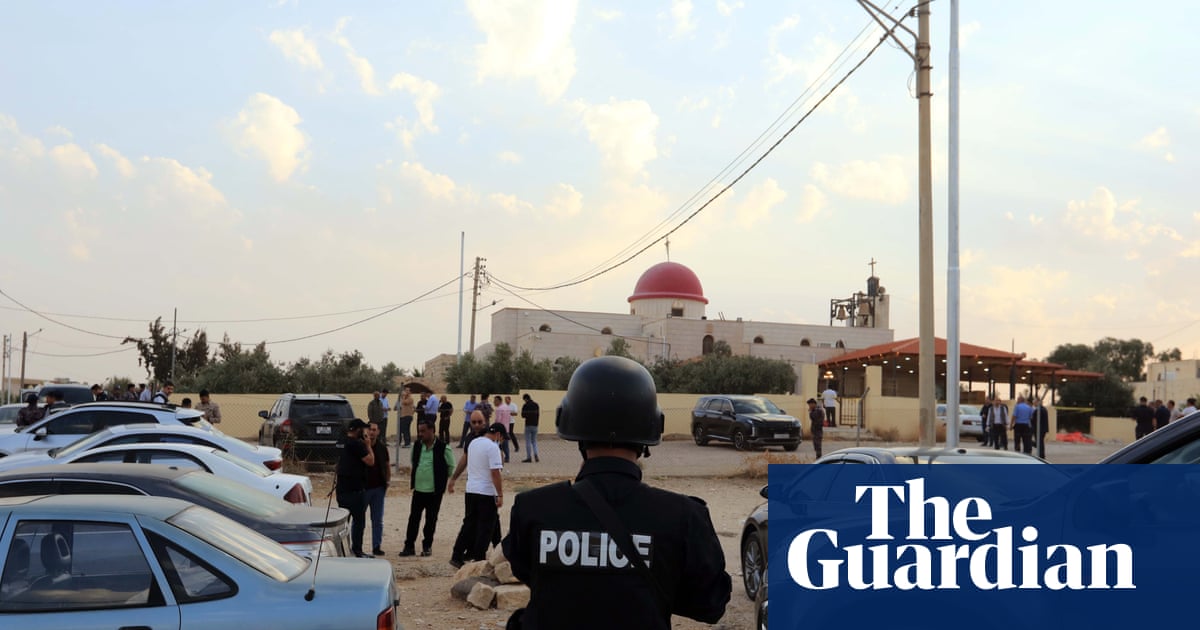
A violent assault on a religious gathering in southern Jordan has resulted in multiple fatalities and dozens of injuries, marking one of the most significant attacks on the country’s Christian minority in recent years. The incident occurred on Friday at St. George’s Greek Orthodox church in the village of Hamoud, located within the Karak governorate. Gunmen targeted mourners attending a funeral service, firing shots into the congregation and causing widespread panic among attendees.
Casualty figures vary slightly between early reports, with some accounts citing seven deaths and others reporting eight. Regardless of the precise death toll, Jordan’s health minister confirmed that forty individuals sustained injuries during the shooting. Most of those wounded were admitted to local medical facilities for treatment. The attack has drawn sharp condemnation from both domestic leaders and international partners, who have described the violence as a direct challenge to national stability.
Footage broadcast on state television provides a visual record of the assault. Video obtained by news organizations shows three individuals approaching the church grounds and opening fire from behind cover, including trees and a low wall near the entrance. The attackers are seen running toward the building before the footage cuts off. Security camera angles verified by Reuters confirm the presence of multiple gunmen and the chaotic scene that unfolded as bullets struck the structure and its occupants.
Witnesses described a scene of terror inside the church. Attendees reported hearing gunfire for several minutes while people collapsed on the floor, bleeding and screaming. One survivor recounted the sound of wailing and crying as the attack progressed. Another witness noted the sheer shock of the event, describing how dozens of mourners were present when the shooting began. The brutality of the assault has left many in the community struggling to process the sudden violence.
Jordanian authorities have moved quickly to characterize the event as an act of terrorism. Maj. Gen. Abdallah al-Maaytah, head of the Public Security Directorate, stated that a manhunt for the suspects is underway. Interior Minister Mazin Al Farrayeh identified the perpetrators as extremists but cautioned that it was too early to determine whether they had ties to known militant groups inside or outside Jordan. No organization has yet claimed responsibility for the attack.
Political leaders have responded with strong rhetoric against extremism. Prime Minister Jafar Hassan posted on social media that the violence stemmed from a terrorist ideology and blind extremism, vowing not to allow society to follow such a path. King Abdullah visited Karak shortly after the shooting, promising that those responsible would face severe punishment. He emphasized national unity, stating that attempts to divide Jordanians through violence would fail against the strength of the population.
The attack has prompted immediate security upgrades across the kingdom. The U.S. embassy in Amman reported increased police presence at malls, foreign diplomatic missions, and other high-traffic locations. This escalation reflects concerns about broader instability, particularly given Jordan’s role as a key U.S. partner in regional counterterrorism efforts. American officials have noted that while Jordan remains relatively stable, authorities have repeatedly thwarted plots by Islamist militants in recent years.
International reactions have been swift and unified in their condemnation. United Nations Secretary-General António Guterres stated that attacks on civilians and places of worship are unacceptable. U.S. Ambassador to the UN Mike Waltz described the incident as a depraved and brutal assault on a house of worship. The violence has also raised questions about regional tensions, especially considering Jordan was targeted by Iranian-backed forces earlier this year following U.S. and Israeli strikes against Iran.
Local residents have expressed deep concern about the origins of such extremism. Outside a government hospital in Karak, people gathered to support the injured while voicing frustration with the state’s ability to prevent radicalization. One attendee criticized the lack of investigation into how dark ideologies infiltrate the minds of young people. The incident has reignited debates about security protocols and social cohesion in a country that hosts numerous biblical sites and attracts Christian pilgrims from around the world.
As investigations continue, authorities face pressure to identify the perpetrators and dismantle any networks involved in planning the attack. The rarity of such incidents in Jordan makes this event particularly alarming for regional observers. While the immediate threat has been contained through heightened security, the long-term implications for social stability and counterterrorism strategy remain unclear. Officials have promised transparency as they work to uncover the motives behind the shooting.
Sources behind this briefing
Go to the original reporting
- NPR↗Gunmen open fire at a church during a funeral in Jordan, killing 7 and wounding 40
- The Guardian US↗Eight killed and 40 injured after gunmen open fire at church funeral in Jordan