The short version
- The shallow seismic event triggered widespread building collapses and small tsunami waves along the coast of Flores Island, prompting mass evacuations to higher ground.
- Rescue operations are severely delayed because landslides have blocked major highways and power outages have disrupted communications in remote regencies near the epicenter.
- Authorities warn that the death toll is likely to increase as teams struggle to reach isolated villages where infrastructure has been completely buried or cut off.
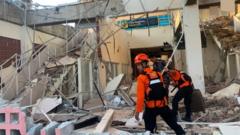
A powerful magnitude 7.7 earthquake struck eastern Indonesia early Saturday, killing at least 47 people and causing extensive destruction across the island of Flores. The National Disaster Management Agency reported that the death toll is expected to rise as search and rescue teams begin operations in areas where buildings have collapsed and roads are impassable. The quake occurred at a shallow depth of approximately 15 kilometers, which typically amplifies surface damage compared to deeper seismic events. Strong tremors were felt across the region, with dozens of aftershocks recorded, including one measuring magnitude 6.1.
The epicenter was located off the north coast of Flores, roughly 42 miles northwest of the town of Ende in East Nusa Tenggara province. Preliminary assessments indicate that more than 150 homes were severely damaged or destroyed, while nearly 200 others sustained significant structural harm. Public infrastructure also suffered heavily, with dozens of schools, healthcare facilities, and places of worship reported as damaged or unusable. In the port town of Maumere, videos showed concrete debris falling from a terminal building onto passengers waiting to board ferries, resulting in casualties and injuries among those on the ground.
Immediate panic ensued as residents fled coastal areas following a tsunami warning issued by authorities. Although the alert was lifted after three hours when monitoring stations detected no significant sea-level rise indicative of a major wave, smaller tsunami surges were recorded in several locations. Waves reaching up to 1.6 meters hit villages in Manggarai and East Manggarai regencies, leaving behind mud and debris that stranded fishing boats and damaged local infrastructure. Approximately 2,000 people evacuated their homes voluntarily or were relocated to temporary shelters due to safety concerns.
Access to the hardest-hit areas remains critically limited. Landslides triggered by the shaking have blocked the Trans-Flores highway, a vital mountain road connecting communities across the island. Rescue teams have been unable to reach Nagekeo regency, which lies closest to the epicenter, because roads are obstructed and communication signals are down. Power outages have further complicated efforts to coordinate between cities and villages, leaving officials with incomplete data on the full extent of the disaster. Some remote villages appear to be completely buried under debris, hindering immediate recovery.
Survivors described terrifying scenes as structures crumbled around them. One university lecturer recounted feeling like she was on a trampoline during the intense shaking, while others reported fleeing hospitals and markets in fear of collapsing walls. At St. Peter Major Seminary in Sikka, students and nuns escaped just as an assembly hall roof gave way during morning Mass. A priest suffered a broken leg after jumping from a second-floor window to avoid being trapped. Many residents have chosen to remain outdoors overnight, fearing further aftershocks might bring down already weakened buildings.
Emergency response efforts are underway but face significant logistical challenges. Authorities have deployed helicopters and rescue vessels to support logistics and potential evacuations in this archipelago region known for its difficult terrain. The National Disaster Management Agency has begun sending aid to affected areas, though the lack of heavy equipment and damaged infrastructure slows progress. Police officials noted that gathering accurate casualty reports is difficult due to ongoing communication disruptions across multiple regencies.
Indonesia sits along the Pacific Ring of Fire, making it highly susceptible to earthquakes and volcanic activity. The country consists of thousands of islands formed by the collision of major tectonic plates. While this region has experienced deadly seismic events in the past, including the catastrophic 2004 tsunami, the current disaster highlights vulnerabilities in remote infrastructure and emergency preparedness. Officials have advised residents to stay away from coastal zones and any structures showing signs of damage as assessments continue.
The situation remains fluid as rescuers work to clear debris and restore access to isolated communities. With communication networks still impaired and roads blocked by landslides, the true scale of the devastation may take days to fully emerge. International attention is focused on the region as local authorities struggle to provide medical care and shelter to thousands of displaced residents. The coming hours will be critical in determining whether additional lives can be saved from under the rubble.
In a separate seismic event later Saturday, a magnitude 6.9 earthquake struck North Sumatra in western Indonesia. However, this quake occurred at a depth of over 100 miles, meaning it did not cause significant surface damage or casualties. Authorities confirmed that the two events were unrelated, with the primary focus remaining on the catastrophic impact of the shallow quake in Flores. Relief agencies are now prioritizing resources to the eastern islands where the human toll and structural damage are most severe.
As night falls over the affected regions, survivors continue to camp in open spaces, wary of returning to homes that may no longer be safe. The combination of physical destruction, logistical barriers, and psychological trauma presents a complex challenge for Indonesian emergency services. The international community is watching closely as the nation grapples with one of its most recent natural disasters, hoping for swift improvements in access and aid delivery.
Sources behind this briefing
Go to the original reporting
- BBC News↗Powerful magnitude 7.7 earthquake kills at least 47 in Indonesia
- The Guardian US↗Powerful earthquake kills dozens in eastern Indonesia
- PBS NewsHour↗Magnitude 7.7 earthquake strikes off Indonesia's coast, killing at least 47 and toppling buildings

