The short version
- At least thirty-seven people died and forty-two were injured after a drone hit a munitions depot in Myla, causing secondary detonations that devastated nearby homes.
- President Volodymyr Zelenskyy announced criminal charges for official negligence, citing violations of safety regulations that prohibit storing ammunition near residential zones.
- The incident echoes a similar deadly strike in July, leading Prime Minister Serhii Koretskyi to condemn the repeated failure to implement necessary safety reforms.
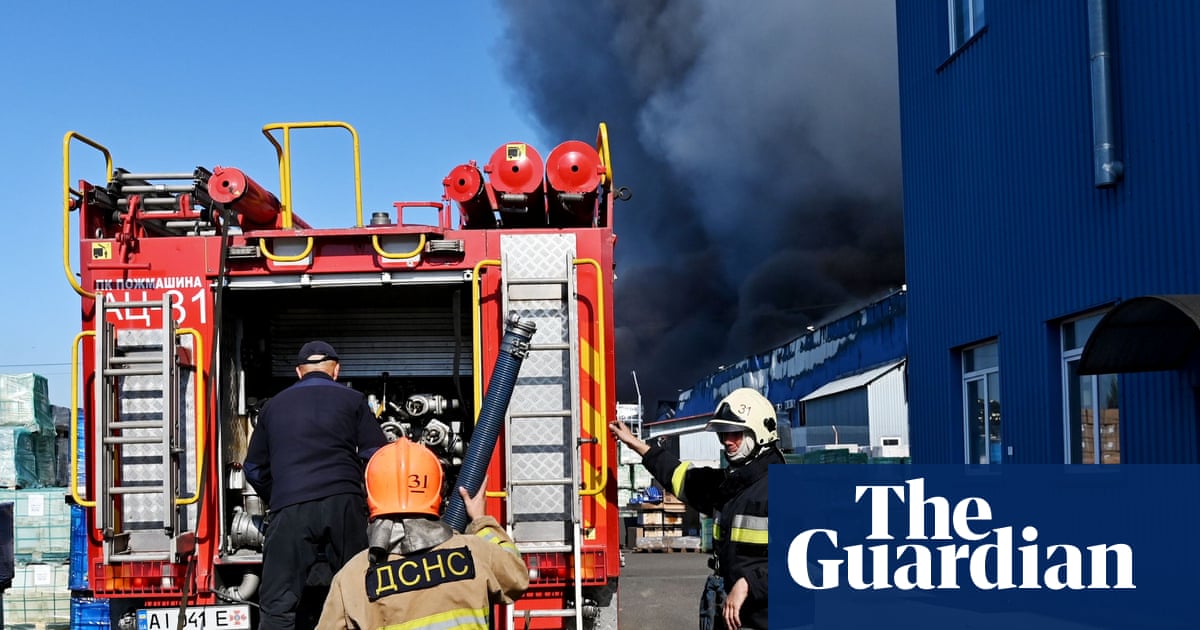
A catastrophic explosion rocked the western suburbs of Kyiv on Saturday morning after a Russian unmanned aerial vehicle struck a warehouse storing military munitions. The impact triggered a chain reaction of detonations involving shells, mines, and other explosive materials, resulting in at least thirty-seven confirmed deaths. Regional authorities reported that forty-two additional individuals sustained injuries, including four children, as the blast waves tore through the Bucha district.
The facility, located in the town of Myla, was identified by Ukrainian President Volodymyr Zelenskyy as a depot owned by the defense forces. He stated that the initial drone strike caused significant secondary explosions due to the large volume of stored weaponry. The force of the blasts damaged at least fifty residential structures, including a care home for elderly and disabled residents. Emergency crews evacuated more than three hundred people from the immediate vicinity, with rescue operations continuing into the day.
Ukrainian leadership has moved quickly to address the circumstances surrounding the storage of these explosives. Zelenskyy announced that criminal proceedings have been initiated on charges of official negligence. He emphasized that existing regulations strictly prohibit the placement of ammunition in close proximity to civilian housing. The prosecutor general’s office confirmed it is investigating the legality of storing such hazardous materials near populated areas and will examine the decisions made by officials responsible for the depot's location.
The tragedy has drawn sharp criticism from within the Ukrainian government regarding repeated safety failures. Prime Minister Serhii Koretskyi expressed deep regret that lessons from a previous incident were not heeded. In July, a similar strike on a munitions depot in Vyshneve, also near Kyiv, killed twenty-two people and ignited fires in nearby homes. An investigation into that event revealed serious regulatory violations by a state-owned company. Koretskyi described the current situation as criminal negligence, arguing that repeating such mistakes in the fifth year of full-scale invasion is unacceptable.
Russian military officials claimed responsibility for the strike, stating they targeted a warehouse storing components and launch boosters for long-range drones. The ministry also reported attacks on logistics centers in the Kyiv region and ports in Mykolaiv and Izmail. Meanwhile, Ukrainian forces reported shooting down two hundred thirty-three Russian drones overnight across multiple regions, including Odesa, Dnipropetrovsk, Sumy, and Zaporizhzhia. Local officials confirmed additional casualties from separate incidents, including a teenager killed in the Boryspil district and a toddler who died after a drone crashed in Obolonskyi.
The violence extended beyond Ukraine’s borders as both sides intensified cross-border operations. Ukrainian strikes targeted economic infrastructure within Russia, including logistics centers for major online retailers. Officials in the Belgorod and Rostov regions reported two deaths and twenty-five injuries from recent attacks. In response, Russian authorities noted damage to facilities belonging to Ozon, a major e-commerce platform, which suspended operations at some sites due to safety concerns. This follows weeks of Ukrainian strikes on Wildberries, another large retailer accused by Kyiv of supplying military components.
The incident underscores the ongoing risks faced by civilians living near military infrastructure in conflict zones. While the Russian strike was the initial trigger, the scale of destruction was amplified by the presence of high-explosive materials in a densely populated area. Ukrainian authorities face pressure to enforce stricter safety protocols to prevent future casualties from secondary explosions. The investigation into negligence will likely determine whether individual officials or systemic failures contributed to the depot’s placement.
As rescue teams continue to search for survivors and assess structural damage, the human toll remains a focal point for international observers. The death of Taras Didych, the head of the Dmytrivka community, who was reportedly assisting in rescue efforts, highlights the dangers faced by local leaders during emergencies. With evacuation orders still in effect for hundreds of residents, the immediate priority remains ensuring public safety and providing medical care to the injured.
The broader conflict continues to escalate, with both nations targeting military and economic assets. Ukraine’s strategy of striking Russian logistical hubs aims to disrupt supply chains supporting the war effort, while Russia maintains pressure on Ukrainian cities through aerial bombardment. The Myla incident serves as a grim reminder of the complex interplay between military operations and civilian safety, raising urgent questions about accountability and regulatory enforcement in wartime conditions.
Future developments will depend on the findings of the criminal investigation and any subsequent policy changes regarding munitions storage. If negligence is proven, officials may face severe penalties intended to deter similar violations. However, the immediate challenge remains managing the aftermath of the blast and supporting displaced families. The international community watches closely as Ukraine balances its defense needs with the imperative to protect its civilian population from collateral damage.
Sources behind this briefing
Go to the original reporting
- The Guardian US↗Russian drone strike on Kyiv warehouse storing weapons kills at least 37
- BBC World↗At least 37 dead and hundreds evacuated after strike on Kyiv weapons depot

