The short version
- Israeli airstrikes killed at least eleven people in southern Lebanon on Saturday, marking the highest death toll since a truce agreement took effect in June.
- Israel claims it targeted Hezbollah commanders and infrastructure in response to an attack on its soldiers, while Lebanese officials condemn the strikes as intimidation tactics that undermine stability.
- The violence highlights deep divisions over the implementation of the ceasefire framework, with Hezbollah refusing disarmament talks and accusing the Lebanese government of capitulating to Israeli demands.
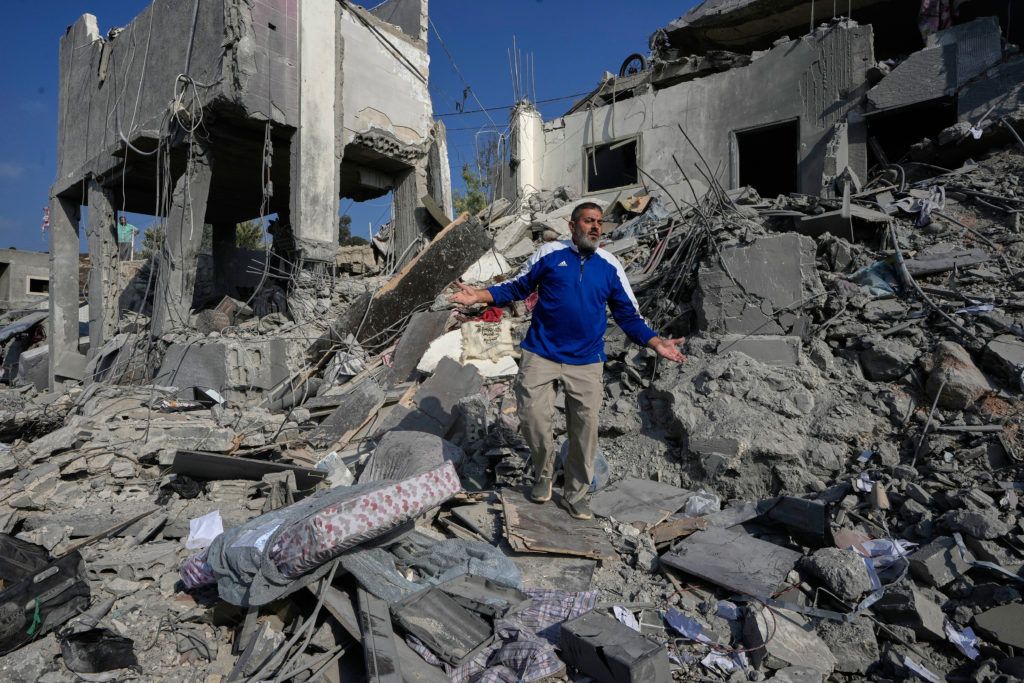
A wave of Israeli airstrikes struck southern Lebanon on Saturday, killing at least eleven people and wounding dozens more in the deadliest attacks since a truce between Israel and Hezbollah began in June. The strikes targeted residential areas in the villages of Ansar and Deir al-Zahrani, as well as strategic high ground near the city of Nabatiyeh. Rescue workers searched through rubble for survivors and bodies after a home on the edge of Ansar was flattened, killing seven people including three children. A second strike hours later hit a house in Deir al-Zahrani, killing four and injuring seventeen others.
The Israeli military stated that its actions were a direct response to an attack by Hezbollah fighters against Israeli soldiers in the Ali Taher area, a hilltop region overlooking Nabatiyeh that Israel says hosts underground command centers. According to the office of Prime Minister Benjamin Netanyahu, three Israeli soldiers were seriously wounded by an explosive drone. The military later announced that one of the strikes killed Ali Samir Al-Haj Hassan, identified as a battalion commander in Hezbollah’s elite Radwan Force unit. Officials noted that while his family was present and harmed during the strike on Ansar, they were not the intended target.
Lebanese political leaders condemned the escalation sharply. Prime Minister Nawaf Salam criticized the airstrikes for intimidating residents and undermining efforts to stabilize the south. He emphasized that the victims in Ansar were civilians, including women and children, rather than military infrastructure, asserting that it is the responsibility of the Lebanese state to handle any remaining military threats. President Joseph Aoun described the strikes as a clear message intended to disrupt negotiation tracks and American diplomatic efforts aimed at implementing the June agreement.
Hezbollah has refused to engage in direct talks with Israel and was not a party to the framework deal announced by the Lebanese government and Israel on June 26. In a statement, the group called on the Lebanese state to halt what it termed aggression rather than pursuing U.S.-sponsored negotiations, which it dismissed as concessions that benefit the enemy. Hezbollah accused the United States of partnering with Israel in its crimes and warned that further attacks would be met with an appropriate response in defense of Lebanon.
The framework agreement envisions a gradual withdrawal of Israeli forces from southern Lebanon in exchange for the disarmament of Hezbollah, with the Lebanese army deploying to secure the region. However, implementation has been fraught with tension. Hezbollah leader Naim Qassem recently accused Lebanese authorities of subjecting their armed forces to undue pressure and humiliation by proceeding with the deal. The group continues to refuse disarmament, arguing that the government is making too many concessions without securing guarantees for a complete Israeli withdrawal.
Despite the ceasefire, violence has not entirely ceased. Israel maintains control over large areas south of the Litani River and has continued near-daily attacks in regions north of the river. Earlier this month, two Israeli soldiers were killed in an explosion in southern Lebanon, marking the first Israeli deaths since the truce began. Hezbollah did not comment on that incident. The current escalation has caused panic among residents, with roads out of Nabatiyeh and surrounding villages choked with traffic as people fled northward seeking safety.
The broader conflict resumed in March after Hezbollah fired rockets across the border following U.S. and Israeli attacks on Iran. Since then, more than 4,000 people have been killed by Israeli strikes in Lebanon, including hundreds of civilians. On the Israeli side, approximately 40 soldiers and three civilians have died. Human Rights Watch has urged the United Nations to maintain an international force in Lebanon after its peacekeepers’ mandate ends this year, citing the need for a deterrent against attacks on civilians.
Diplomatic efforts remain stalled as trust erodes. Lebanon and Israel have held seven rounds of talks, with the most recent occurring in Rome earlier this month. However, Hezbollah’s refusal to disarm and its accusations that the Lebanese government is serving Israeli interests complicate any path toward a lasting peace. The latest strikes serve as a stark reminder of the fragility of the current arrangement and the high stakes involved in implementing the ceasefire framework.
Sources behind this briefing
Go to the original reporting
- PBS NewsHour↗Israeli airstrikes on southern Lebanon kill 11 people in another test to truce
- The Guardian World↗Israeli strikes on southern Lebanon kill 11 in worst toll since June truce

