The short version
- Professional cycling unions express outrage over safety protocols following the fatal collision involving teenager Finlay Tarling.
- Police indicate criminal charges against the driver are unlikely, citing a breakdown in the rolling security bubble rather than malicious intent.
- Former riders and officials argue that rising costs are compromising security standards, prompting calls for stricter UCI oversight.
The professional cycling community is reeling from the death of nineteen-year-old Welsh rider Finlay Tarling, who died after colliding with a non-race vehicle during the eighth stage of the Volta a Portugal. The incident has triggered immediate and severe criticism of the event’s safety infrastructure, with the Cyclistes Professionnels Associés (CPA), the riders’ union, describing itself as furious over the circumstances. Union representatives stated that it is unacceptable for a young athlete’s life to end in such a manner and emphasized that preventable accidents remain a persistent threat despite ongoing efforts to improve race security.
Tarling, the younger brother of Netcompany Ineos professional Josh Tarling, was competing when he struck a vehicle driving toward the peloton. The collision occurred on a downhill section where Tarling was attempting to catch up with the main group, which had split into three distinct clusters. According to Portuguese police, the race utilized a rolling road closure system, often described as a security bubble, rather than the full road closures typical of Grand Tours like the Tour de France. This method relies on a convoy of vehicles to clear the path ahead and behind the riders, but officials admitted that gaps in coverage can occur.
Investigative details provided by Carlos Catanario of the Portuguese police suggest a complex sequence of failures rather than a single error. The driver involved had stopped at the roadside to allow the race to pass but later asked bystanders if he could re-enter the road before the rear security vehicle, known as the broom wagon, had passed. Police noted that no officers were present at that specific location because it was not prioritized in the pre-race safety assessment. Additionally, the National Republican Guard escort struggled to keep pace with Tarling as he descended the hill, leaving him exposed outside the protected zone.
The mechanics of the crash involved Tarling cutting across a curve on the left lane, a standard maneuver for racing cyclists seeking optimal lines. The vehicle was traveling in the opposite direction when the two paths intersected. While authorities are gathering more evidence, they indicated that it is unlikely the driver will face criminal charges. This assessment has fueled frustration among riders and advocates who argue that the current system places an undue burden on participants to navigate unpredictable traffic conditions without adequate protection.
Former French professional Jérôme Pineau, who competed in multiple Grand Tours between 2002 and 2015, labeled the safety measures at the Volta a Portugal as catastrophic. He described the lack of other major incidents in recent years as a constant miracle and criticized the race finishes as unworthy of the event’s status. Pineau attributed these shortcomings to a broader financial strain affecting race organizers, noting that increasing costs are forcing some to abandon established safety principles. He argued that the Union Cycliste Internationale (UCI), the sport’s governing body, must implement stricter approval processes to ensure security standards are met before events are authorized.
The economic pressures facing second-tier races like the Volta a Portugal are significant. Organizers must secure funding for police escorts, race officials, and staff while managing rising operational expenses. Pineau suggested that these financial constraints lead to compromised safety protocols, creating dangerous conditions for riders. The incident has highlighted the disparity between top-tier events, which benefit from comprehensive road closures and extensive security, and lower-tier races that rely on less robust systems. This gap in protection has become a focal point for discussions about equity and safety across the professional cycling calendar.
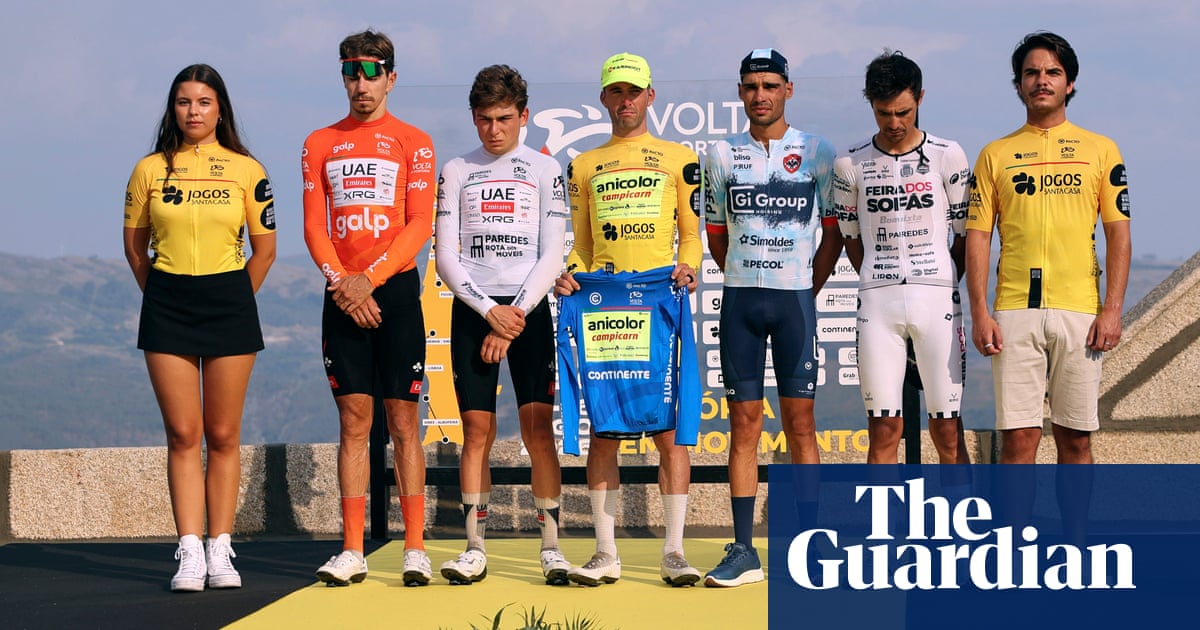
In response to the tragedy, Tarling’s team, NSN Development, withdrew from the race on Saturday. The remaining stages proceeded as planned, but the mood was somber. Riders observed a minute of silence at the start of the ninth stage, and the leader’s jersey, previously yellow, was changed to black. Participants wore black armbands in tribute to Tarling, a gesture mirrored by riders at other concurrent events, including the Czech Tour and the Arctic Race of Norway. These actions underscored the solidarity within the cycling community and the shared concern over rider safety.
Tarling’s father, Michael, shared a message on social media expressing the family’s grief and gratitude for the outpouring of support. He described Tarling as gentle, loving, and a best friend to his family, noting that the coming days would be incredibly difficult. As the police investigation continues, the cycling world faces mounting pressure to address systemic safety issues. The incident has reignited debates about the responsibility of organizers, governing bodies, and local authorities to protect athletes in an era where racing speeds are increasing and traffic conditions are becoming more complex.
Sources behind this briefing
Go to the original reporting
- The Guardian US↗Cyclists criticise ‘catastrophic’ safety measures after Finlay Tarling’s death

