The short version
- The US president has engaged in a repetitive pattern of threatening massive military strikes against Iran only to cancel them shortly after, citing potential diplomatic breakthroughs that have not materialized.
- Experts contend this cycle stems from a lack of strategic clarity and an underestimation of the ideological durability of the Iranian regime, which continues to inflict damage on US interests despite leadership losses.
- The ongoing instability in the Strait of Hormuz and the absence of a concrete peace deal suggest that current tactics are failing to secure a decisive military or diplomatic victory.
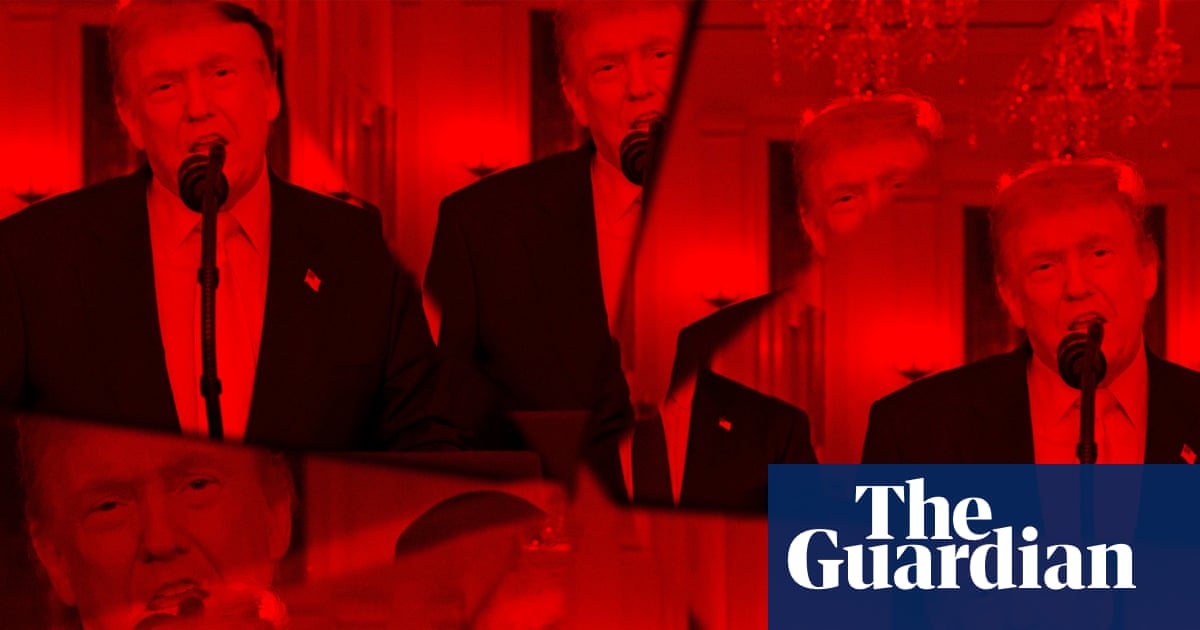
More than five months into a conflict initiated alongside Israel, the United States finds itself trapped in a recurring cycle of aggressive posturing followed by abrupt de-escalation. This pattern, which critics describe as having a repetitive, almost theatrical quality, has emerged seven times since hostilities began in late February. The most recent episode occurred last weekend when the president announced he had halted what he characterized as a massive bombardment, claiming it would have been the largest attack since World War II. He attributed the cancellation to appeals from allies and his belief that a diplomatic agreement was imminent.
Despite these assertions of impending peace, no formal deal has emerged. Negotiations involving Iran and Oman regarding shipping access in the Strait of Hormuz remain inconclusive. The waterway, which previously facilitated roughly twenty percent of global oil supplies, remains closed to commercial traffic. This disconnect between presidential rhetoric and on-the-ground reality has drawn increasing scrutiny from observers who note that Iranian forces retain the capacity to target US and allied assets in the region, contradicting claims that Tehran has been rendered militarily impotent.
The sequence of threats and retreats mirrors earlier incidents, including a stark warning in April that Iranian civilization would face extinction unless demands were met. That ultimatum also ended in a last-minute ceasefire agreement rather than the capitulation demanded. The president has repeatedly declared that the United States has virtually won the war and that Iranian leaders are eager for a settlement. However, video compilations from news outlets highlight numerous instances where such declarations of imminent peace were made only to be followed by continued conflict or further threats, undermining the credibility of these statements.
Commentators have expressed frustration with this zigzagging approach. British journalist Andrew Neil recently mocked the frequency of these proclaimed victories, sarcastically suggesting the president deserves a Nobel Peace Prize for bringing an end to the war multiple times within a few months. He argued that analyzing such volatile messaging is futile because the positions often reverse within twenty-four hours, rendering them as unpredictable and uninformative as weather forecasts. This perception of inconsistency raises concerns about the administration’s ability to project strength or maintain coherent foreign policy objectives.
Political scientists suggest that this erratic behavior reflects a deeper strategic void and a significant misreading of the adversary. Mehrzad Boroujerdi, a political scientist at Missouri Science and Technology University, argues that the president’s failure to comprehend the nature of Iran’s authoritarian Islamic system has led to ineffective tactics. Boroujerdi notes that regimes born from mass revolutions, such as the 1979 uprising that ousted the Shah, possess a distinct psychological resilience. They are not easily coerced into submission through threats alone.
Boroujerdi points out that the elimination of top leadership figures, including former Supreme Leader Ayatollah Ali Khamenei, has not weakened the regime’s resolve but may instead have hardened it. The current leadership, including Mojtaba Khamenei, operates within a structure deeply rooted in revolutionary ideology. Key figures holding sensitive military and security posts, such as Mohammad Baqer Zolqadr and Mohsen Rezaei, are part of networks that have survived decades of sanctions, isolation, and conflict. Their commitment to the regime’s survival is not contingent on external pressure but on internal ideological cohesion.
The personal history of Boroujerdi informs his academic perspective. His father was assassinated by Islamist militants in 1978, shortly before the revolution. This background has driven him to study the motivations and structures of Iran’s elite extensively, resulting in a comprehensive political handbook detailing thousands of regime members. His research underscores that the Iranian state is not a fragile entity on the verge of collapse but a resilient system capable of withstanding significant external hostility. The assumption that military pressure alone can force a quick resolution ignores this historical and structural reality.
The implications of this stalemate extend beyond the battlefield. Analysts warn that the lack of a clear strategy and the perception of impotence could have severe domestic political consequences. With congressional midterm elections approaching in November, the administration risks electoral backlash if voters perceive the conflict as mismanaged or futile. The continued closure of vital shipping lanes and the absence of a tangible diplomatic breakthrough suggest that current methods are not achieving their stated goals. Without a shift in approach, the cycle of threats and retreats is likely to persist, leaving both regional stability and US strategic interests in jeopardy.
Sources behind this briefing
Go to the original reporting
- The Guardian US↗Bluster and backdown have turned Iran war into Trump’s own Groundhog Day

