The short version
- Carrion crows completed visual discrimination tasks with an average reaction time of 235 milliseconds, significantly faster than human and primate benchmarks.
- Neural recordings indicate that avian brain regions analogous to the primate prefrontal cortex utilize similar decision-making circuitry despite different evolutionary origins.
- Researchers suggest rapid processing may be an adaptation for flight navigation and predator avoidance, though it remains unclear if this speed is unique to crows or common among birds.
Recent findings published in the journal Science challenge long-held assumptions about the relationship between brain structure and cognitive speed. Researchers from the University of Tübingen have demonstrated that carrion crows can process visual information and make decisions at approximately twice the speed of humans. This discovery highlights a remarkable convergence in neural processing between birds and mammals, despite their distinct evolutionary paths.
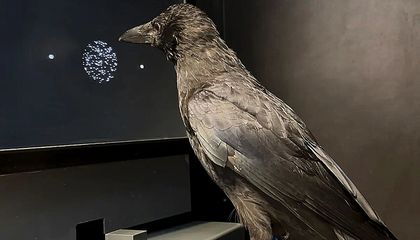
The study focused on two individual carrion crows named Iggy and Lemmy. The birds were trained to sit before a touchscreen displaying clusters of dots. In each trial, a subset of these dots moved coherently either left or right, while the remaining dots shifted randomly to serve as distractors. The crows were required to tap the side of the screen corresponding to the direction of the coherent motion. Correct responses were rewarded with mealworms, incentivizing rapid and accurate performance.
Over thousands of trials, the researchers varied the difficulty by adjusting the proportion of dots moving in the target direction. In some instances, nearly all dots moved together, providing a clear signal. In others, only a small fraction moved coherently, making the task significantly more challenging. Despite these variations, the crows maintained high levels of accuracy, achieving near-perfect results when signals were strong and performing better than chance even when patterns were difficult to discern.
The speed of the crows’ responses was particularly striking. The birds averaged 235 milliseconds to indicate their choice, a duration roughly equivalent to one-fifth of a second. This reaction time is approximately double the speed at which monkeys and humans perform similar visual discrimination tasks without compromising accuracy. Such rapid processing suggests that avian brains operate with exceptional efficiency in handling sensory input.
To understand the neural mechanisms behind this speed, the team monitored neuronal activity in the nidopallium caudolaterale, a brain region in birds that is functionally analogous to the prefrontal cortex in primates. This area is critical for higher-order thinking and decision-making. The recordings showed that neurons began firing signals within 70 milliseconds of the visual stimulus appearing on the screen.
As the crows processed the information, neuronal activity accumulated until it reached a specific threshold, at which point the birds executed their motor response by tapping the screen. This pattern of evidence accumulation mirrors findings in primate studies, indicating that both groups rely on similar computational strategies for decision-making. The similarity suggests that complex cognitive functions can emerge from different anatomical structures.
Experts note that these findings imply sophisticated computations do not strictly require a mammalian neocortex. Instead, the specific circuitry and organization of neural networks appear to be the determining factors for cognitive capability. Neuroscientists who were not involved in the study have echoed this sentiment, emphasizing that functional equivalence can exist across vastly different biological architectures.
The evolutionary drivers for such rapid processing likely stem from the demands of avian life. Flight requires precise navigation, quick adjustments to air currents, and immediate responses to potential threats. The ability to process visual data and initiate motor actions swiftly would provide a significant survival advantage in these contexts. However, researchers caution that it is not yet clear whether this speed is a trait shared by all birds or specific to crows.
Further investigation is needed to determine the extent of this capability across avian species. While carrion crows are known for their intelligence, including tool use and social memory, it remains uncertain if other birds exhibit similar processing speeds. The study provides a compelling case for reevaluating how cognitive abilities evolve independently in different lineages, offering new insights into the diversity of intelligent behavior in the animal kingdom.
Sources behind this briefing
Go to the original reporting
- Smithsonian Magazine↗Crows Can Make Decisions Based on Visual Information at Lightning Speed—Roughly Twice as Fast as Humans Can, Study Suggests


