The short version
- A SpaceX Falcon 9 rocket launched Crew-13 from Florida after a valve replacement delayed the mission from September to October.
- The four-person crew includes astronauts from NASA, CSA, and Roscosmos who will conduct experiments supporting future lunar and Martian exploration.
- Canadian astronaut Joshua Kutryk joins his wife as one of only four couples in history to have a child born while a parent is in space.
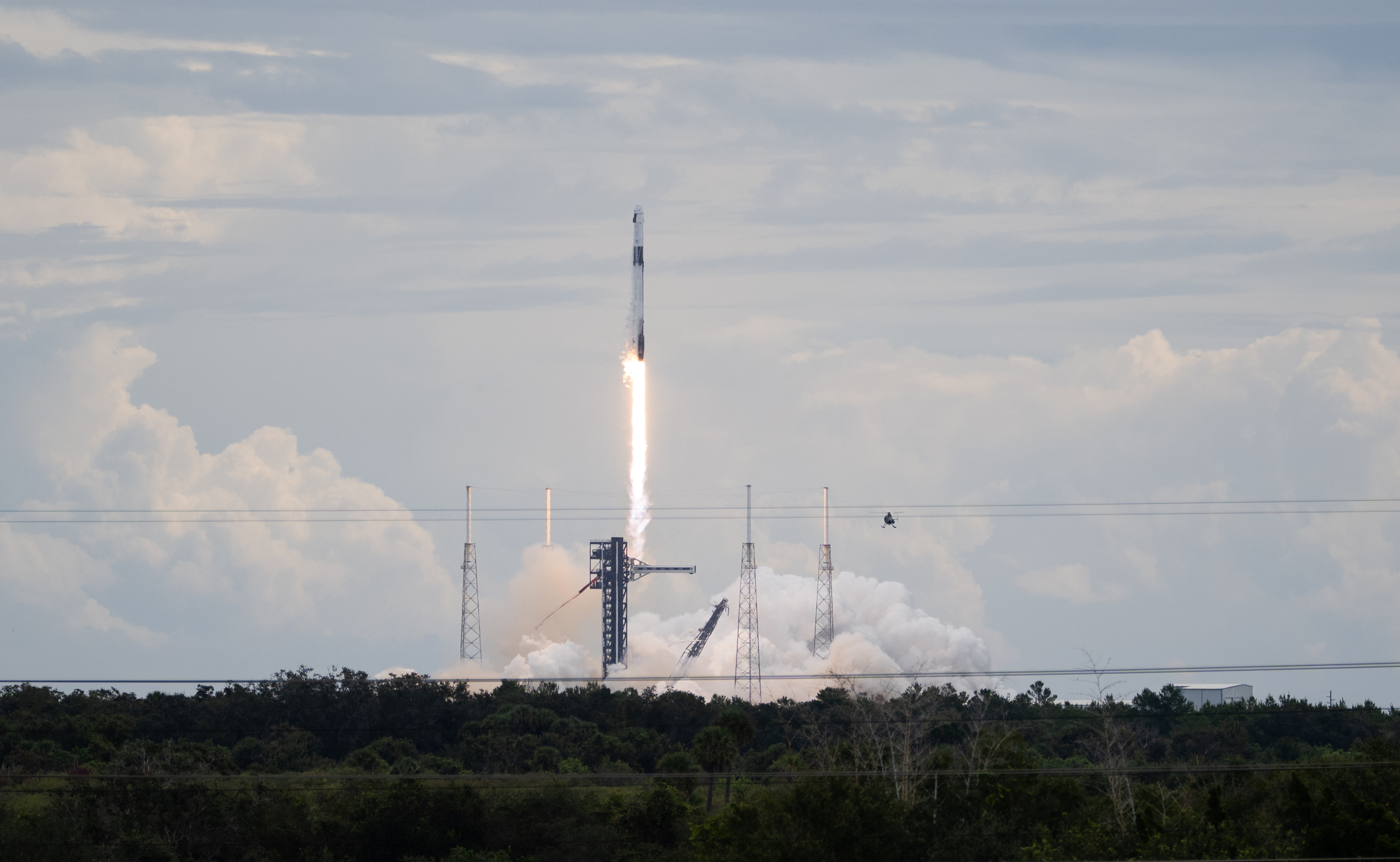
A SpaceX Falcon 9 rocket lifted off from Cape Canaveral Space Force Station in Florida on October 1, 2026, carrying the Crew-13 mission to the International Space Station. The launch marked the successful departure of a four-person crew after a technical issue had previously pushed back the timeline. Originally scheduled for mid-September, the mission was postponed to allow engineers time to replace a valve within the Crew Dragon spacecraft’s propulsion system. This adjustment ensured the vehicle met safety standards before attempting the journey into orbit.
The spacecraft is transporting NASA astronauts Jessica Watkins and Luke Delaney, Canadian Space Agency astronaut Joshua Kutryk, and Roscosmos cosmonaut Sergey Teteryatnikov. Together, this multinational team will embark on a long-duration science mission aboard the orbital laboratory. Their arrival is anticipated at 7 p.m. EDT, following a transit period of approximately seven hours and fifty minutes. NASA has organized live coverage across various digital platforms to broadcast the docking procedure, with streaming beginning earlier in the evening to provide context for viewers.
The primary objective for Crew-13 involves conducting extensive research and experiments designed to support future human exploration beyond low Earth orbit. Specifically, the work performed during this stay will contribute data and insights relevant to upcoming missions aimed at the Moon and Mars. By testing life-support systems, studying microgravity effects on the human body, and performing technological demonstrations, the crew helps bridge the gap between current orbital operations and deeper space travel goals.
Beyond the scientific agenda, the mission carries a notable personal milestone for one of its members. Joshua Kutryk’s wife is expecting their third child approximately two months into his time in orbit. This circumstance places Kutryk among an exclusive group of individuals; he will become part of only the fourth couple in history to welcome a newborn while one parent remains off-planet. While such personal events are not part of the official mission parameters, they highlight the human dimension of long-term spaceflight and the logistical realities faced by astronauts and their families.
The delay caused by the propulsion valve issue underscores the rigorous safety protocols governing modern spaceflight. Rather than rushing to meet an arbitrary calendar date, mission controllers prioritized hardware integrity. This approach reflects a broader trend in commercial and government space partnerships where reliability takes precedence over schedule adherence. The successful launch after the repair demonstrates the effectiveness of these checks, ensuring that the Crew Dragon vehicle was fully operational before leaving the ground.
International cooperation remains a cornerstone of this mission. The presence of crew members from the United States, Canada, and Russia illustrates the continued reliance on global partnerships for maintaining the International Space Station. Each agency contributes expertise and resources, allowing for a diverse range of scientific investigations. As geopolitical tensions fluctuate on Earth, the station often serves as a neutral ground where professional collaboration continues uninterrupted, focusing on shared scientific goals rather than political divisions.
Upon docking, the new arrivals will join existing crew members to continue the station’s operational rhythm. The handover process involves transferring responsibilities for daily maintenance, experiment management, and emergency procedures. This transition ensures that critical systems remain monitored at all times while allowing outgoing astronauts to prepare for their return journey. The seamless integration of new personnel is vital for sustaining the continuous human presence in low Earth orbit.
Looking ahead, the data gathered by Crew-13 will inform future mission planning for both NASA and its international partners. Insights into long-term health effects, material degradation, and system performance in space are invaluable for designing habitats for lunar bases or Martian outposts. As humanity prepares to venture further from Earth, each mission like this one adds another layer of understanding about how humans can live and work in the harsh environment of space.
The successful launch also reinforces the role of commercial providers in government-led space initiatives. SpaceX’s ability to deliver crews reliably supports NASA’s strategy of leveraging private industry for transportation services. This partnership allows the agency to focus more resources on exploration goals while ensuring safe and efficient access to orbit. The Crew-13 mission exemplifies this collaborative model, combining public objectives with private sector innovation.
As the spacecraft approaches the station, attention will shift from launch logistics to orbital operations. Engineers and flight directors will monitor the automated docking sequence closely, ready to intervene if necessary. Once connected, the crew will begin unpacking supplies and setting up their living quarters. The next phase of their mission will involve rigorous scientific work, contributing to the broader understanding of space travel’s challenges and possibilities.
Sources behind this briefing
Go to the original reporting
- NASA↗NASA’s SpaceX Crew-13 Launches
- BBC Science & Environment↗SpaceX launches crew to ISS


