The short version
- The Court of Appeal refused to overturn the Parades Commission's decision to permit a restricted Orange Order march on Garvaghy Road in Portadown.
- Hundreds of nationalist protesters, including Sinn Féin leadership, blocked the route in a peaceful but unlawful demonstration against the ruling.
- Political figures from across the spectrum have called for calm, though reactions range from accusations of hysteria to condemnation of the permit as incomprehensible.
A significant legal and political confrontation unfolded in Portadown, Northern Ireland, after the Court of Appeal declined to intervene in a decision allowing a loyalist parade on Garvaghy Road. The ruling permits the Orange Order to march along this historically contentious route for the first time since 1998, reversing a long-standing de facto ban that had been maintained through community resistance and regulatory restrictions. The court’s refusal to block the event has ignited immediate protests and sharp political debate regarding the stability of the region's peace process.
The legal battle culminated in the early hours of Sunday morning when Mr Justice Humphreys presided over a final hearing. Acknowledging the unusual timing with the march scheduled to begin shortly, the judge cited established case law requiring courts to respect the judgments of public bodies like the Parades Commission unless there are compelling reasons to interfere. This decision overturned an earlier Saturday ruling by Justice Patricia Smyth, who had temporarily blocked the parade citing potential for escalation across Northern Ireland. The Orange Order successfully challenged that interim block, leading to the current standoff.
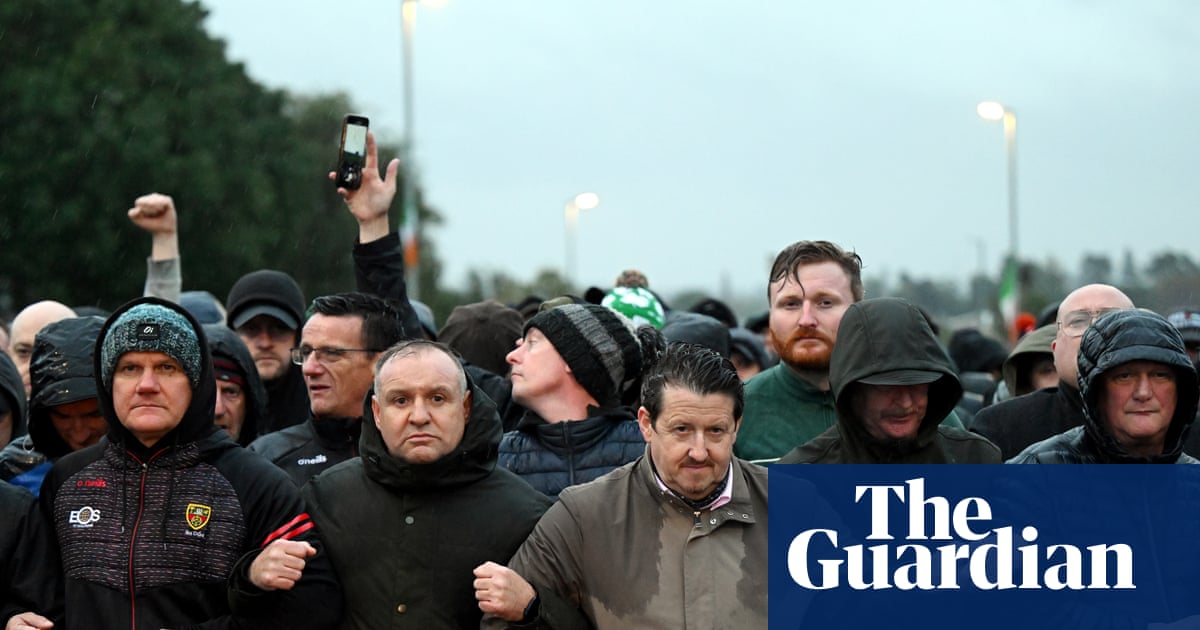
In response to the court’s clearance, hundreds of nationalist protesters gathered on Garvaghy Road in driving rain and cold temperatures. Many participants linked arms and sang songs while blocking the path, defying warnings from police that they faced arrest and prosecution for unlawful assembly. The proposed march was subject to strict conditions imposed by the Parades Commission, including a limit of thirty-five participants, an early morning start time, and a requirement that the procession remain silent. Despite these restrictions, the mere permission to proceed was viewed by opponents as a profound provocation.
Sinn Féin leaders played a prominent role in the opposition, with President Mary Lou McDonald describing the decision as madness and primitive treatment of the community in 2026. She emphasized that the mood among protesters remained peaceful, united, and orderly, asserting that the community was determined not to be drawn back into past conflicts. Vice-President Michelle O’Neill, who also serves as Northern Ireland’s first minister, expressed deep concern that reigniting this dispute questions the functionality of the broader peace process. She highlighted the trauma experienced by local families and questioned why the commission chose to reintroduce such conflict after twenty-eight years of stability.
The political reaction from unionist parties was equally intense but framed differently. Democratic Unionist Party leader Gavin Robinson accused O’Neill of disrespecting the courts, police, and rule of law by participating in what he termed an unlawful protest. Local DUP MP Carla Lockhart criticized the first minister’s behavior as hysterical and suggested that such actions would normally result in detention for other politicians. These exchanges underscore the deep polarization surrounding the event, with unionists viewing the protest as a breach of legal order and nationalists viewing the permit as a breach of social peace.
Government officials from both sides of the border have urged de-escalation. Northern Ireland Secretary Chris Bryant traveled to Belfast from the Labour party conference in Liverpool, stating that while he lacked the power to cancel the march without a formal police request, he considered the protest unlawful. He called on all political leaders to lower tensions and consider the impact of their rhetoric on those with differing views. Prime Minister Andy Burnham also appealed for calm on all sides, reflecting the high stakes involved in maintaining public order.
The Irish Taoiseach, Mícheál Martin, echoed calls for mediation but strongly criticized the Parades Commission’s decision as incomprehensible and wrong. He emphasized the need to protect the gains made in peace and harmony over recent decades. The Garvaghy Road dispute has historically been one of the most volatile flashpoints in Northern Ireland, previously sparking some of the most serious disorder in the region's history. The current situation highlights the fragility of these arrangements and the difficulty of balancing legal rights with community sensitivities.
As the standoff continues, the Orange Order members remain stationed at a church a mile from the proposed start point, waiting for police confirmation that the route is clear. The immediate future remains uncertain, with no indication of whether the march will proceed as planned or if further legal or political interventions will occur. The incident serves as a stark reminder of the enduring legacy of sectarian division in Northern Ireland and the challenges faced by institutions tasked with managing historical grievances in a modern context.
Sources behind this briefing
Go to the original reporting
- The Guardian World↗Tense standoff over loyalist march in Portadown as protesters block route

