The short version
- Thai military forces responded to more than fifty coordinated arson incidents across Narathiwat, Yala, and Pattani provinces late Saturday night.
- The attacks targeted infrastructure including telecommunications towers and government offices, resulting in two injuries from a separate explosive device.
- Violence escalates tensions ahead of a scheduled visit by Prime Minister Anutin Charnvirakul to the region for investment and security discussions.
A wave of coordinated arson attacks swept through southern Thailand on Saturday night, marking a significant escalation in violence within the region’s long-running separatist conflict. Thai military authorities confirmed that more than fifty incendiary incidents occurred between 8:00 p.m. and midnight local time across three border provinces. The Internal Security Operations Command described the assaults as deliberate efforts to generate unrest, targeting both civilian infrastructure and state facilities.
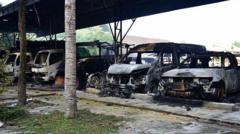
The majority of the fires were concentrated in Narathiwat province, with additional reports emerging from neighboring Yala and Pattani. Among the targets set ablaze were a local government administrative office in Ra-ngae, a convenience store, and a stolen vehicle. Telecommunications towers were also struck in several locations, disrupting communications networks in areas already strained by security concerns. Security officials issued urgent warnings to residents to avoid touching any suspicious objects found in the aftermath of the blasts.
While most incidents involved fire-setting, at least one explosion caused physical harm. Two women were injured when a bomb detonated in Muang district within Narathiwat province. No other casualties were reported from the broader campaign of arson. Authorities imposed an overnight curfew in Narathiwat to contain the situation, which was lifted on Sunday morning after no further attacks were recorded during the early hours of the day.
No individual or organization has publicly claimed responsibility for the series of attacks. However, the pattern of violence aligns with tactics historically employed by insurgent groups in the region. The conflict, which has persisted since 2004, pits Muslim-majority separatist factions against the Buddhist-majority Thai state. Rebels have long sought greater autonomy or independence for the southernmost provinces, a struggle that has claimed more than 7,000 lives over two decades.
The Barisan Revolusi Nasional is widely recognized as the primary leadership body behind the insurgency. Despite periodic attempts at reconciliation, the peace process has remained fragile. Talks facilitated by Malaysia began in 2013 but have repeatedly stalled due to shifting political landscapes in Bangkok and internal disagreements among rebel factions. The current wave of violence underscores the deep-seated mistrust that continues to hinder diplomatic progress.
Recent months have seen a deterioration in security conditions, complicating efforts to resume dialogue. In July, five soldiers were killed in a combined gun and bomb attack at a checkpoint in Narathiwat. That incident led authorities to postpone planned negotiations, signaling a breakdown in the tentative calm that had previously allowed for political engagement. Insurgents have frequently targeted security personnel and government buildings, often timing their actions to coincide with official visits or high-profile events.
The timing of this latest surge in violence is particularly significant given upcoming government activities in the region. Prime Minister Anutin Charnvirakul and several cabinet members are scheduled to visit Hat Yai in Songkhla province next week. The two-day trip aims to address critical issues including investment opportunities, flood prevention measures, and regional security. The attacks appear designed to disrupt these plans and draw attention to the ongoing grievances of the local population.
As authorities investigate the source of the incendiary devices and coordinate responses across provincial lines, the immediate threat appears to have subsided following the lifting of the curfew. However, the underlying tensions remain unresolved. The failure of previous peace initiatives and the continued use of violent tactics by separatist groups suggest that any future dialogue will face substantial hurdles. The government must now balance security enforcement with diplomatic outreach to prevent further destabilization.
Residents in the affected areas are likely to experience heightened military presence and restricted movement in the coming days. The destruction of telecommunications infrastructure poses additional challenges for emergency response and information dissemination. While no group has claimed credit, the strategic nature of the attacks indicates a coordinated effort by organized factions within the insurgency. The international community watches closely as Thailand navigates this renewed crisis.
The incident serves as a stark reminder of the complexity of the southern conflict. It is not merely a matter of criminal activity but a deeply rooted political struggle involving identity, autonomy, and state authority. With peace talks stalled and violence resuming, the path forward remains uncertain. The government’s upcoming visit will be tested by these recent events, requiring careful navigation to avoid further provocation while addressing legitimate security concerns.
Sources behind this briefing
Go to the original reporting
- BBC News↗Dozens of co-ordinated arson attacks hit southern Thailand

