The short version
- Ramla Ali secured a split decision victory over Mikiah Kreps to win the vacant WBO and IBF junior featherweight titles in Arlington, Texas.
- Punch statistics indicated Kreps landed significantly more blows, leading promoters and observers to question the accuracy of the judges' scorecards.
- The event also featured Alycia Baumgardner capturing an additional lightweight title, intensifying a public rivalry with British champion Caroline Dubois.
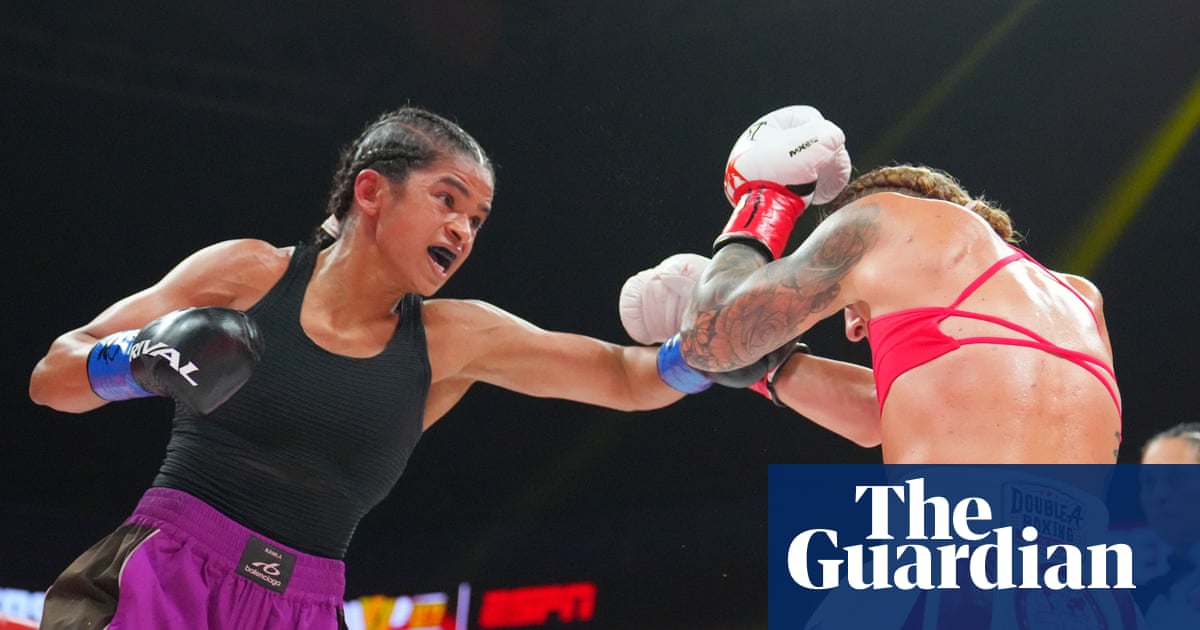
Ramla Ali achieved her long-sought status as a world champion on Sunday night in Arlington, Texas, claiming the vacant WBO and IBF women’s junior featherweight titles. The victory came via a contentious split decision against former sparring partner Mikiah Kreps, marking a dramatic conclusion to Ali’s second attempt at securing a global belt. At thirty-six years old, the British-Somali athlete completed a journey that began with her family fleeing Somalia’s civil war and culminated in her becoming the first boxer from Africa to represent the country at the Olympic Games.
The bout itself presented a stark contrast between early momentum and late-round dominance. Ali established an early advantage by knocking Kreps down in the third round after landing a clean right hook to the chin. However, Kreps appeared to recover quickly from the setback, increasing her output and applying relentless pressure that disrupted Ali’s rhythm for the remainder of the ten-round contest. To many observers, the American fighter controlled the majority of the exchanges following the initial knockdown.
The scoring discrepancy has drawn sharp criticism from industry figures. Two judges scored the fight 97-92 and 96-93 in favor of Ali, while a third judge awarded it to Kreps by a margin of 98-91. Independent reporting outlets also diverged on the outcome, with some scoring the bout for Kreps. The statistical data further complicated the narrative; Compubox records showed Kreps landing 115 punches compared to Ali’s 78, including a significant edge in power shots. Kreps connected on more punches in eight of the ten rounds and maintained a substantially higher work rate throughout the evening.
Lou DiBella, a veteran promoter often viewed as an informal watchdog for boxing integrity, expressed outrage at the verdict. He argued that Kreps won decisively and called for an investigation into the scoring process, suggesting that the decision was so clear-cut that even someone with impaired vision could have discerned the winner. His comments reflect broader concerns within the sport regarding the consistency and accuracy of officiating in high-stakes bouts.
Despite the controversy surrounding the result, Ali’s emotional response to the victory was profound. Upon hearing the announcement, she dropped to her knees and wept, later attributing her reaction to the recent passing of her father in May. She revealed that her trainer had invoked her father’s memory before the fight, urging her to dedicate the performance to him. This personal tribute added a layer of poignancy to a night defined by professional ambiguity.
Ali also acknowledged the physical toll exacted by Kreps’ aggressive style. She noted that she repeatedly told her corner team how exhausted she felt during breaks, crediting her opponent’s exceptional work rate for making the contest so demanding. This mutual respect highlighted the competitive nature of the bout, even as the final outcome remained disputed among fans and analysts.
The significance of Ali’s achievement extends beyond the ring. Her profile has grown substantially in recent years, with appearances on major magazine covers, attendance at high-profile fashion events, and roles as an ambassador for Unicef and Dior. She also founded Sisters Club in 2018, an initiative providing free boxing classes to vulnerable women, including survivors of domestic abuse. A biopic based on her life story premiered recently, further cementing her status as a cultural figure.
In the main event of the card, Alycia Baumgardner successfully defended and expanded her championship portfolio. The three-belt junior lightweight champion moved up to 135 pounds and added the IBF lightweight title with a unanimous decision over Elif Nur Turhan. All three judges scored the fight 100-90 in favor of Baumgardner, who competed under men’s championship rules featuring ten three-minute rounds.
Baumgardner’s victory immediately reignited tensions with British champion Caroline Dubois, who was present ringside. The two athletes engaged in a heated confrontation following the bout, continuing a feud that has simmered for months. Dubois has accused Baumgardner of avoiding a matchup, while Baumgardner maintains that Dubois has not yet earned the right to challenge her.
The path forward for both champions remains complex. Dubois is scheduled to face Stephanie Han in February in El Paso, Texas, with WBA, WBC, and WBO lightweight belts on the line. A victory for Dubois would likely set up a unification bout with Baumgardner, potentially resolving their rivalry in the ring rather than through public disputes. Meanwhile, Ali must now defend her newly acquired titles while navigating the lingering questions about the legitimacy of her split-decision win.
Sources behind this briefing
Go to the original reporting
- The Guardian US↗Ramla Ali wins first world titles at 36 with highly controversial split decision


