The short version
- Family members report significant weight loss and mental health struggles among crew due to prolonged deployment conditions.
- Official statements from Central Command assert that mental health cases remain low relative to other active carriers.
- The USS George Washington is scheduled to relieve the Lincoln, bringing its own history of investigated welfare issues.
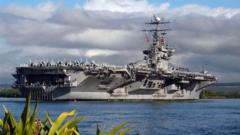
The United States Navy faces renewed scrutiny regarding the living conditions and morale aboard the USS Abraham Lincoln, which has been deployed in support of operations involving Iran since December. The vessel has remained on station for more than double the duration of typical deployments, sparking a divergence between official military assessments and accounts from service members' families. As concerns mount over potential logistical failures and crew exhaustion, the Navy is preparing to rotate the carrier out of the theater.
Relatives of sailors stationed on the Lincoln have voiced alarm regarding the physical and psychological toll of the extended mission. One family member reported that their relative had lost approximately 65 pounds during the deployment, attributing the drastic weight change to chronic exhaustion driven by constant noise and vibration levels aboard the ship. These personal accounts suggest a deterioration in well-being that extends beyond standard operational stress, with some reports indicating severe distress among crew members.
In contrast, military leadership has pushed back against narratives of systemic failure. Admiral Brad Cooper, head of US Central Command, issued a statement noting that the Lincoln currently records one of the lowest rates of mental health cases among the eleven active aircraft carriers in the US fleet. While acknowledging that long-term sea service is inherently difficult and not suited for everyone, officials maintain that the crew remains prepared and capable. Retired Navy Lt. Commander Steve Rogers, representing the Association of the United States Navy, characterized media reports as largely exaggerated, suggesting that family anxiety is a normal byproduct of wartime deployment rather than evidence of acute crisis.
Political figures have also weighed in on the situation, with former President Donald Trump dismissing concerns about the ship's condition. He argued that the current deployment duration is insufficient, implying that the vessel and its crew are performing adequately despite the reported hardships. This perspective aligns with the official stance that minimizes the severity of the issues, framing them as manageable aspects of naval warfare rather than indicators of institutional neglect or logistical breakdown.
Veterans who have served on similar vessels offer a nuanced view of life aboard an aircraft carrier. Jonny Burnell, a Navy veteran who spent 111 days on the USS Carl Vinson during the 2001 Afghanistan conflict, described a gradual shift in crew morale from initial excitement to a pervasive sadness. He noted that the confined spaces, constant noise from aircraft operations, and lack of natural light can create an environment akin to a floating prison. Burnell observed that many sailors are confined to their work areas for extended periods, rarely seeing the sky, which can exacerbate feelings of isolation and fatigue.
Independent journalistic investigations have yielded mixed findings regarding the actual conditions on board. A CNN crew visited the Lincoln in July and reported that food supplies were plentiful during their three-day stay, contradicting earlier claims of severe shortages. However, some troops mentioned having rationed food over previous months, suggesting that supply issues may be intermittent or resolved temporarily for inspections. The reporters also noted hot showers but observed signs of mold, indicating that while critical needs are being met, maintenance standards may be slipping under the pressure of continuous operations.
The logistical reality of operating an aircraft carrier involves significant strain on both equipment and personnel. Reports from military-focused publications have highlighted issues such as broken plumbing and food scarcity, which families cite as contributing factors to declining health. While officials dispute the severity of these claims, the acknowledgment by Admiral Cooper that mental health requires attention alongside physical well-being suggests an awareness of the cumulative stressors. The debate centers on whether these are temporary operational hiccups or symptoms of a deeper systemic issue exacerbated by the unprecedented length of the deployment.
Resolution is imminent as the USS George Washington is en route to relieve the Abraham Lincoln, with an arrival expected within a week. This rotation will provide a critical opportunity for the exhausted crew to rest and for maintenance crews to address any deferred repairs. However, the incoming vessel carries its own baggage; in 2022, the George Washington was investigated following a series of suicides while docked in Virginia. The subsequent inquiry concluded that poor living conditions contributed to the tragedies, raising questions about whether the replacement ship offers a meaningful improvement or simply shifts the same challenges to a different platform.
As the Lincoln prepares to depart, the incident underscores the broader difficulties of sustaining prolonged naval operations in high-intensity environments. The disconnect between official metrics and personal experiences highlights the complexity of measuring morale and welfare in military settings. Whether the reported issues are isolated incidents or indicative of a wider pattern will likely become clearer as the crew returns home and undergoes debriefing, providing data that could inform future deployment strategies and support systems for naval personnel.
The situation also reflects the evolving nature of modern warfare, where psychological resilience is as critical as physical readiness. The Navy's response to these reports will be watched closely by policymakers and the public alike, as it tests the institution's ability to balance operational demands with the humane treatment of its service members. The upcoming transition between carriers serves as a pivotal moment for assessing how well the military can adapt to the unique stresses of extended combat deployments.
Sources behind this briefing
Go to the original reporting
- BBC News↗What it's like to be on a warship like the USS Abraham Lincoln

