The short version
- President Abelardo de la Espriella has ordered immediate joint operations to track down and deport migrants in irregular situations, prioritizing those accused of criminal activity.
- The announcement coincides with the country's recovery from a devastating earthquake, raising concerns about resource allocation and operational capacity within migration authorities.
- Critics argue the policy reverses over a decade of inclusive migration frameworks and misuses legal terminology, as Colombian law does not classify undocumented status as a crime.
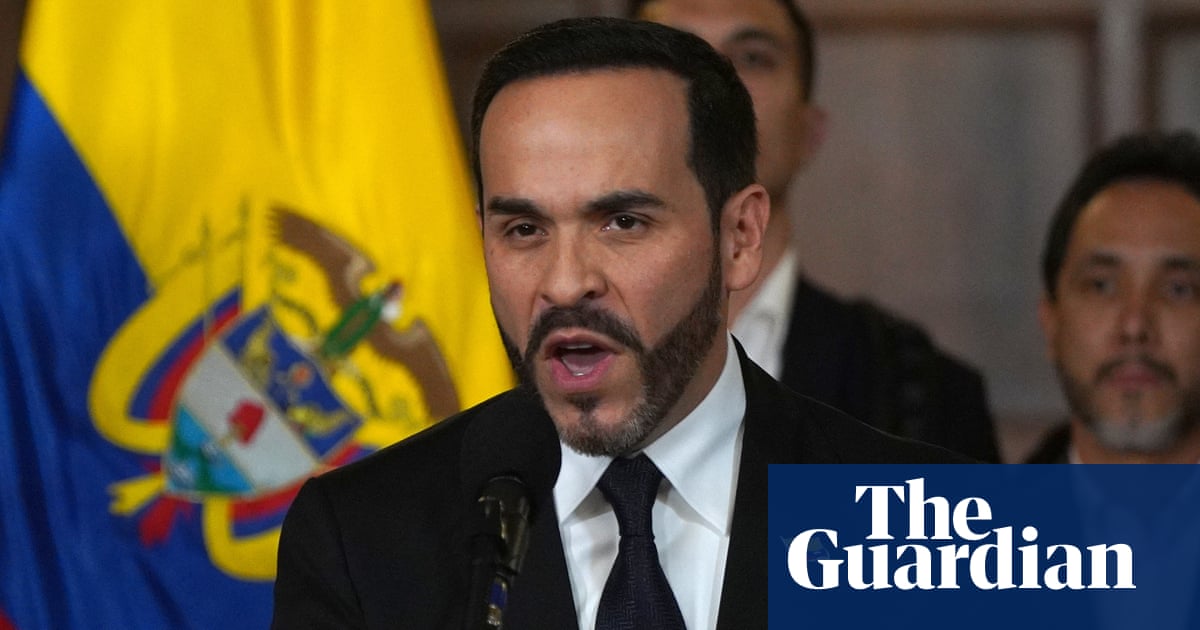
Colombia’s newly inaugurated president, Abelardo de la Espriella, has directed government agencies to commence immediate operations aimed at detaining and deporting individuals residing in the country without proper documentation. The order, issued during a cabinet meeting in Barranquilla, marks a sharp departure from previous administration policies that have largely facilitated the regularization of migrants, particularly those fleeing Venezuela. De la Espriella, who assumed office just over two weeks prior to this announcement, framed the initiative as a matter of national priority, adopting rhetoric that places Colombian citizens above all others in policy considerations.
The directive calls for coordinated efforts between the national police force and the migration authority, with operations expected to begin within days of the announcement. The president specified that enforcement would target two primary groups: those currently involved in criminal activities and those who have failed to regularize their immigration status. This approach mirrors strategies employed by political allies in other nations, notably United States President Donald Trump, whose “America First” platform has influenced similar hardline stances across the region. De la Espriella explicitly stated that from this point forward, Colombian interests would take precedence in all governmental decisions.
The timing of this policy shift presents significant challenges for implementation. Colombia is still grappling with the severe aftermath of a 7.4-magnitude earthquake that struck on August 10, resulting in more than 300 fatalities and the destruction of over 30,000 homes. Barranquilla, the city where the cabinet meeting took place, has effectively become an alternative capital as government operations continue amidst the disaster response. Critics and analysts question whether the migration agency possesses sufficient personnel and resources to execute such a large-scale operation while simultaneously managing emergency relief efforts. Internal sources within the migration department have expressed doubts about their capacity to fulfill the president’s promises given current staffing levels.
Legal experts and human rights advocates have raised objections to both the terminology and the substance of the new policy. Under Colombian law, there is no legal category for “illegal” immigrants; instead, individuals without proper documentation are classified as being in an “irregular” situation. Being undocumented is not considered a criminal offense under domestic statutes, which complicates the legal basis for immediate detention and deportation. Senator María José Pizarro Rodríguez, representing the left wing of the political spectrum, criticized the move as xenophobic and aporophobic, drawing parallels to controversial immigration enforcement tactics in the United States. She argued that the policy targets vulnerable populations fleeing poverty and violence rather than addressing actual security threats.
The majority of migrants affected by this crackdown are Venezuelan nationals, who constitute approximately 90 percent of all foreign residents in Colombia. Of the estimated 2.8 million Venezuelans living in the country, roughly 848,000 are in an irregular situation. This group includes a significant number of children and adolescents, totaling around 193,000 minors who may face separation from families or disruption of their lives under the new enforcement regime. The previous decade saw both right-wing and left-wing governments maintain relatively open migration policies, allowing many Venezuelans to regularize their status and integrate into local economies. This new directive threatens to undo those gains, potentially reversing years of diplomatic and humanitarian cooperation.
De la Espriella’s broader political platform has centered on a tough stance against criminal organizations involved in drug trafficking, illegal mining, extortion, and smuggling. In the same announcement where he outlined immigration enforcement plans, he declared that all gangs engaged in these activities would be treated as terrorists. He vowed to defeat these groups through any means necessary, including force if required. While his campaign rhetoric frequently targeted crime, the specific focus on immigration appears to align with a regional trend among far-right leaders who have tightened border controls and migration rules. This includes figures such as Argentina’s Javier Milei and Chile’s José Antonio Kast, who have adopted similar nationalist positions.
The practical implications of this policy remain uncertain due to the logistical hurdles involved in identifying and processing hundreds of thousands of undocumented individuals. The migration authority faces the daunting task of distinguishing between those who pose a security risk and those who are simply lacking paperwork, all while operating under intense public scrutiny and limited resources. Human rights organizations warn that mass deportations could exacerbate humanitarian crises both within Colombia and in neighboring countries. Meanwhile, supporters of the president argue that strict enforcement is necessary to restore order and protect national sovereignty. The coming weeks will likely reveal whether the government can translate its rhetorical commitments into actionable policy without causing further social disruption.
As operations begin, the international community and local civil society groups are closely monitoring the situation. The potential for widespread displacement and legal challenges looms large, particularly given the lack of clear procedural safeguards in the initial announcement. The intersection of disaster recovery and immigration enforcement creates a complex environment where competing priorities may clash. Whether this crackdown will succeed in reducing irregular migration or merely displace it remains to be seen. What is clear is that Colombia’s approach to one of its most pressing social issues has undergone a fundamental transformation under new leadership, setting the stage for significant political and social upheaval in the months ahead.
Sources behind this briefing
Go to the original reporting
- The Guardian World↗Colombia’s new president Abelardo de la Espriella announces immigration crackdown

