The short version
- Ninety-nine former combatants disarmed under the previous administration’s total peace plan remain in a government-controlled zone with no clear path to reintegration.
- The new president has halted negotiations and ordered the extradition of a key dissident leader, signaling a return to hardline security measures.
- Former negotiators warn that closing the temporary settlement could constitute a crime against humanity given the fighters’ unarmed status.
In mid-June, ninety-nine guerrilla fighters arrived by helicopter at a rural settlement in southern Colombia, marking a rare moment of de-escalation in a conflict that has claimed nearly half a million lives over six decades. One by one, the combatants handed over rifles, pistols, machine guns, and grenade launchers to government officials. They stripped off tactical vests and camouflage uniforms, piling the gear into bonfires as a symbolic end to their armed existence. This disarmament was the centerpiece of former President Gustavo Petro’s total peace initiative, which aimed to negotiate with all criminal groups in the country.
The surrender occurred just three days before the presidential runoff election, a contest won by Abelardo De la Espriella, a far-right lawyer and millionaire who campaigned on ending the total peace strategy. De la Espriella promised a return to aggressive tactics, focusing on jailing or eliminating criminals rather than negotiating with them. Since taking office, his administration has begun airstrikes against criminal groups while managing the aftermath of a 7.4-magnitude earthquake. The ninety-nine disarmed fighters now find themselves in an administrative void, unsure of their legal status or future under the new leadership.
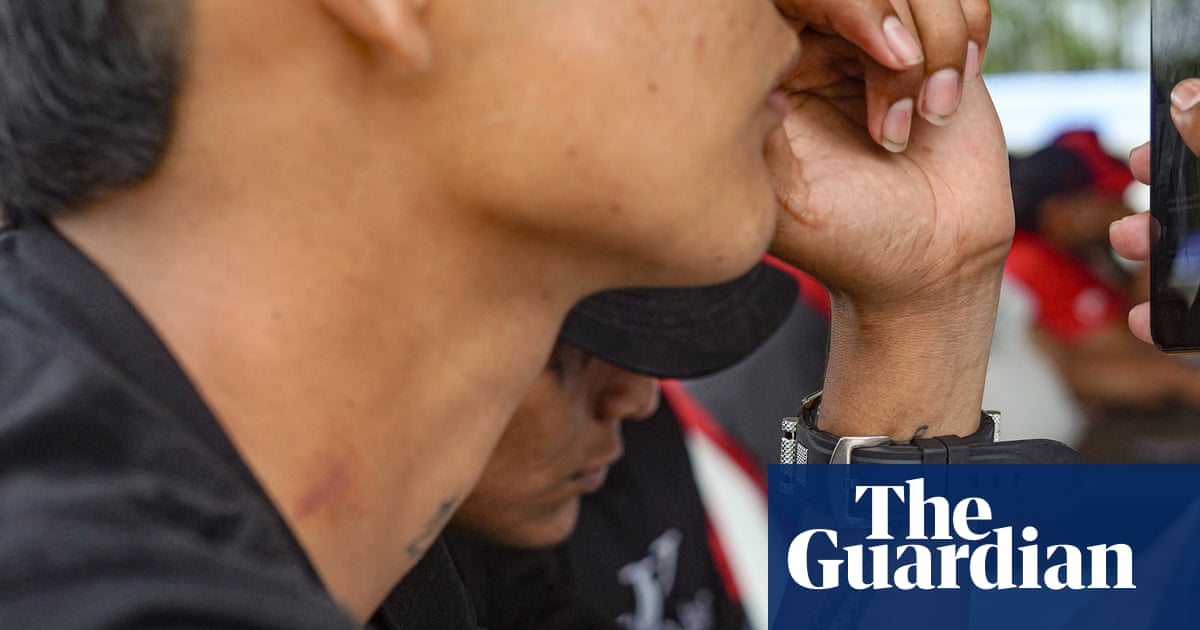
The former combatants are currently housed in a temporary location zone, known as ZUT, where they live under surveillance and cannot leave. The facility consists of beige brick buildings decorated with peace-themed murals painted by the residents themselves. Inside, there is a communal dining hall providing three meals daily, a makeshift gym constructed from metal pipes and cement-filled tins, and an improvised football pitch. Despite these amenities, most residents spend their days using mobile phones, waiting for clarity on their transition to civilian life. Soldiers guard the perimeter less than a mile away, ensuring no weapons enter the compound.
Natalia Bríñez, a 29-year-old former fighter with a phoenix tattoo symbolizing her rebirth, describes the situation as limbo. She is one of thirteen women in the group and has been separated from her seven-year-old daughter and ten-year-old son since arriving at the ZUT. While she communicates with them via video calls, physical reunification is prohibited until her transition process is complete. This process was supposed to include vocational training, psychosocial support, and monthly financial aid of approximately £425. However, payments have not been made, leaving some residents to plan alternative income sources, such as a chicken-rearing business, while they wait.
The legal framework protecting these ninety-nine individuals is precarious. Under Petro’s decree, arrest warrants against them are suspended, and they remain under state protection until December 25. However, De la Espriella retains the authority to revoke this decree at any time. The new president has repeatedly stated that his government will no longer engage in peace agreements and has not responded to requests for comment regarding the ZUT residents. This silence has heightened anxiety among the former fighters, who fear they may be targeted by the administration’s renewed military campaign.
Armando Novoa, the official who led peace negotiations with the group before resigning, warns of severe consequences if the new government acts against them. He suggests that closing the ZUT and launching a military operation to capture or kill unarmed individuals would constitute a crime against humanity. Novoa’s office, the High Commissioner for Peace, has been absorbed into the newly created National Security Commission, a move expected to result in over 200 job losses. This structural shift underscores the administration’s pivot from diplomacy to security enforcement.
The ninety-nine fighters represent only a fraction of the Commandos of the Frontier, a group of about 1,000 combatants most of whom remain armed. They are part of the National Coordinator of the Bolivarian Army (CNEB), a former Farc dissident faction with approximately 2,500 members that controls the border with Ecuador. The Petro administration had indicated that negotiations were ongoing with other CNEB members, who published an open letter expressing willingness to continue talks with De la Espriella. It remains unknown whether the president has responded to this overture.
Tensions have escalated further with the extradition of Geovany Andrés Rojas, known as Araña, the CNEB’s chief peace negotiator. Rojas had been in custody since February under a U.S. extradition request for drug trafficking, a process Petro had delayed. De la Espriella ordered the extradition shortly after taking office, signaling a decisive break from previous policies. As the new administration consolidates its hardline approach, the fate of the ninety-nine disarmed fighters remains unresolved, highlighting the human cost of Colombia’s shifting political landscape.
Sources behind this briefing
Go to the original reporting
- The Guardian US↗They laid down arms. Now ex-guerrillas in Colombia fear fate under new hardline president

