The short version
- Smallholder farmers in San Pablo are replacing coca cultivation with oil palm production due to government subsidies and reduced violence.
- The transition has improved local economic stability and safety, though experts warn of potential environmental risks from monoculture practices.
- New presidential leadership supports the crop substitution policy while appointing conservation-focused officials to oversee environmental impacts.
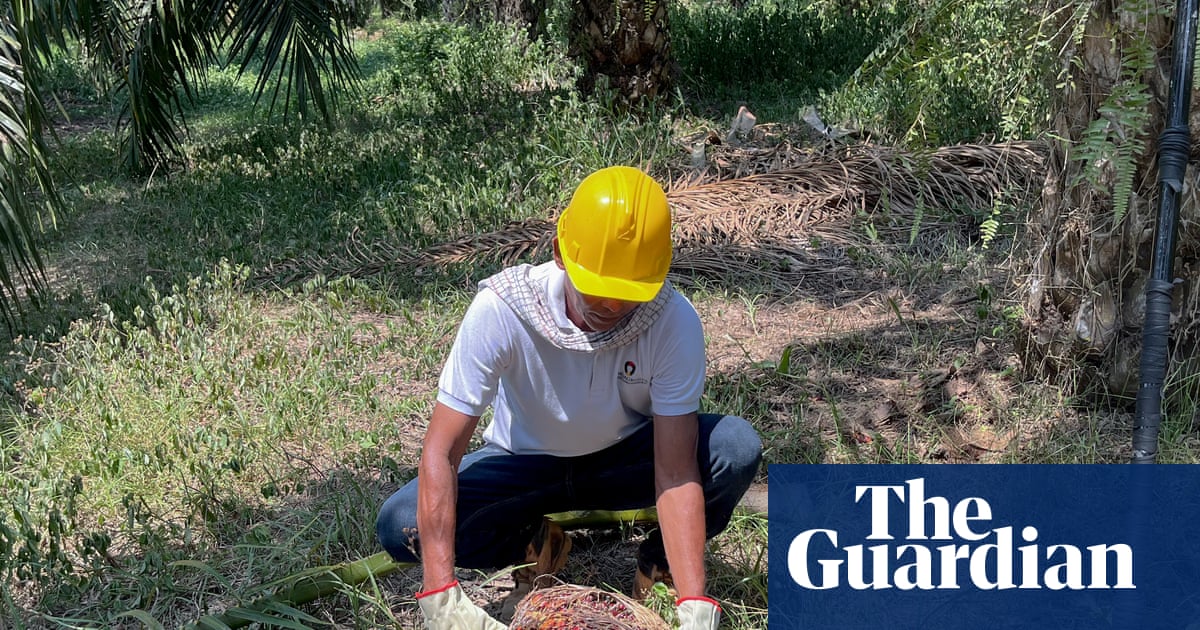
In the village of Caño Barbú, near San Pablo in northern Colombia, Yoger Payares works among towering oil palm trees, using a traditional pole-mounted tool to harvest fruit. This scene represents a significant departure from his life over the past decade, when he cultivated coca leaves just yards away. Payares entered the illicit drug trade in 1990 after leaving cattle farming, driven by the lucrative nature of the coca market and the lack of viable alternatives for local growers.
The region has historically been plagued by violence stemming from conflicts between armed groups such as the Revolutionary Armed Forces of Colombia – People’s Army (Farc) and the National Liberation Army (ELN), later exacerbated by the drug trade. Payares recalls a period defined by fear, where farmers worried about armed factions discovering their sales to rival buyers. He cites personal losses, including the killing of a police-officer cousin and the kidnapping of a neighbor’s son, as evidence of the dangers inherent in coca cultivation.
Colombian public policy has aimed to replace coca plantations with legal crops since 1995. Recently elected President Abelardo de la Espriella, known for his hardline stance against armed groups and opposition to predecessor Gustavo Petro’s peace talks, has announced intentions to maintain this substitution strategy. His administration promotes cacao and oil palm as primary alternatives, leveraging subsidies, technical support, and tax discounts to encourage farmers to leave the illicit economy.
For Payares, the shift to oil palm on his 11-hectare farm has brought tangible improvements in safety and prosperity. He describes a calmer daily existence, free from the constant threat of violence that characterized his years growing coca. The financial stability provided by palm oil has allowed him to purchase a house and a truck, and has funded university education for two of his children. These personal gains reflect broader trends among smallholders in San Pablo, where approximately 275 farmers now grow oil palm out of a population nearing 30,000.
Camilo Santos, deputy director of market transformation for Latin America at the Roundtable on Sustainable Palm Oil, notes that nearly 90% of oil palm growers in San Pablo are independent smallholders. He attributes the revitalization of the local economy to these farmers, who have created jobs, improved food security, and attracted workers from neighboring regions. Oil palm has become the most significant source of income for the area, offering a stable alternative to the volatile and dangerous coca trade.
On a national scale, Colombia remains the largest oil palm producer in Latin America. According to the National Federation of Oil Palm Growers, the country planted 609,142 hectares of palm oil in 2024, representing a 2.2% increase from the previous year. Arturo Garcia, a project manager at consultancy Econometria, highlights that oil palm, alongside coffee, covers the largest planted area in Colombia. As a permanent tropical crop, it competes primarily with Indonesia and Malaysia, countries that have reportedly reached their production peaks.
Despite the economic benefits, the surge in palm oil production raises concerns about environmental sustainability. Garcia points out that palm oil cultivation can lead to deforestation, loss of biodiversity, and greenhouse gas emissions through forest clearing and peatland draining. While some studies suggest palm oil is relatively land-efficient, the monoculture nature of the crop poses risks, including the ease of pest spread and vulnerability to falling international prices. These factors could impact long-term food security and income stability for farmers.
The new administration’s approach includes a bioeconomy plan aimed at developing agro-industry, which has generated hope among smallholders. Although President de la Espriella supports fossil fuels and pesticides, the appointment of Fabio Arjona, a marine biologist and former conservation leader, as environment minister signals a potential balance between production and conservation. Garcia describes the commitment to sustainable oil palm as a strong and likely irreversible trend, suggesting that satellite monitoring and environmental certifications may help mitigate some ecological impacts.
Sources behind this briefing
Go to the original reporting
- The Guardian US↗‘We now live without this violence’: the Colombian farmers giving up coca for palm oil

