The short version
- A 7.4 magnitude earthquake struck western Colombia, killing at least 224 people and leaving thousands missing as rescue operations continue in heavily damaged cities.
- President Abelardo de la Espriella declared a state of emergency and deployed military forces to prevent looting, marking his first major test since taking office days earlier.
- Analysts note that Colombia’s institutional response appears more organized than Venezuela’s recent disaster management, despite concerns about the new administration's political direction.
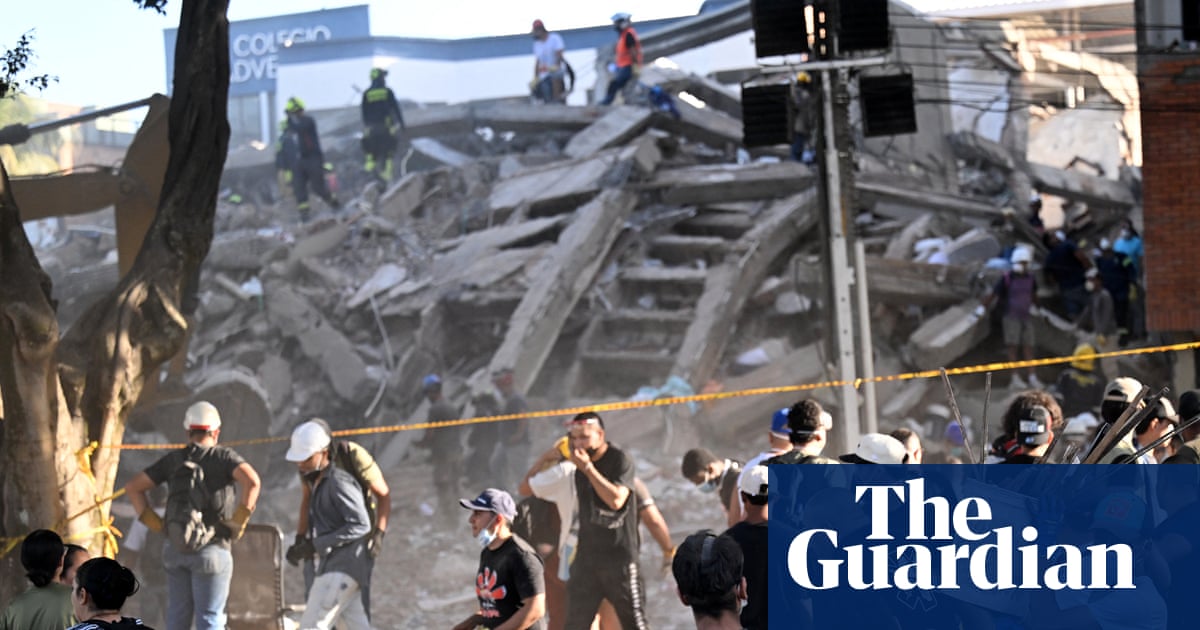
Rescue operations are intensifying across western Colombia following a powerful 7.4 magnitude earthquake that struck on Monday morning, claiming at least 224 lives and leaving approximately 3,000 people unaccounted for. The seismic event, which occurred at 7:34 am local time, has caused widespread destruction in the region’s urban centers, particularly in Cali and Pereira. Emergency crews are working through the night to extract survivors from collapsed structures, with firefighters in Cali reporting they pulled a man from the rubble nearly twenty-four hours after the initial shock. The urgency of the mission is underscored by officials who emphasize that every minute is critical for survival amidst the debris.
Cali, Colombia’s third-largest city, has emerged as one of the hardest-hit areas. Local authorities report that forty buildings have completely collapsed in the metropolitan area, with emergency responders managing to rescue thirty-seven individuals from the wreckage. In a separate incident, civilians assisted in pulling at least five survivors from a partially destroyed hotel. However, the human toll remains starkly visible on city streets, where bodies covered by sheets lie near disaster zones. The mayor of Cali, Alejandro Eder, addressed the city’s 2.3 million residents via television, urging unity and resilience as the community grapples with the immediate aftermath of the catastrophe.
The political leadership in Colombia is facing its first significant crisis under new management. President Abelardo de la Espriella was sworn into office only days before the earthquake, having won power on a platform focused on cracking down on illegal armed groups. Despite his lack of prior governing experience, De la Espriella has moved quickly to coordinate the national response. He declared a state of emergency and personally traveled to affected regions, including the department of Chocó and later Cali. The president stated that five thousand homes had been destroyed in the Valle del Cauca department alone, with 188 people missing in that specific area.
To maintain order amidst the chaos, more than one thousand troops have been mobilized to the disaster zones. This military deployment comes amid reports of looting in some areas, prompting officials to prioritize public security alongside rescue efforts. De la Espriella has dispatched teams led by various cabinet ministers to the worst-affected locations to ensure a coordinated federal response. Government officials have provided regular updates on the situation, aiming to maintain transparency during the crisis. The president is scheduled to travel to Pereira, another severely impacted city, to oversee relief operations directly.
Pereira, located roughly 130 miles north of Cali, is also experiencing severe devastation. At least fifty-eight buildings have collapsed in this city, with reports indicating that fifty-three people remain trapped in the ruins. Local media outlets confirm eleven missing persons in Pereira, while at least sixty-six deaths have been verified. The mayor of Pereira, Mauricio Salazar, appeared visibly distressed during press briefings, describing the situation as historic and difficult. He highlighted the strain on local healthcare systems, which are struggling to manage the influx of injured patients arriving from the disaster sites.
This earthquake marks Colombia’s deadliest seismic event since a 6.2 magnitude quake in January 1999, which killed over one thousand people in the same western coffee-growing region. The current disaster poses an immediate and severe challenge to De la Espriella’s administration, testing its capacity to manage large-scale emergencies. While the new president is a far-right populist with no previous political experience, his government’s initial reaction has been characterized by rapid mobilization and direct engagement with affected areas. Critics who had voiced concerns about potential authoritarian tendencies under his leadership are now observing how democratic institutions respond to the crisis.
The response in Colombia stands in sharp contrast to the handling of recent earthquakes in neighboring Venezuela. In June, twin quakes struck Venezuela’s north coast, killing at least 6,300 people and drawing widespread criticism for the government’s lethargic initial reaction. Survivors in Venezuela reported that officials and troops were absent during the critical first seventy-two hours, leaving civilians to dig victims from rubble themselves. Experts attribute this disparity to Venezuela’s prolonged authoritarian rule under Nicolás Maduro, which has eroded institutions, media freedom, and civil society. In contrast, Colombia remains a vibrant multiparty democracy with strong institutional frameworks.
Christopher Sabatini, a senior fellow for Latin America at Chatham House, noted that these differing political systems explain the dramatically different disaster responses. While Venezuela’s acting leaders faced accusations of incompetence and mismanagement, Colombia’s government has demonstrated proactive organization. De la Espriella’s administration has maintained open communication channels and deployed resources efficiently, leveraging existing democratic structures to coordinate relief efforts. As rescue operations continue, the effectiveness of this response will likely influence public perception of the new government’s competence and commitment to citizen safety.
Looking ahead, the focus remains on locating missing persons and providing shelter for displaced families. The destruction of thousands of homes means that long-term recovery will require significant resources and planning. International aid groups may soon play a larger role as the immediate rescue phase transitions into reconstruction. For now, the priority is saving lives in the remaining pockets of trapped survivors. The coming days will determine whether the initial organizational success can be sustained as the scale of the disaster becomes fully apparent.
The earthquake has also highlighted vulnerabilities in urban infrastructure across western Colombia. Many collapsed buildings were older structures that may not have met modern seismic standards. This tragedy is likely to spark debates about building codes and urban planning reforms in the future. However, immediate concerns center on humanitarian needs. Hospitals are overwhelmed, supply chains are disrupted, and communities are grieving significant losses. The resilience of Colombian institutions will be tested not just in the rescue phase, but in the months of recovery that lie ahead.
Sources behind this briefing
Go to the original reporting
- The Guardian US↗‘Every minute counts’ as rescuers race to find survivors after deadly Colombia earthquake

