The short version
- France and Germany have officially terminated their collaborative sixth-generation fighter jet program after years of disputes over leadership and technical specifications.
- Germany faces uncertainty regarding its future air capabilities, potentially becoming a secondary partner in the UK-led Global Combat Air Programme rather than leading its own project.
- The failure highlights broader difficulties in European defense integration, with economic constraints making multiple competing national programs unsustainable for the continent.
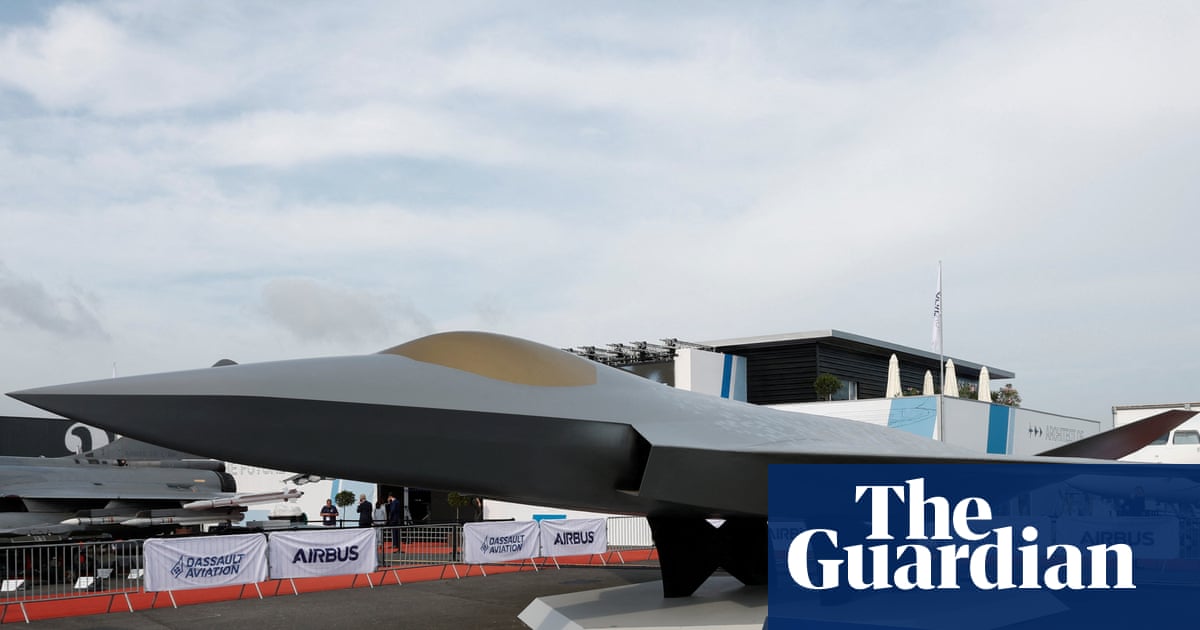
The ambitious effort by France and Germany to jointly develop a next-generation fighter jet has ended, marking a significant setback for European defense integration. Leaders from both nations were compelled to cancel the Future Combat Air System in June, bringing an abrupt halt to a partnership that had been under negotiation since 2018. This dissolution leaves the continent’s air defense strategy in disarray, challenging earlier prescriptions by figures such as former Italian Prime Minister Mario Draghi, who argued that shared costs and technologies among allies were essential for Europe to compete economically with the United States and China.
The immediate consequence is a divergence in national strategies. France appears prepared to proceed independently, with Dassault Aviation expressing determination to develop a new combat jet either alone or with limited partners. The company’s chief executive has indicated a goal of flying a demonstrator model by 2031. In contrast, Germany finds itself without a clear path for its own sovereign aircraft program. Berlin may instead be relegated to the role of a secondary customer within the Global Combat Air Programme, a rival initiative led by the United Kingdom, Italy, and Japan.
The breakdown was driven by deep-seated industrial and technical disagreements. Tensions between France’s Dassault Aviation and Germany-based Airbus Defence and Space centered on which entity would lead the program. Furthermore, conflicting operational requirements emerged: France reportedly sought a smaller aircraft capable of operating from its aircraft carriers, while Germany, lacking carrier capabilities, had different priorities. The final decisive blow came recently when Safran, the French engine manufacturer, announced it would terminate its joint engine development efforts with Germany’s MTU Aero Engines.
Industry experts warn that this fragmentation could lead to an inefficient proliferation of competing European fighter programs. One defense executive noted that while it is not impossible for up to three distinct European jets to emerge if Germany attempts to build a rival to the UK-led program, such an outcome would be far from ideal. Consultants in the sector argue that there is no viable market order book to support multiple large-scale projects simultaneously. Economies of scale are critical for fighter jet programs, which typically require hundreds of units to be considered financially successful.
The economic reality of modern defense manufacturing makes consolidation necessary. A benchmark for success in industrial terms involves producing approximately 600 aircraft, a volume that far exceeds the capacity of any single European air force. For context, France currently operates 228 Rafale fighter jets according to data from the International Institute for Strategic Studies. The strained economics suggest that even two competing European fighters might be difficult to sustain, let alone three.
Historical parallels underscore the recurring nature of these challenges. In the early 1980s, European nations attempted a similar joint effort for fourth-generation fighters involving France, Italy, Spain, West Germany, and Britain. Disputes over workshare distribution and final product capabilities eventually caused France to withdraw. Dassault subsequently built the Rafale independently, while the remaining four countries continued developing the Eurofighter Typhoon, which entered service decades after its initial conception.
Technical skepticism also surrounds France’s independent ambitions. Some industry observers doubt that Dassault can achieve the advanced stealth characteristics required for true sixth-generation status without a complete redesign. Critics suggest the result might resemble an upgraded Rafale with improved radar, weaponry, and digital systems rather than a cutting-edge platform. However, even an enhanced version is expected to integrate with stealth drones, addressing one aspect of modern air combat.
Broader questions about the future of crewed aircraft loom over all these developments. Military planners in Europe, as well as in the United States and among GCAP partners, are grappling with whether manned fighters will remain relevant by the time they enter service around 2035. The current industry consensus leans toward maintaining crewed platforms, but the rapid advancement of artificial intelligence and drone swarms introduces uncertainty. Meanwhile, political debates continue elsewhere; in the UK, discussions over defense spending targets and ministerial resignations reflect ongoing fiscal pressures.
As the dust settles on the Franco-German collapse, the path forward remains unclear. The failure to collaborate at this critical juncture risks leaving Europe dependent on external suppliers or fragmented into smaller, less efficient national programs. With the US developing its own sixth-generation fighter and global competition intensifying, the inability to present a unified European front may have long-term strategic implications for the continent’s security and industrial base.
The coming months will likely see Germany finalize its position within the GCAP framework while France accelerates its independent timeline. Whether these separate paths can coexist without further straining European defense budgets or duplicating efforts remains an open question. The episode serves as a stark reminder of the difficulties inherent in multinational defense cooperation, where political ambitions often clash with industrial realities and technical constraints.
Sources behind this briefing
Go to the original reporting
- The Guardian US↗Europe’s fighter jet plans are in disarray. What happens next?

