The short version
- CIA Director John Ratcliffe made a rare, unannounced trip to Moscow for meetings with Russian intelligence officials.
- The Kremlin confirmed the contacts but stated President Putin did not meet with Ratcliffe and declined to specify discussion topics.
- Analysts view the visit as unusual given the current diplomatic freeze and stalled peace negotiations between Russia and Ukraine.
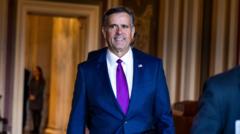
In a significant departure from recent diplomatic norms, CIA Director John Ratcliffe traveled to Moscow for an unannounced visit, marking one of the highest-level American engagements with Russian officials during President Donald Trump’s second term. The Kremlin confirmed that Ratcliffe held contacts with Russian intelligence services but explicitly stated that no meeting took place with President Vladimir Putin. This development occurs against a backdrop of profound strain in bilateral relations, characterized by international isolation for Moscow and ongoing economic sanctions imposed by Western nations.
Dmitry Peskov, the press secretary for the Russian president, addressed the visit during a daily briefing, confirming that intelligence-level contacts occurred while refusing to elaborate on their substance. When asked about the specific topics discussed or whether Putin was immediately briefed on the details, Peskov offered limited information, noting only that the president is informed of all such events. He characterized these intelligence exchanges as a positive phenomenon that often persists even during periods of intense diplomatic friction between the two countries.
The rarity of such high-level, unannounced visits underscores the unusual nature of this diplomatic maneuver. The last time a CIA director visited Moscow was in November 2021, when William Burns traveled to warn Russia against sending troops into Ukraine. That visit occurred just weeks before the Kremlin launched its full-scale invasion, which has since dominated global geopolitical dynamics and led to a severe deterioration in US-Russia ties. Since that time, direct communication channels between top officials have been largely severed or restricted to lower-level technical exchanges.
Experts suggest that the timing and secrecy of Ratcliffe’s trip may indicate an attempt to open new lines of communication or address urgent security concerns. John Foreman, a former British military attaché in Moscow, noted that American officials typically do not send senior personnel on short-notice, unannounced missions unless there is a specific operational or strategic imperative. The lack of prior announcement contrasts sharply with standard diplomatic protocols, which usually involve extensive coordination and public signaling to manage expectations and mitigate misinterpretations.
The visit coincides with reports that US-led peace talks between Russia and Ukraine have stalled, raising questions about whether this engagement represents a new effort to break the deadlock. Ahead of Ratcliffe’s arrival, the United States reportedly informed Kyiv that a senior delegation was traveling to Moscow and requested that Ukraine suspend strikes until the team departed. This request highlights the delicate balancing act Washington faces in maintaining support for Ukraine while exploring potential diplomatic avenues with Russia.
Despite the confirmation of intelligence contacts, the Kremlin has been cautious about attributing any immediate significance to the meeting. Peskov stated it was premature to assess how this interaction might influence the broader process of repairing bilateral relations, which remain in a deep crisis. The refusal to provide details on the agenda or outcomes suggests that both sides are managing expectations carefully, avoiding public commitments that could be exploited politically or undermine ongoing negotiations.
The absence of a meeting with Putin further complicates the interpretation of this visit. While intelligence agencies often maintain backchannel communications regardless of political tensions, the involvement of the CIA director—a figure closely tied to national security strategy—implies a level of seriousness beyond routine operational coordination. However, without direct engagement at the presidential level, it remains unclear whether this step will lead to substantive policy shifts or serve primarily as a confidence-building measure.
As of now, neither the White House nor the Pentagon has provided detailed commentary on the purpose or results of Ratcliffe’s trip. The CIA has also remained silent, leaving much of the narrative to speculation and analysis from external observers. Given the historical context of failed diplomatic efforts and the current impasse in Ukraine-related negotiations, any progress stemming from this visit would likely be incremental rather than transformative.
Looking ahead, the impact of this engagement will depend on whether it facilitates further dialogue or addresses specific security issues such as nuclear risk reduction or prisoner exchanges. If these contacts prove fruitful, they could pave the way for more structured discussions between US and Russian officials. Conversely, if no tangible outcomes emerge, the visit may be viewed as a symbolic gesture with limited practical significance in resolving the broader geopolitical standoff.
Ultimately, this unannounced trip reflects the complex interplay of diplomacy, intelligence, and strategy in managing one of the most contentious relationships in modern international affairs. While it does not signal an immediate thaw in US-Russia relations, it demonstrates a willingness to explore alternative channels of communication amid persistent challenges. The coming weeks will reveal whether this initiative leads to meaningful engagement or remains an isolated incident in an otherwise frozen diplomatic landscape.
Sources behind this briefing
Go to the original reporting
- BBC News↗CIA chief met Russian intelligence services but not Putin, Kremlin says

