The short version
- Former Premier Zhu Rongji was cremated in Beijing with senior leaders attending a ceremony that avoided public spectacle or released footage.
- State media praised his loyalty while online platforms removed essays and posts that highlighted the openness of his reform era.
- The restrictions reflect historical party anxieties about mourning turning into political protest, similar to events in 1976 and 1989.
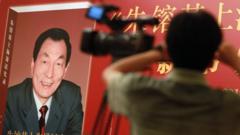
China has moved quickly to contain public expressions of grief following the death of former Premier Zhu Rongji, balancing official state honors with strict digital censorship. Zhu, who passed away at age ninety-seven after an illness, was cremated in Beijing on Tuesday at the Babaoshan Revolutionary Cemetery. This site serves as the final resting place for high-ranking officials and other prominent figures within the Communist Party hierarchy. The ceremony itself was deliberately low-key, attended by current President Xi Jinping, incumbent Premier Li Qiang, and former President Hu Jintao, among others. No video footage of the event has been made available to the public, marking a stark departure from the more visible state funerals of the past.
While flags at government sites were lowered to half-mast and security vehicles secured key areas in Beijing, the tone of the mourning was tightly controlled. State media outlets described Zhu as an outstanding member of the party and a loyal fighter who had been tested by time. These official characterizations emphasize his dedication to the Communist cause rather than his specific policy achievements or personal style. The absence of public spectacle suggests a strategic effort to prevent the funeral from becoming a focal point for broader political commentary or dissent.
The digital landscape reflected this caution even more sharply. Online posts commemorating Zhu were systematically removed, including an essay by economist Zhao Jian that had gone viral before its deletion. Zhao’s writing contrasted the era of Zhu’s premiership with the present day, describing a time when people felt they had a clear future despite being materially poorer. He noted the absence of smartphones and anxiety-inducing short-form videos, recalling a slower pace of life where citizens felt free to speak their minds. Such reflections on social openness and economic trajectory were deemed sensitive enough to warrant immediate removal from platforms like WeChat.
This crackdown on digital mourning underscores long-standing party fears regarding public gatherings and expressions of grief. Historical precedents loom large in Beijing’s calculus; the deaths of former Premier Zhou Enlai in 1976 and General Secretary Hu Yaobang in 1989 both triggered widespread outpourings of sorrow that eventually evolved into political protests. The leadership remains wary that nostalgia for past leaders can easily morph into veiled criticisms of current governance. By suppressing online tribals, authorities aim to keep the focus on Zhu’s official role as a loyal party member rather than allowing his legacy to become a symbol for alternative political visions.
Zhu served as premier from 1998 to 2003, a period defined by aggressive economic reforms and China’s integration into the global trading system. During his tenure, the country shut down unprofitable state-owned enterprises, dismantled the traditional housing allocation system in favor of a commercial property market, and weathered the Asian financial crisis. His administration also oversaw China’s entry into the World Trade Organization in 2001. These structural changes laid the groundwork for decades of rapid growth, but they also involved significant social disruption and pain for many citizens who lost jobs or security.
Beyond policy, Zhu is remembered by many Chinese citizens for his candid communication style and deadpan humor, which stood in sharp contrast to the carefully choreographed demeanor of today’s leadership. He was known for blunt assessments, such as describing flood defenses along the Yangtze River as flimsy and comparing rogue bankers to half-wits. In a 1999 news conference with then-U.S. President Bill Clinton, Zhu deflected allegations of political donations with a wry remark about the inefficiency of spending billions on influence peddling. This approachability resonated with the public, creating a sense of connection that current leaders have largely abandoned in favor of more rigid protocol.
The timing of Zhu’s death adds another layer of complexity to the current political atmosphere. He died just days before the Communist Party leadership gathered to commemorate the birth centenary of Jiang Zemin, who served as party chief and president during much of the same era as Zhu. The simultaneous remembrance of these two figures has sparked a wave of nostalgia among some Chinese people for a period when the country appeared more open to the world and allowed greater personal freedom. This sentiment highlights a growing disconnect between the current administration’s emphasis on control and the public’s memory of a more dynamic, albeit chaotic, reform era.
As China moves forward, the handling of Zhu’s death signals a continued prioritization of stability over openness. The leadership seems determined to prevent any resurgence of the political activism that characterized previous mourning periods. By keeping the funeral private and censoring online discussions, the state aims to close the chapter on the 1990s reform era without allowing it to serve as a critique of present-day policies. The contrast between Zhu’s pragmatic, outspoken style and Xi Jinping’s more centralized approach remains evident, even if it is no longer permitted to be discussed openly in public forums.
What comes next for China’s political narrative remains uncertain, but the suppression of grief suggests that the party will continue to monitor public sentiment closely. The legacy of Zhu Rongji may remain a quiet point of reference for those who remember the rapid changes of the early twenty-first century, but it is unlikely to be celebrated in official channels. Instead, his contributions will likely be absorbed into the broader history of the Communist Party’s economic successes, stripped of the personal charisma and candidness that made him popular with ordinary citizens. The state’s message is clear: loyalty to the party supersedes individual legacy.
Sources behind this briefing
Go to the original reporting
- BBC News↗China censors public mourning as it holds former premier's funeral

