The short version
- Chiltern Railways has officially entered public ownership, becoming the sixth train operator nationalised under the current government's broader strategy to renationalise major passenger rail services.
- The Department for Transport promises significant service enhancements, including additional daily trains and thousands of extra seats, aimed at reducing overcrowding on the London-Birmingham corridor.
- Labor tensions persist as unions oppose driver-only operations, with potential strikes looming despite the government's push to integrate these assets into the new Great British Railways framework.
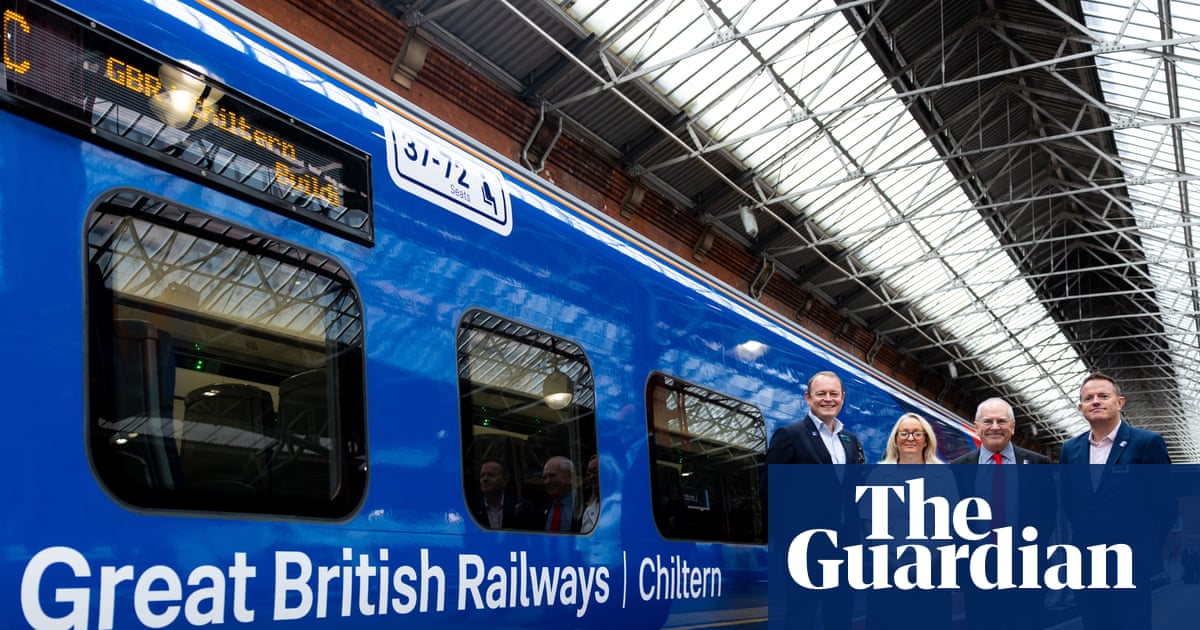
Chiltern Railways has officially transitioned into public ownership, marking a significant milestone in the current administration’s campaign to renationalise the United Kingdom’s major passenger rail networks. The operator, which manages commuter services along the Chiltern mainline connecting London Marylebone to Birmingham, is now the sixth entity to be brought under state control since 2025. This move aligns with legislative efforts passed in 2024 that authorized the government to reclaim private train operations as their contracts expire or allow for transfer.
The Department for Transport framed the acquisition as a critical step toward resolving long-standing issues of reliability and capacity. Officials stated that public ownership would enable the elimination of what they described as the daily frustration of overcrowding. The agency outlined a comprehensive improvement package designed to benefit passengers, featuring increased service frequency, additional seating capacity, the introduction of new rolling stock, and upgrades to station infrastructure and onboard amenities such as wireless internet connectivity.
Specific operational changes are scheduled to begin in December, with the addition of twenty-five daily services across the Chiltern network. These enhancements are expected to provide approximately ten thousand extra seats on weekdays, facilitated by the deployment of newer trains. The government views this expansion as essential for meeting growing demand and improving the overall travel experience for commuters who rely on this corridor for daily transit between major urban centers.
Peter Hendy, the rail minister, emphasized that each transfer into public ownership presents an opportunity to address fundamental concerns regarding frequency, comfort, and punctuality. He noted that while the establishment of Great British Railways will not occur overnight, the ultimate goal is to create a trusted, integrated railway system that supports economic growth, job creation, and housing development. The integration aims to unify the four operators already in public ownership with Network Rail under a single body.
Tony Baxter, the interim managing director of Chiltern Railways, acknowledged the transition as a continuation of progress driven by years of planning and dedication from staff. He suggested that public ownership would strengthen this momentum through closer collaboration across the industry. The shift is intended to streamline operations and align incentives with passenger needs rather than private profit margins, according to official statements.
The transfer also opens a new chapter for the East West Rail project, which was originally slated to launch under Chiltern’s management on a completed section of the future Oxford-Cambridge line. The Department for Transport indicated that public ownership provides a fresh opportunity to deliver these long-awaited services. However, uncertainty remains regarding specific start dates for connections between Oxford and Milton Keynes, as various logistical and political factors continue to influence the timeline.
Labor relations present a significant challenge to the smooth implementation of these changes. The RMT union has announced demonstrations outside London Marylebone station and is balloting members for potential strike action. The dispute centers on government-backed plans for driver-only operations, which unions oppose due to safety and staffing concerns. This conflict threatens to undermine the government’s efforts to demonstrate the immediate benefits of publicly owned railways.
Looking ahead, Great Western Railway is scheduled to be the next operator to transfer into public ownership in December. The remaining four operators are expected to follow by the end of 2027, completing the administration’s ambitious nationalisation agenda. As the government seeks to prove the efficacy of state-run rail services, it must navigate both operational upgrades and ongoing industrial disputes that could impact service reliability during this transitional period.
The broader implications of these transfers extend beyond individual routes, affecting the entire structure of British rail transport. By consolidating operations under Great British Railways, the government aims to create a more cohesive and accountable system. Critics and supporters alike will be watching closely to see whether public ownership delivers on its promises of improved service and reduced costs, or if it inherits the same structural challenges that plagued the previous private operators.
As the dust settles on the Chiltern transfer, attention turns to how quickly tangible improvements will materialize for passengers. The introduction of new trains and additional services in December will serve as an early test case for the government’s strategy. Success or failure in this initial phase could set the tone for the remaining transfers and influence public perception of the nationalisation project as a whole.
Sources behind this briefing
Go to the original reporting
- The Guardian World↗Chiltern Railways enters public ownership in Labour nationalisation push

