The short version
- Boehly and Walter sold their shares after four years, realizing gains despite the club's poor league finishes and record financial losses.
- The transaction underscores a broader trend in American-style sports capitalism where ownership is treated as a short-term investment vehicle rather than stewardship.
- Chelsea spent billions on player acquisitions that have significantly depreciated in value, yet the owners profited from the overall increase in club valuation.
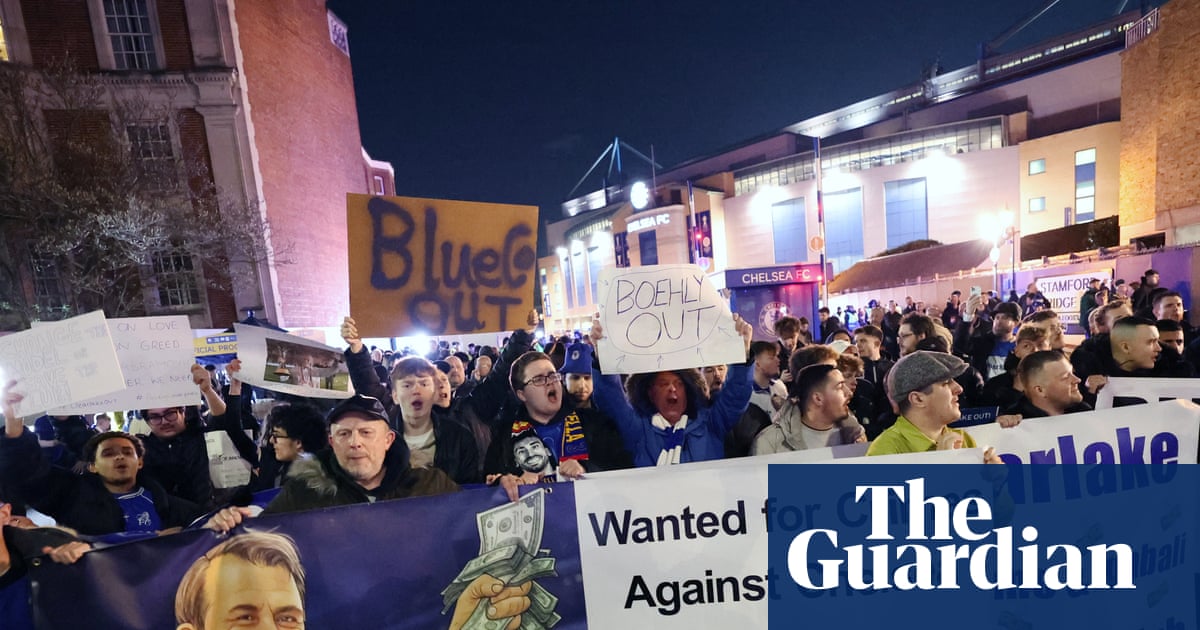
Todd Boehly and Mark Walter have exited their roles as primary stakeholders in Chelsea Football Club, selling their shares to Clearlake Capital. The transaction marks the end of a four-year period defined by significant financial investment but limited sporting success. Despite the club’s struggles on the pitch and its record-breaking pre-tax losses, the departing owners are leaving with a profit. This outcome illustrates a growing dynamic in professional sports where ownership is increasingly viewed as a financial asset to be traded rather than a community institution to be stewarded.
The sale reflects a substantial increase in the club’s valuation. Boehly and Walter originally acquired their stakes when the group purchased the club from Roman Abramovich in May 2022, with the entity valued at approximately $3.3 billion. They have now sold their 12.8 percent shares at a valuation of roughly $6.7 billion. This doubling of value occurred despite a period that saw Chelsea finish as low as tenth and twelfth in the Premier League table. The financial gain for the owners stands in stark contrast to the operational challenges faced by the football department.
During this ownership tenure, Chelsea invested heavily in player acquisitions. Reports indicate spending of about $2.37 billion on sixty new players. However, the current market value of the first-team squad is estimated at only $1.23 billion. This discrepancy highlights a strategy focused on buying young talent with the expectation of future resale profits, a model that has not yet yielded positive returns in terms of asset retention or competitive performance. The club also experienced significant managerial instability, cycling through five permanent and four interim managers after the departure of Thomas Tuchel.
The financial structure of the ownership group allowed for these losses to be absorbed without jeopardizing the eventual exit strategy. Boehly, Walter, and other investors committed approximately $2.3 billion in capital when they took control. The recent sale allows them to recoup this investment and generate additional returns. Financial analysts note that the exact figures of the profit are less significant than the mechanism by which it was achieved. The owners benefited from the inherent scarcity and brand value of a top-tier English football club, regardless of its immediate sporting performance.
This case exemplifies what some observers describe as late-stage American sports capitalism. In this model, billionaire investors treat sports franchises as ultra-scarce assets that appreciate in value over time. The primary goal is not necessarily to win championships or satisfy fan bases, but to hold the asset until another investor is willing to pay a premium. This approach decouples financial success from sporting achievement, allowing owners to profit even when the team underperforms competitively.
The trend extends beyond Chelsea. Similar patterns have been observed in other major sports leagues where ownership stakes are traded among wealthy individuals or investment firms. The Glazer family’s management of Manchester United serves as a precedent, having leveraged debt to acquire the club and later selling partial stakes for significant profits. These transactions often occur with little regard for the long-term sporting health of the organization, focusing instead on short-term financial optimization.
Critics argue that this model undermines the traditional relationship between clubs and their supporters. Owners in this framework do not see themselves as stewards with a duty to the community or the fans. Instead, they act as temporary holders of financial control, moving assets around to maximize returns. The lack of allegiance to the fan base is evident in decisions that prioritize balance sheet management over competitive investment.
Looking ahead, the impact of this ownership style on English football remains uncertain. While clubs like Chelsea may continue to attract investment due to their global brand recognition, the disconnect between financial gains and sporting results could erode fan trust. The Premier League’s structure, which lacks a salary cap and has limited relegation risk for top-tier clubs, facilitates this speculative approach. As more American-style ownership groups enter the market, the pressure on traditional club values may intensify.
The immediate future for Chelsea involves navigating the transition to new ownership under Clearlake Capital. The club must address its financial losses and rebuild its sporting project while maintaining its commercial appeal. For fans, the departure of Boehly and Walter offers little consolation, as the underlying economic model that allowed them to profit from failure remains intact. The challenge for regulators and league officials will be to determine whether current structures adequately protect the integrity of the sport against purely speculative investment.
Ultimately, the Chelsea case study serves as a warning about the commodification of sports franchises. When clubs are treated primarily as financial instruments, the incentives for long-term stability and competitive excellence diminish. The profit realized by Boehly and Walter is not a reflection of good management but rather of a market that rewards ownership of scarce assets regardless of operational performance. This dynamic poses significant questions about the future sustainability and cultural value of professional sports in an era dominated by high-finance strategies.
Sources behind this briefing
Go to the original reporting
- The Guardian US↗Chelsea have entered the realm of late-stage American sports capitalism | Leander Schaerlaeckens

