The short version
- A section of the ceiling in the Kennedy Center's main hallway collapsed on Friday evening, causing debris to fall onto the red carpet but resulting in no reported injuries.
- Center officials cited the incident as evidence of urgent need for a $250 million renovation and two-year closure, aligning with President Trump’s agenda despite legal challenges.
- A federal judge previously ruled that adding Trump’s name to the building was illegal and blocked the proposed shutdown, setting up continued conflict between the administration and preservation groups.
A structural failure at the John F. Kennedy Center for the Performing Arts has reignited a contentious legal and political dispute over the future of the Washington, D.C., landmark. On Friday evening, a portion of the ceiling in the center’s grand foyer collapsed, sending debris onto the red carpet in a hallway that connects three major performance auditoriums. The incident occurred during stormy weather in the capital, though officials did not explicitly link the collapse to the atmospheric conditions. No injuries were reported following the event.
Roma Daravi, the center’s vice president for public relations, stated that the damage highlights the critical necessity of shutting down the venue for extensive repairs. She characterized the collapse as a direct result of years of deferred maintenance under previous leadership, arguing that there is no valid reason to delay further restoration efforts. The Kennedy Center’s board, which aligns closely with President Donald Trump, has long advocated for a two-year closure to facilitate $250 million in renovations.
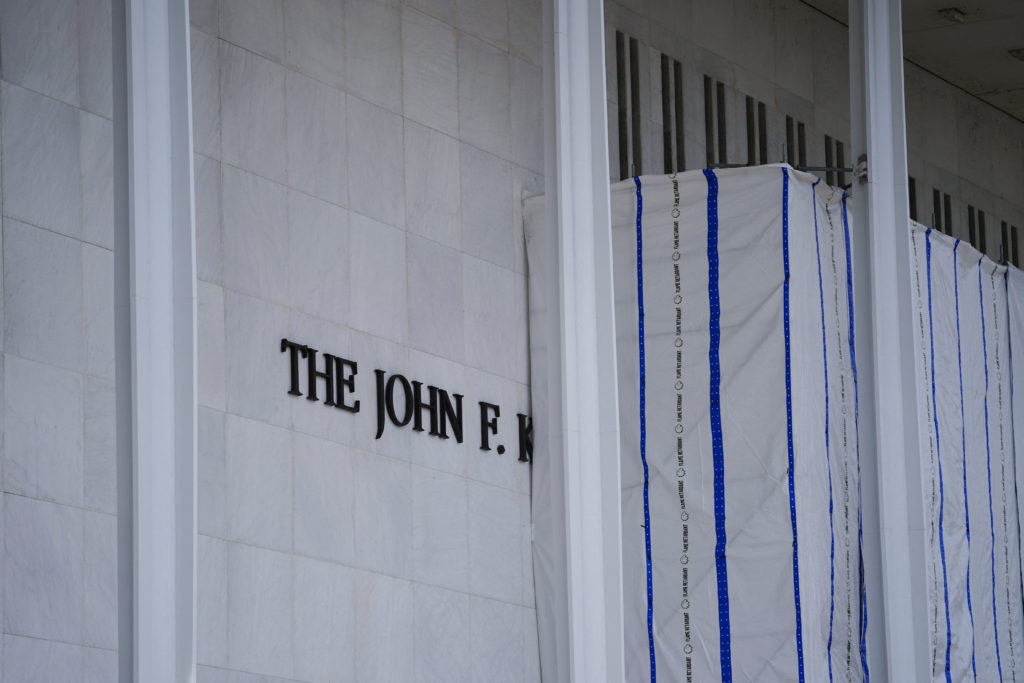
The administration’s push to rename the facility and close it for construction faces significant judicial opposition. In May, U.S. District Judge Christopher Cooper ruled that the addition of Trump’s name to the building’s exterior was illegal and ordered its removal. The judge also issued an injunction blocking the administration from closing the center for renovations. Despite this ruling, the Kennedy Center’s board voted in August to reinstate Trump’s name on the facade, with the proposed inscription reading: 'The John F. Kennedy Center for the Performing Arts Restored and Renovated By President Donald J. Trump.'
Legal arguments surrounding the closure have centered on financial viability. Department of Justice lawyers have contended that without Trump’s name prominently displayed, private donations necessary to fund the renovations would cease. This stance contrasts sharply with the views of community preservation groups. Grace Terpstra, founder of Keep the KC, expressed skepticism regarding the administration’s response to the ceiling collapse. She suggested that board members might exploit what appears to be limited structural damage to justify a complete shutdown, potentially exaggerating the severity of the issue to support their broader agenda.
The controversy at the Kennedy Center is part of a larger pattern of infrastructure changes driven by the Trump administration in Washington. Recent projects include the demolition of the White House East Wing to construct a ballroom and plans for a triumphal arch near Arlington National Cemetery. Additionally, proposals for a renovated golf course along the Potomac River have been advanced. These initiatives reflect a broader strategy to reshape the physical landscape of the nation’s capital during Trump’s second term.
In addition to structural renovations, aesthetic changes at the Kennedy Center have proceeded despite legal hurdles. Last week, the center removed a large stick-figure sculpture known as 'Blue,' which had stood on its grounds since 2019. Created by the late sculptor Joel Shapiro, the piece was taken down without a specific explanation from the center. Officials stated only that they were honored to have served as stewards of the artwork. The removal has drawn attention from critics who view it as part of a systematic effort to alter the cultural identity of the venue.
The immediate aftermath of the ceiling collapse involved securing the affected area and assessing further damage. Photos released by the center showed a large hole in the high ceiling and scattered debris, underscoring the visible deterioration of the facility’s interior. While the incident has provided ammunition for proponents of the renovation plan, it has also intensified scrutiny from opponents who question the timing and motives behind the administration’s actions. The legal battle is expected to continue as both sides prepare for further court proceedings regarding the validity of the board’s decisions.
As the dispute unfolds, the Kennedy Center remains open to the public, though specific areas may be restricted due to safety concerns. The conflict illustrates the broader tensions between federal authority, judicial oversight, and private interests in managing national cultural institutions. With the judge’s previous orders still in effect, the administration faces an uphill battle to implement its vision for the center without violating court mandates. The outcome of this legal struggle could set a precedent for how future administrations handle similar disputes over historic landmarks.
Community reactions have been mixed, with some residents expressing concern over the safety of the building and others criticizing the political maneuvering involved. Preservationists argue that the center’s historical significance should take precedence over political branding efforts. Meanwhile, supporters of the renovation plan emphasize the need for modernization and structural integrity. The situation remains fluid, with no immediate resolution in sight as legal arguments continue to play out in federal court.
Looking ahead, the next steps will likely involve further litigation and potential appeals from either side. The administration may seek to challenge Judge Cooper’s rulings, while preservation groups could push for stricter enforcement of existing orders. Public opinion remains divided, with debates centering on the balance between honoring historical legacy and ensuring modern safety standards. The Kennedy Center’s fate hangs in the balance, serving as a focal point for broader discussions about governance, heritage, and political influence in Washington.
Sources behind this briefing
Go to the original reporting
- PBS NewsHour↗Kennedy Center renews call for Trump-backed shutdown after part of a ceiling collapses

