The short version
- A section of the ceiling in the Kennedy Center's grand foyer collapsed following heavy rain, prompting a temporary closure but causing no injuries.
- Administration officials cite the incident as evidence of urgent deferred maintenance, supporting their plan for a $250 million renovation and two-year closure.
- Preservationists and critics argue the board may exploit the damage to accelerate plans that could result in the building's demolition or significant alteration.
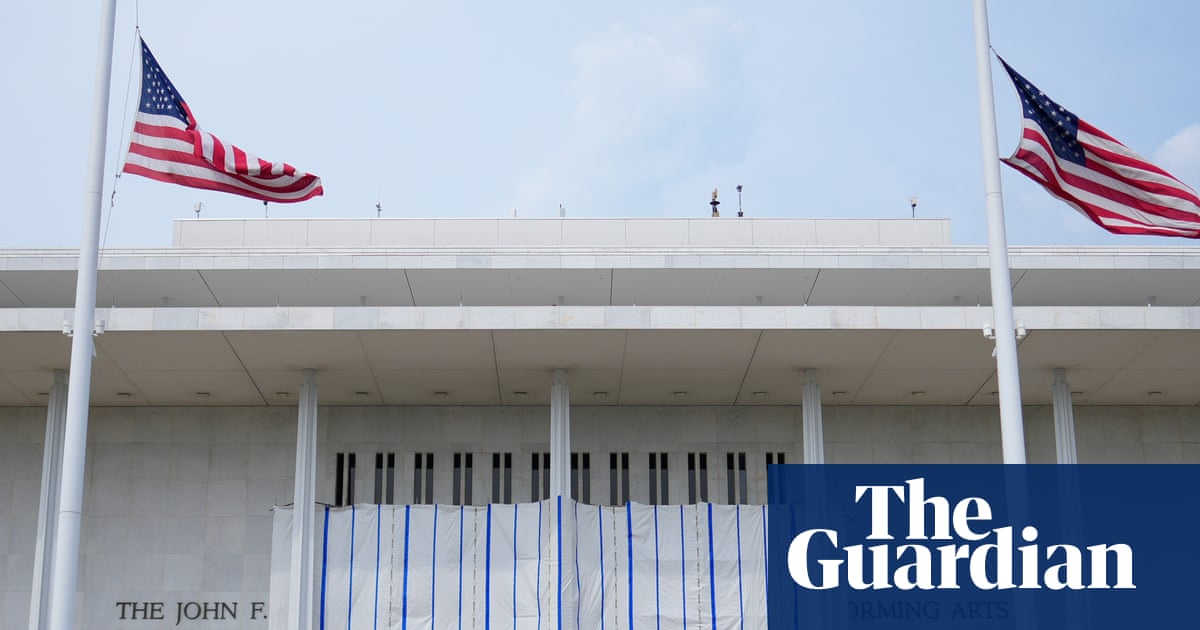
A structural failure at the John F. Kennedy Center for the Performing Arts has reignited a contentious dispute over the future of the Washington, D.C., landmark. On Friday evening, heavy rainfall triggered the collapse of a portion of the ceiling in the building’s grand foyer, sending debris into the public space. Officials temporarily closed the Edward Durell Stone-designed facility to ensure safety, though no injuries were reported. The incident has immediately become a focal point in the ongoing battle between the center’s leadership and preservationists who oppose the proposed extensive renovations.
Kennedy Center administrators moved quickly to frame the collapse as confirmation of their long-standing argument that the building requires immediate and comprehensive intervention. In an online statement, officials described the event as an unavoidable consequence of decades of neglected upkeep. Roma Daravi, the center’s vice-president for public relations, characterized the debris fall as further proof that a temporary shutdown is necessary for revitalization efforts championed by President Donald Trump. This narrative aligns with a broader second-term agenda to reshape key Washington landmarks, including projects involving the White House ballroom and the Lincoln Memorial reflecting pool.
The proposed renovation plan involves closing the center for two years while executing $250 million in repairs. A significant component of this initiative is the addition of President Trump’s name to the building’s facade. The board voted earlier this month to inscribe text crediting the president for restoring and renovating the arts center by September 8. Furthermore, if a dedicated renovation fund reaches $100 million, an additional inscription acknowledging the 'Trump Kennedy Center Fund' would be added. Congress has already approved $257 million for the project, with the administration seeking an additional $500 million through private donations.
Legal challenges have already complicated these efforts. A federal judge recently expressed skepticism regarding the center’s intention to return Trump’s name to the building. The district court had previously blocked the renovations, ruling that the president’s name had been added illegally and ordering its removal. Administration attorneys have countered that without the political capital associated with Trump’s name, the center would struggle to secure the necessary funding for repairs. They argue that a failure to proceed with the current plan could lead to further deterioration, potentially rendering the structure unsafe and necessitating its demolition.
The stakes of this dispute extend beyond mere cosmetic changes or maintenance schedules. Critics warn that the proposed renovations could serve as a precursor to more radical alterations or even the complete removal of the existing building. Some proposals have suggested replacing the center with a large outdoor amphitheater overlooking the Potomac River, a concept that has circulated for years. The administration’s legal team has explicitly stated that without the Trump-backed funding and renovation strategy, the building could deteriorate into a decrepit state requiring teardown, leaving the site open for alternative development.
Preservationists view the ceiling collapse with deep concern, fearing it will be leveraged to justify extreme measures. Grace Terpstra of Keep the KC, an organization dedicated to preventing the center’s closure, suggested that the board might use the incident to argue that the entire structure is unsafe and must be shut down. She expressed apprehension that officials would attempt to magnify the significance of the event, potentially uncovering or highlighting other issues to support a narrative of total structural failure. This perspective highlights the tension between necessary maintenance and the preservation of the building’s original design and historical integrity.
The timing of the collapse adds another layer of complexity to the situation. Just last week, the center removed a sculpture titled 'Blue' by American post-minimalist artist Joel Shapiro without providing a specific reason for its departure, stating only that they were honored to have stewarded the work. This removal, combined with the recent ceiling failure, has fueled speculation among critics about the extent of changes underway. The lack of transparency regarding the sculpture’s removal mirrors the broader concerns about how the renovation process is being managed and communicated to the public.
As the center remains closed for safety inspections, the debate over its future continues to intensify. The incident underscores the physical vulnerabilities of the aging structure while simultaneously highlighting the political maneuvering surrounding its repair. Whether the collapse leads to a straightforward renovation or becomes a catalyst for more drastic changes remains uncertain. The coming weeks will likely see increased scrutiny from both legal authorities and preservation groups as they assess the damage and challenge the administration’s proposed path forward.
The situation at the Kennedy Center serves as a microcosm of larger questions about public infrastructure, political legacy, and cultural preservation in Washington. With millions of dollars already allocated and significant private fundraising efforts underway, the pressure to proceed with the renovation plan is mounting. However, the legal hurdles and opposition from preservationists suggest that the path to reopening the center will not be smooth. The ceiling collapse has undeniably shifted the dynamics of the debate, providing tangible evidence of decay while raising fears about the ultimate fate of this iconic arts venue.
Sources behind this briefing
Go to the original reporting
- The Guardian World↗Falling ceiling debris at Kennedy Center may mire debate over renovations

