The short version
- The United States imposed fifty percent tariffs on approximately twenty billion dollars in Canadian goods after negotiations broke down late Friday.
- Prime Minister Mark Carney announced dollar-for-dollar retaliatory measures set to begin September eight, citing unacceptable demands that would compromise national sovereignty.
- The dispute highlights the vulnerability of middle powers reliant on the U.S. market while challenging the notion that long-standing alliances shield nations from economic coercion.
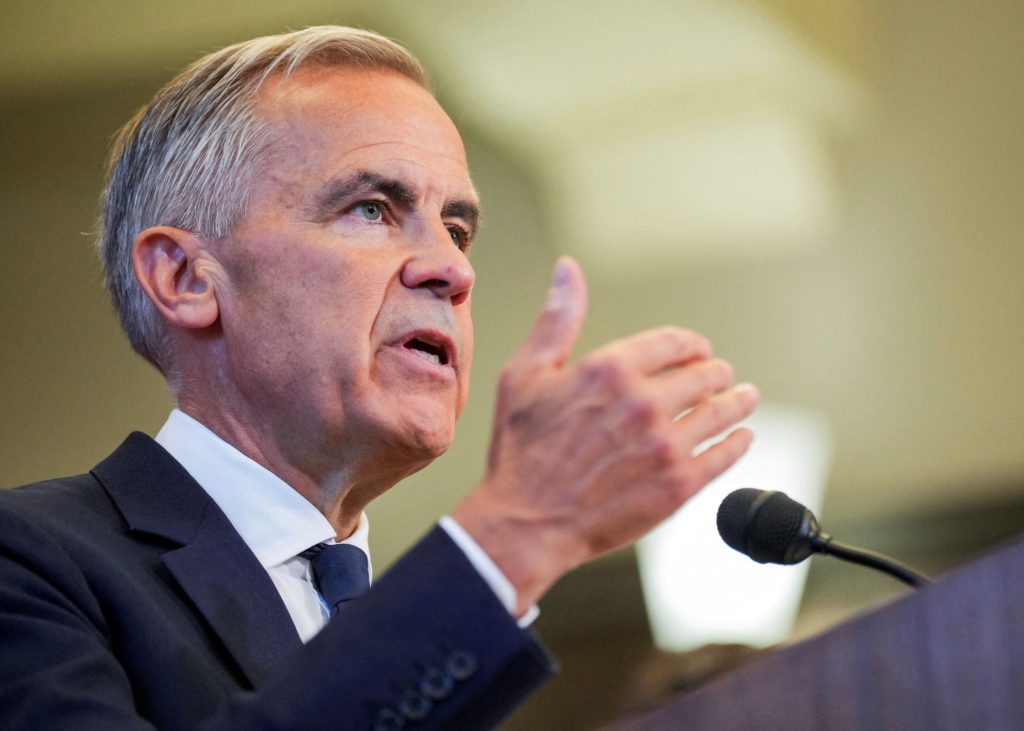
A significant rupture in North American trade relations has emerged as Canada and the United States engage in a direct tariff confrontation. Following the collapse of negotiations late Friday, the United States imposed duties of fifty percent on roughly twenty billion dollars worth of Canadian imports starting Saturday. In response, Prime Minister Mark Carney announced that Canada would initiate dollar-for-dollar retaliatory tariffs beginning September eight. This escalation represents a decisive shift in how Ottawa is managing its relationship with Washington, moving from diplomatic engagement to active economic resistance.
The breakdown in talks centered on what Carney described as unacceptable conditions imposed by the United States in the final hours of discussions. The Canadian prime minister stated that Washington introduced language intended to restrict Canada’s ability to negotiate trade agreements with other nations. Carney characterized this demand as a fundamental issue of sovereignty, arguing that accepting such terms would undermine Canada’s independence. British Columbia Premier David Eby echoed these concerns, suggesting that yielding to these conditions would effectively reduce Canada to the economic status of a U.S. state.
This standoff serves as a practical test of Carney’s earlier warnings about the changing nature of global power dynamics. During an address at the World Economic Forum in Davos this January, Carney argued that middle powers must resist economic coercion from larger nations like the United States and China. He described the current international order as undergoing a rupture rather than a simple transition, emphasizing that sovereignty increasingly depends on a country’s capacity to withstand pressure. The current trade dispute provides a real-world scenario for these theoretical arguments.
President Donald Trump has responded to Carney’s stance with renewed emphasis on Canada’s dependence on the American economy. Trump has repeatedly suggested that Canada should become the fifty-first U.S. state and dismissed the border between the two nations as artificial. On social media, he accused Canada of seeking the benefits of statehood without assuming the responsibilities, while also claiming that Canadian tariffs have unfairly targeted U.S. farmers for years. Trump’s rhetoric underscores a view that economic integration can be leveraged as a tool of political influence.
The structural realities of the trade relationship complicate Canada’s position. Nearly three-quarters of Canadian exports are destined for the United States, an economy roughly ten times larger than its own. While Canada retains the legal ability to sign new trade agreements with other partners, replacing supply chains and customer bases established over decades is a formidable challenge. Historian Robert Bothwell noted that no country is more exposed to American economic pressure than Canada, making the path to maintaining independence particularly difficult.
Carney has acknowledged the domestic costs of this strategy, admitting that retaliatory measures will likely raise prices and reduce consumer choice for Canadians. He framed the decision as a necessary step to prevent the weaponization of economic integration, describing the previous stability of trade relations as fragile. By choosing to absorb some economic pain rather than yield to tariff pressure, Carney is distinguishing Canada’s approach from that of other U.S. allies who have largely avoided direct confrontation.
The United States Trade Representative, Jamieson Greer, offered a contrasting account of the negotiations’ failure. Greer asserted that Ottawa introduced new demands and withdrew from previous commitments, even after Washington offered to reduce tariffs on key sectors such as steel, automobiles, and lumber. He indicated that the U.S. would proceed with additional measures in response to Canada’s retaliation, signaling a potential for further escalation rather than de-escalation.
This conflict may influence how other nations navigate their relationships with the United States under the current administration. The European Union previously prepared retaliatory tariffs but suspended them during negotiations, illustrating a different approach to managing trade disputes. Canada’s willingness to engage in tit-for-tat measures provides a unique case study for observers analyzing the limits of allied diplomacy. The outcome could reshape expectations regarding how much economic leverage great powers can exert without triggering significant pushback.
As both governments prepare for the implementation of new tariffs, the focus remains on whether this confrontation will lead to a renegotiation of terms or a prolonged trade war. Carney’s administration appears committed to testing the resilience of its economy against American pressure, betting that sovereignty is worth the short-term financial cost. The coming weeks will reveal whether this strategy strengthens Canada’s negotiating position or exacerbates economic vulnerabilities.
The dispute also raises broader questions about the reliability of traditional alliances in an era of heightened economic nationalism. If long-standing partnerships no longer guarantee protection from coercive trade policies, middle powers may need to reassess their strategic dependencies. The actions taken by both Ottawa and Washington will likely be closely watched by other nations facing similar pressures from larger economic actors.
Sources behind this briefing
Go to the original reporting
- PBS NewsHour↗Carney warned about economic coercion. Now Trump is testing the Canadian prime minister

