The short version
- Canadian and French leaders agreed to deepen collaboration in space infrastructure, defense systems, and critical mineral supply chains during a summit in Saint-Pierre-et-Miquelon.
- The partnership reflects a broader Canadian strategy to reduce reliance on the United States following recent trade tensions and political pressure from Washington.
- France aims to secure stable energy supplies and access to rare earth elements while supporting Canada’s potential role as an associate member of the European Union.
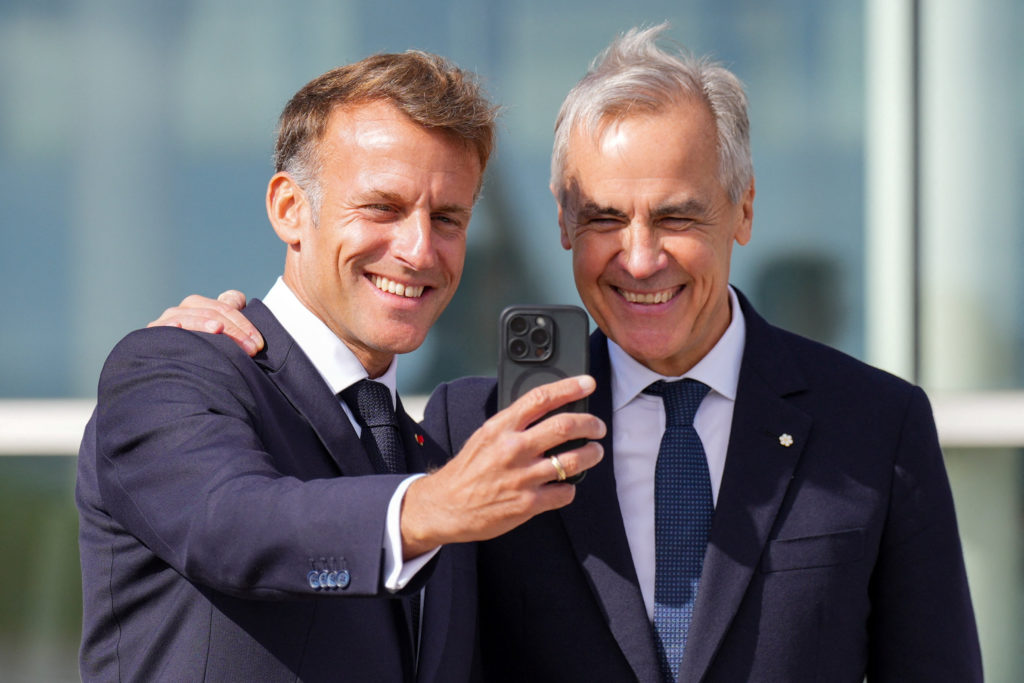
Canadian Prime Minister Mark Carney and French President Emmanuel Macron have formalized a significant expansion of their bilateral relationship, focusing on strategic sectors including defense, space exploration, energy security, and advanced technology. The agreement was announced during a meeting in Saint-Pierre-et-Miquelon, a small French territory located off the coast of Newfoundland. This geographic proximity served as a symbolic backdrop for discussions aimed at strengthening transatlantic ties between the two nations.
The partnership marks a notable shift in Canada’s foreign policy orientation, reflecting an accelerated move toward Europe as relations with the United States face strain. Carney emphasized that closer alignment with European powers would help mitigate Canada’s vulnerability to economic coercion by any single nation. This strategic pivot comes in the context of recent diplomatic friction with Washington, where U.S. President Donald Trump has imposed tariffs, demanded economic concessions, and made controversial remarks regarding Canadian sovereignty.
Under the new framework, the space agencies and defense ministries of both countries will collaborate on developing and sharing critical infrastructure. This includes joint efforts in launch systems and ground-based reception facilities. The cooperation extends beyond aerospace to include telecommunications, climate resilience measures, and broader economic development initiatives. These sectors were identified as key areas where shared values and complementary resources can yield mutual benefits.
Energy security remains a central component of the agreement. Macron highlighted Canada’s substantial reserves of critical minerals, rare earth elements, oil, and natural gas as vital assets for European stability. France is seeking to conclude agreements that would facilitate the shipment of liquefied natural gas to Europe’s Atlantic coast. This effort is partly driven by disruptions in global energy markets linked to conflicts in the Middle East, which have raised concerns about fuel prices and supply chain reliability.
The diplomatic engagement also touches on advanced technological domains such as quantum computing, satellite systems, and supercomputing. Carney’s office stated that these discussions were part of a broader effort to integrate Canada more deeply into European economic and security structures. Macron described the visit as a historic moment, noting that it affirmed both nations’ sovereignty and their freedom to make independent decisions amid global turmoil.
France has expressed support for Canada’s potential future involvement in the European Union, including the prospect of associate membership. Carney recently embraced this possibility, arguing that deeper integration with Europe would provide a buffer against unilateral pressures from other major powers. The EU’s proposal for Canada to become its first associate member underscores the institutional dimension of this shifting alliance.
The timing of these developments coincides with ongoing geopolitical adjustments in the North Atlantic region. Recent announcements regarding U.S. military presence in Greenland, while respecting Danish sovereignty and international law, have added complexity to regional security dynamics. Both leaders acknowledged that easing tensions and respecting international norms are essential for maintaining stability in the area.
Saint-Pierre-et-Miquelon, home to approximately 5,800 residents, provided a unique setting for these high-level talks. The choice of location underscored the historical and cultural connections between France and Canada, even as the substantive discussions focused on modern strategic imperatives. As global alliances realign, this partnership represents a concrete step toward diversifying Canada’s international engagements.
Looking ahead, the implementation of these agreements will require sustained coordination between government agencies and private sector partners in both countries. The success of this initiative may influence how other nations view their own dependencies on major economic powers. For now, the focus remains on building resilient supply chains and enhancing defense capabilities through shared infrastructure and joint ventures.
This development signals a broader trend of nations seeking to balance their relationships with multiple global partners rather than relying heavily on one dominant neighbor. As Canada continues to navigate its position between North America and Europe, the strengthened ties with France offer a pathway to greater autonomy and security in an increasingly uncertain international landscape.
Sources behind this briefing
Go to the original reporting
- PBS NewsHour↗Carney and Macron deepen ties as Canada turns toward Europe and away from U.S. dependence

