The short version
- Canada and the European Union established a new alliance focused on stabilizing trade and securing critical infrastructure against geopolitical shocks.
- Leaders highlighted reduced dependence on US-based technology providers, citing recent disruptions in satellite services as a catalyst for diversification.
- The agreement includes financial support for Ukraine and plans for deeper economic integration, though Quebec separatists criticized their exclusion from the summit.
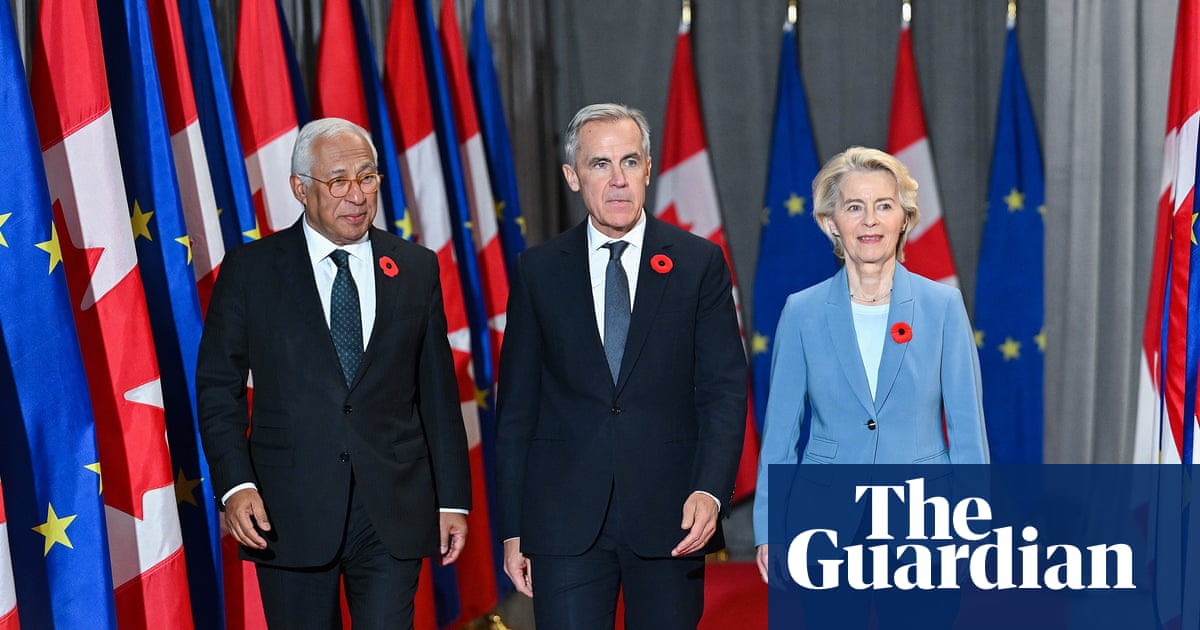
Canada and the European Union have formalized a new strategic partnership designed to provide stability amid increasing global uncertainty. Unveiled at a summit in Montreal, the Alliance for the Future positions itself as a coalition of like-minded nations seeking to protect citizens from economic and political volatility. Prime Minister Mark Carney and European Commission President Ursula von der Leyen described the initiative as a protective framework that offers unprecedented opportunity through deepened cooperation between Ottawa and the 27-member bloc.
The leaders emphasized that current global conditions, characterized by climate emergencies, eroding democratic norms, and the weaponization of trade, necessitate a more resilient international order. Von der Leyen noted that trusted suppliers of energy, critical minerals, and semiconductors are increasingly being used as instruments of pressure, which ultimately impacts families through higher costs for everyday goods. Carney echoed this sentiment, suggesting that the alliance would help build certainty around supply chains and withstand external shocks collectively.
A significant driver behind this rapprochement is Canada’s desire to reduce its reliance on American companies, particularly in the defense and technology sectors. Recent events, such as the throttling of Starlink and Starshield speeds over Ukraine by Elon Musk, have raised concerns in Ottawa about the vulnerability of national security infrastructure to the whims of private corporate actors. Musk, a dual Canadian citizen who has criticized Canada’s governing Liberal party, exemplifies the risks associated with depending on entities that may hold opposing political interests.
To mitigate these risks, Canada is pursuing strategic mergers and investments in artificial intelligence. A planned merger between Canadian firm Cohere Inc and Germany’s Aleph Alpha GmbH will create a dual-headquartered entity in Toronto and Berlin. The Canadian federal government has announced a stake in Cohere worth up to C$1.6 billion, aiming to ensure that the future of AI is not dictated solely by American giants. Additionally, an agreement was reached to integrate Canada into Europe’s supercomputing network, providing access to European machines for training AI models.
The partnership also includes substantial financial commitments to ongoing global conflicts. As part of the summit conclusions, Canada agreed to contribute to a €90 billion support loan for Ukraine. This move underscores the alliance’s commitment to supporting democratic nations under threat while simultaneously diversifying geopolitical partnerships beyond traditional transatlantic frameworks dominated by the United States.
Economic integration remains a central pillar of the new agreement. Leaders indicated that future discussions would focus on creating a more integrated market worth tens of billions of dollars, alongside reduced trade and travel restrictions. New educational opportunities for citizens on both sides of the Atlantic were also highlighted as part of the broader effort to strengthen ties. The goal is to foster more competition and choice, thereby reducing the leverage that any single external actor might hold over either economy.
The concept of Canada becoming an associate member of the EU has been reintroduced, though it remains uncharted territory. Von der Leyen described the ambition to shape this role together, emphasizing that it is a partnership for common strength rather than against others. However, some EU members have expressed reservations about granting a legally meaningless designation that could confuse other nations seeking full membership. Germany and other states previously worked to remove references to associate membership from draft statements, but both Carney and Von der Leyen reaffirmed the term during the summit.
Despite the high-level diplomatic achievements, the summit has sparked friction within Canada, particularly in Quebec. The separatist Parti Québécois, which recently formed a minority government in the province, criticized Ottawa for excluding Premier Paul St-Pierre Plamondon from speaking publicly at the event. This exclusion highlights ongoing tensions between federal authority and provincial autonomy, adding a layer of domestic complexity to an otherwise outward-facing diplomatic success.
European Council President Antonio Costa praised Canada as the most European of non-European countries, reflecting a shared sense of values despite geographical distance. He stated that both sides would pursue the closest and strongest association ever between the EU and a non-European nation. While the scope of this relationship will be further defined at a 2027 summit, the initial framework signals a significant shift in how Canada and Europe approach global challenges together.
Looking ahead, the alliance aims to serve as a hedge against unpredictable geopolitics while offering a safe harbor for nations seeking stability. The success of this partnership will depend on its ability to translate lofty promises into tangible economic and security benefits. As both regions navigate an increasingly fragmented world, the Alliance for the Future represents a concerted effort to rebuild trust and cooperation through shared interests and mutual support.
Sources behind this briefing
Go to the original reporting
- The Guardian World↗Canada and EU announce new alliance open to like-minded countries