The short version
- President Paul Biya has appointed officials to key army positions and promoted five colonels while remaining in Geneva for nearly sixty days.
- The government maintains the leader is working remotely, but opposition figures cite a significant institutional vacuum due to his physical absence.
- Previous military reshuffles occurred after regional coups and during election cycles, raising questions about whether this move signals precaution or instability.
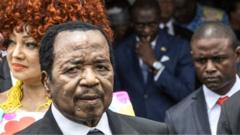
Cameroon’s long-serving president has enacted a series of changes within the nation’s armed forces while remaining outside the country for nearly two months. Paul Biya, who is ninety-three years old, issued separate decrees on Monday from Geneva, Switzerland, where he has been staying since departing Cameroon on June 7. The administrative actions included appointing officials to critical roles within the army and elevating five colonels to the rank of brigadier general. These moves come as public unease grows regarding the duration and nature of his stay abroad, which his team initially characterized as a brief private visit.
One of the most notable appointments involves Raymond Jean Charles Beko'o Abondo, one of the newly promoted brigadier generals. Abondo was immediately reappointed as the commander of the elite presidential guard, a unit responsible for protecting Biya. He has held this specific position since 2013, meaning the promotion effectively reinforces his existing authority rather than introducing new leadership to the protective detail. This continuity in the security apparatus suggests an effort to maintain stability within the inner circle of state protection despite the president’s physical distance from the capital.
Such personnel adjustments are not unprecedented under Biya’s administration. Historical patterns indicate that military shake-ups often coincide with periods of intense public scrutiny or perceived political vulnerability. For instance, following an unexpected coup in neighboring Gabon three years ago that ended the Bongo dynasty, Cameroon swiftly reorganized its military leadership. Similarly, during the campaign for his controversial eighth term in power last year, Biya reshuffled the top brass of the army. Another round of promotions within the defense and security sectors occurred as recently as June this year, establishing a precedent for using military appointments to manage political narratives.
The current situation has sparked significant debate, particularly on social media platforms where citizens are questioning the lack of transparency regarding the president’s activities. Critics point out that Biya has not only reshuffled the military but also signed several other decrees during his absence. These include authorizations for the government to enter into loan agreements with international financial institutions. The ability to conduct high-level state business from abroad highlights the centralized nature of power in Cameroon, yet it also underscores the disconnect between the executive branch and the domestic political environment.
Government officials have consistently denied reports suggesting that Biya is hospitalized or incapacitated. René Emmanuel Sadi, Cameroon’s Communication Minister, stated in an interview with French-language broadcaster RFI that the president is alive and will return to the country soon. Sadi dismissed allegations from opposition groups that the leader’s absence constitutes a vacancy at the helm of the state, asserting that Biya continues to work effectively from Geneva. This official stance aims to quell speculation about the head of state’s health, which has been a sensitive topic since press freedom groups expressed outrage two years ago when media outlets were banned from reporting on Biya’s medical condition.
Despite these assurances, opposition leaders argue that the prolonged absence creates a dangerous institutional void. Mamadou Mota, vice-president of the opposition CRM party, described the situation as a glaring institutional vacuum. He criticized the current mode of governance, noting that executive power should be exercised at the heart of the nation rather than through remote communication from hotel suites abroad. This perspective reflects broader concerns about democratic accountability and the visibility of leadership in times of uncertainty.
Further compounding the sense of political stagnation is the failure to fulfill certain post-election promises. After last year’s election, Biya pledged to name a new cabinet but has yet to do so. Additionally, a vice-presidential position created in April remains unfilled. These unmet commitments contribute to the narrative of a government operating in a transitional limbo, where key structural roles are left vacant while the president manages affairs from overseas.
The circumstances surrounding these latest changes have intensified scrutiny of Biya’s leadership style and the resilience of Cameroon’s political institutions. While the government insists that operations continue normally, the combination of military promotions, financial decrees, and prolonged absence has created a complex picture of state authority. As the days pass without a clear timeline for Biya’s return, the debate over whether this is a routine administrative exercise or a sign of deeper instability continues to dominate public discourse.
Observers remain divided on the implications of these events. Some view the military reshuffle as a standard precautionary measure designed to secure loyalty and maintain order during a period of uncertainty. Others see it as evidence of a weakening grip on power, necessitating constant reinforcement of key positions. The lack of definitive information about Biya’s health or intentions leaves many questions unanswered, ensuring that the political landscape in Cameroon remains tense and unpredictable.
What comes next depends largely on whether Biya returns to Cameroon in the near future as promised by his ministers. If his absence extends further, the pressure on the government to provide clarity regarding succession and daily governance will likely intensify. Until then, the military appointments serve as a reminder of the central role the armed forces play in maintaining the status quo, even as the political elite navigates the challenges of leading from afar.
Sources behind this briefing
Go to the original reporting
- BBC World↗World's oldest president reshuffles army as his absence stokes unease

