The short version
- The special election guarantees Democratic retention of California's 14th District seat, further reducing Republican control in the House.
- State Senator Aisha Wahab leads BART President Melissa Hernandez by over twenty points despite significant outside spending favoring Hernandez.
- New district boundaries approved via Proposition 50 will take effect for the full term starting in January 2027.
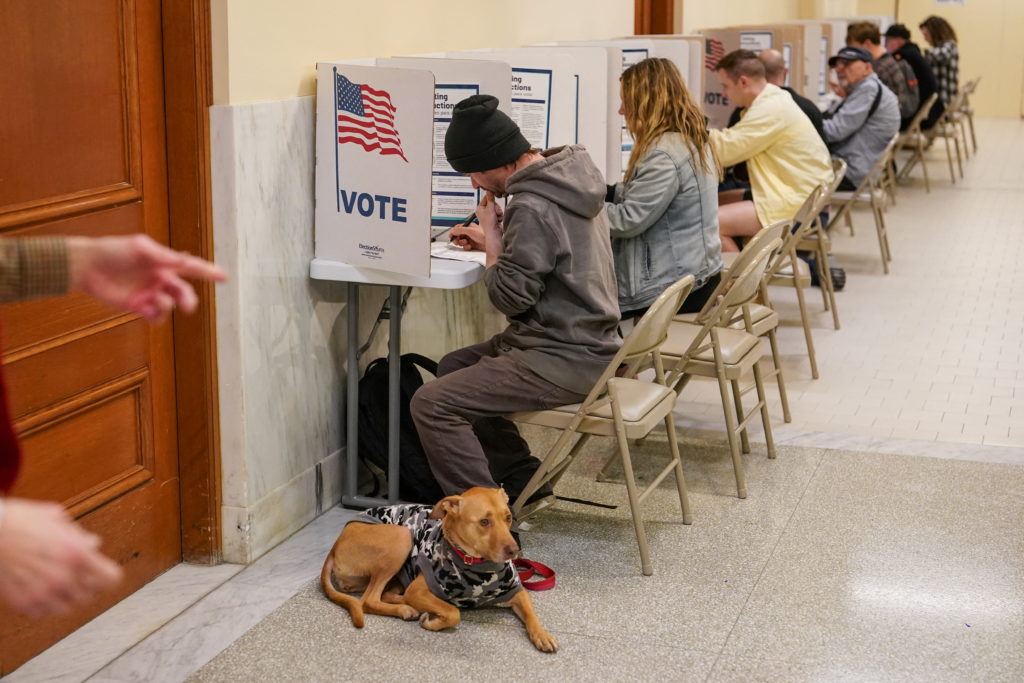
Voters in California’s 14th Congressional District are casting ballots to select a representative who will serve out the remainder of the term vacated by Eric Swalwell. The former congressman resigned from office four months ago following sexual assault allegations that also ended his bid for governor. Although Swalwell has denied the accusations, his departure triggered this special election process in the Bay Area district.
The outcome of Tuesday’s vote is effectively predetermined regarding party affiliation. Because the top two finishers in the June primary were both Democrats, the seat will remain under Democratic control regardless of who wins on Election Day. This result further narrows an already fragile Republican majority in the U.S. House of Representatives, reinforcing the chamber's current partisan balance.
State Senator Aisha Wahab and Bay Area Rapid Transit Board President Melissa Hernandez are the two candidates competing for the position. Wahab secured first place in the special primary held on June 16, leading Hernandez by more than twenty percentage points. She achieved a similar margin of victory in the separate primary for the full-term seat that will begin in January 2027.
Despite Wahab’s commanding lead in early voting, the race has attracted substantial financial attention from outside political organizations. Federal Election Commission records indicate that groups affiliated with the American Israel Public Affairs Committee have heavily invested in the contest. Specifically, the United Democracy Project super PAC spent $1.2 million in August to support Hernandez and oppose Wahab.
Another entity, Bold America, which has received funding from United Democracy Project, contributed approximately $1.7 million to the race since the primary. Collectively, outside groups have expended about $4.1 million since mid-July. The vast majority of this spending, roughly $3.7 million, benefited Hernandez’s campaign, while only about $400,000 supported Wahab.
Hernandez has significantly outpaced Wahab in fundraising and spending efforts during the campaign cycle. However, financial reports from the end of July show that both candidates held roughly equivalent amounts of cash on hand. This disparity between total spending and available war chests highlights the intense external pressure applied to what is otherwise a low-turnout special election.
The geographic scope of the district is undergoing changes that will impact future elections. Voters approved Proposition 50 in a 2025 statewide ballot measure, which redrew congressional maps in response to mid-decade efforts led by President Donald Trump in other states. The winner of this special election will serve under the current boundaries for the rest of the year.
Starting in January 2027, the district will operate under new lines that slightly alter its demographic composition. Both the old and new versions of the 14th District are located entirely within Alameda County in the East Bay. Registered voter data shows Democrats hold a slight majority in both configurations, with Republican registration hovering around seventeen percent.
Presidential voting patterns suggest little shift in partisan preference between the two district maps. In 2024, Kamala Harris carried the current district with nearly sixty-six percent of the vote. Under the new boundaries, her share would have been virtually identical at sixty-five point four percent. This consistency indicates that redistricting has not dramatically altered the electoral dynamics for this specific seat.
Early voting data reveals a strong Democratic turnout advantage. As of Wednesday, approximately fifty-two thousand ballots had been cast, with Democrats accounting for roughly thirty-two thousand votes. Republicans contributed about seven thousand eight hundred ballots, while unaffiliated and third-party voters made up the remainder. Polls close at 8 p.m. Pacific Time, after which results will be tallied to determine the final winner.
Sources behind this briefing
Go to the original reporting
- PBS NewsHour↗Live Results: California special election to replace former Rep. Eric Swalwell

