The short version
- San Clemente residents will vote in November on a one percent sales tax increase intended to fund beach restoration and wildfire protection amid accelerating coastal erosion.
- The encroaching ocean has repeatedly closed a seven-mile segment of the busy Los Angeles to San Diego rail line, prompting officials to evaluate costly relocation options or permanent service reductions.
- Scientists attribute the worsening conditions to long-term sea level rise compounded by urban development that blocks natural sediment flow and an impending El Niño weather pattern.
The coastline of San Clemente, a Southern California community historically defined by its Spanish-style architecture and wide sandy shores, is undergoing a rapid physical transformation. What was once a mile-long stretch of walkable beach has been significantly reduced by erosion, with waves pushing the shoreline inland and splitting the city’s North Beach area. This retreat of the land is not merely an aesthetic loss for residents but a structural crisis that threatens homes, public infrastructure, and a major transportation artery. The situation highlights the growing difficulty coastal municipalities face in maintaining their existing footprints as ocean levels continue to climb.
At the center of the local response is a proposed ballot measure scheduled for November. Voters in the town of approximately 62,000 people will decide whether to approve a one percent increase in sales tax. The revenue generated would be directed toward two primary goals: replenishing sand on eroding beaches and funding wildfire protection efforts. Proponents of the measure argue that self-funding is necessary because the city faces a severe deficit in beach material. City Manager Andy Hall estimated that San Clemente lacks roughly three million cubic yards of sand, a volume that would require hundreds of thousands of truck trips to replace if sourced externally.
The urgency for intervention stems from both long-term climatic trends and immediate geological changes. Research oceanographers note that sea level rise exerts constant pressure on coastlines, causing beaches to retreat landward over time. In San Clemente specifically, urban development has disrupted the natural flow of sediment that historically nourished the shore. Without this steady supply of sand, warmer ocean waters have enabled waves to crash higher and further inland, accelerating the degradation of seaside bluffs. This process has damaged oceanfront properties and compromised the stability of the ground supporting critical infrastructure.
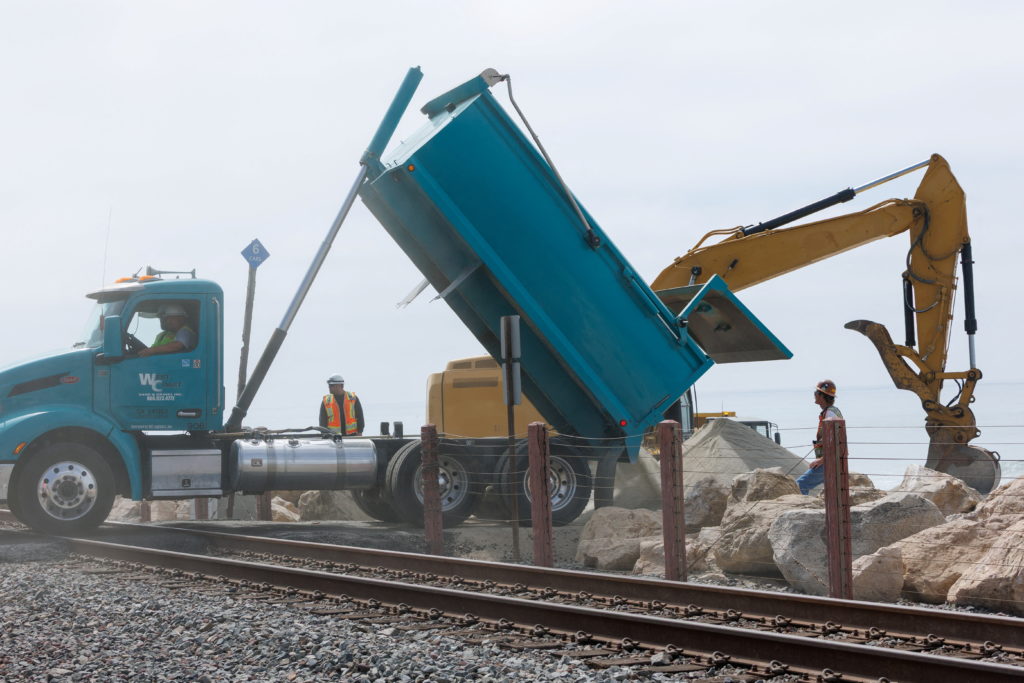
The most visible impact of this erosion is on the passenger rail line that runs along the coast. The seven-mile segment in question is part of a larger 351-mile corridor connecting San Diego to Los Angeles County’s port complex and extending north to San Luis Obispo. This route is among the busiest in the nation, serving commuters, freight operators, and military personnel. Over the past five years, the line has faced repeated closures due to surf encroachment on one side and crumbling bluffs on the other. Transportation officials have attempted temporary fixes by laying rock ballast to shore up the tracks, but these measures often exacerbate erosion by sweeping sand offshore when waves strike the rocks.
Transit authorities are now confronting difficult long-term decisions regarding the rail line’s future. Darrell Johnson, chief executive of the Orange County Transportation Authority, indicated that officials are studying the possibility of moving the tracks inland. While this option was previously dismissed as too expensive, the escalating costs of maintenance and the frequency of closures have made it a more viable consideration. Another potential outcome is the permanent halting of service on this segment if neither shoring up nor relocation proves feasible. Such a decision would fundamentally alter regional transportation logistics and freight movement.
The broader context for San Clemente’s struggle includes the anticipated effects of El Niño, a temporary warming in the equatorial Pacific that intensifies weather patterns worldwide. California is bracing for increased flooding and landslides associated with this year’s expected super El Niño event. Recent studies suggest that human-caused climate change is strengthening these events, leading to more severe storm surges. Earlier this year, similar conditions forced the closure of a pier in Pacifica and caused seawater to flood homes in Long Beach, illustrating the widespread vulnerability of California’s coast.
Public opinion in San Clemente remains divided on the best path forward. While many residents acknowledge the need for sand replenishment, some oppose the tax measure, arguing that the city should pursue a regional approach rather than acting alone. City Councilman Zhen Wu noted that fighting natural forces is prohibitively expensive and suggested collaboration with neighboring communities like Huntington Beach, which has engaged in beach nourishment for years. Others, including marine meteorologist Charlie Fox, emphasize the critical role sand plays as a buffer between the ocean and built structures, warning that without it, waves will continue to threaten lifeguard stations, homes, and transit infrastructure.
State-level actions may influence local outcomes. Officials are hoping that California’s recent emergency declaration ahead of El Niño will expedite the permitting process for obtaining additional sand. However, securing state permits has historically been a bottleneck in coastal restoration projects. As San Clemente prepares for the November vote, the city stands at a crossroads between accepting significant financial burdens to preserve its current coastline or adapting to a new reality where infrastructure must retreat inland. The outcome will likely serve as a case study for other coastal communities grappling with similar challenges.
Sources behind this briefing
Go to the original reporting
- PBS NewsHour↗Sea level rise reshaping California beach town and threatening rail line