The short version
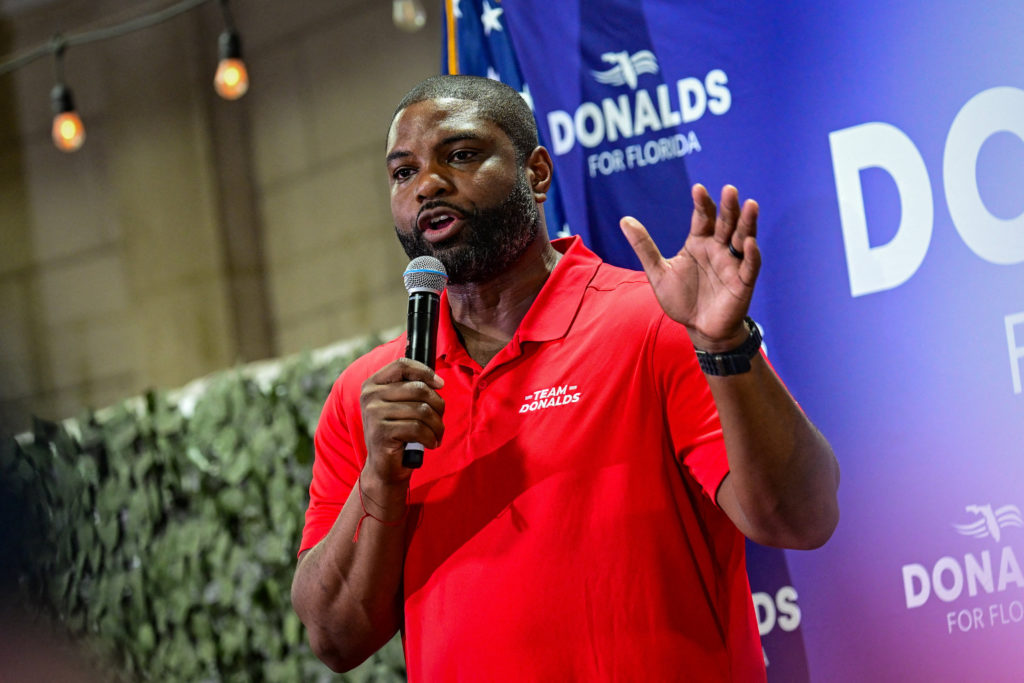
- Republican Byron Donalds has been elected governor of Florida, defeating Democrat David Jolly in a race that tested the durability of Republican dominance in the state.
- Donalds becomes the first Black person elected as governor by a Republican party and will succeed Ron DeSantis, who used the office to advance national political ambitions.
- The campaign highlighted persistent structural advantages for Republicans, including significant voter registration leads and fundraising disparities, despite competitive dynamics in key regions.
Republican Representative Byron Donalds has secured victory in the Florida gubernatorial election, defeating Democratic challenger David Jolly. The outcome confirms the continued strength of the Republican Party in a state that has not elected a Democrat to the governor’s office in more than three decades. Donalds’ win is historically significant as he becomes the first Black individual elected to lead a state government under the Republican banner.
The election served as a critical stress test for the GOP’s grip on Florida, particularly given the national political climate surrounding President Donald Trump. Observers watched closely to see whether widespread dissatisfaction with the former president would translate into losses in his adopted home state. Donalds, a loyal ally of Trump, successfully navigated this dynamic, thanking the president during his victory address and affirming the state’s continued alignment with Republican values.
Donalds will assume office following the tenure of Ron DeSantis, who transformed the governorship into a platform for national influence. During his time in office, DeSantis pursued policies focused on cultural issues, including legislation restricting discussions of gender identity and sexual orientation in early elementary grades. These efforts contributed to a significant realignment of Florida’s electorate, culminating in a landslide reelection victory for DeSantis in 2022 that marginalized the state’s Democratic infrastructure.
The contest against David Jolly presented unique challenges for the Democratic candidate. Jolly, a former Republican congressman who switched parties, ran a centrist campaign aimed at overcoming substantial structural headwinds. Republicans maintain an estimated voter registration advantage of approximately 1.5 million in Florida, a demographic reality that complicated Jolly’s path to victory. Additionally, Donalds held a commanding lead in fundraising resources throughout the race.
Despite these disadvantages, the race remained unexpectedly competitive, reflecting broader tensions within the electorate. Jolly focused his campaign efforts on Democratic strongholds such as Broward County, while also targeting traditionally Republican areas in central Florida and the Panhandle. His strategy aimed to exploit potential vulnerabilities in the Republican base, particularly among voters concerned about economic conditions.
Key issues driving voter engagement included the high cost of living and the escalating price of homeowners insurance. These concerns are especially acute in Florida, a state frequently impacted by hurricanes that strain insurance markets and increase financial burdens on residents. Donalds attempted to frame Jolly as an out-of-touch liberal while simultaneously reaching out to Black voters, a demographic that has historically supported Democratic candidates.
Donalds’ campaign strategy involved a careful balance of loyalty and independence. While he maintained strong ties to Trump, he minimized direct references to the president on his official campaign website, suggesting an effort to appeal to moderate voters who might be wary of overt partisan alignment. This approach allowed him to project confidence while navigating the complex political landscape shaped by DeSantis’ previous administration.
The election results underscore the enduring nature of Florida’s political transformation under Republican leadership. Once known as a swing state where elections were often decided by narrow margins, Florida has shifted significantly toward the right. The defeat of Jolly indicates that despite national headwinds for Republicans, the party’s organizational strength and voter base in Florida remain robust enough to withstand competitive challenges.
Looking ahead, Donalds faces the task of governing a state with diverse interests ranging from urban centers to agricultural communities and retiree populations. His administration will need to address ongoing economic pressures while managing expectations shaped by DeSantis’ controversial policy legacy. The outcome also sets the stage for future political battles in a state that continues to play a pivotal role in national politics.
As Donalds prepares to take office, the focus will shift to how he navigates the intersection of local governance and national partisan dynamics. His historic election marks a new chapter for Florida’s political landscape, one defined by both continuity in Republican control and change in leadership demographics. The implications of this victory will likely resonate beyond state borders, influencing strategies for future elections across the country.
Sources behind this briefing
Go to the original reporting
- PBS NewsHour↗WATCH: Republican Byron Donalds speaks after winning election for governor in Florida


