The short version
- Prime Minister Andy Burnham plans a September visit to New York to urge the US administration to restore Patriot missile supplies to Ukraine.
- The UK and Ukraine have signed an agreement allowing British access to Kyiv’s AI-driven battlefield database to enhance defense capabilities.
- Russian officials have hinted at possible semi-military or cyber actions against British drone manufacturers in response to increased support for Kyiv.
Prime Minister Andy Burnham is preparing for a diplomatic mission to the United States next month, aiming to secure renewed American military assistance for Ukraine. The planned trip to New York coincides with the UN General Assembly meetings in September and marks Burnham’s first visit to the US since assuming office in July. While Downing Street has not fully confirmed the itinerary, the prime minister indicated that the journey is likely to proceed. His primary objective will be joining European counterparts in lobbying President Donald Trump to address the critical shortage of Patriot interceptor missiles currently facing Ukrainian forces.
The urgency of this diplomatic push stems from a significant depletion of air defense resources in Kyiv. Ukraine has received markedly fewer Patriot missiles this year compared to previous periods, largely because supplies were redirected to the Middle East following the outbreak of conflict between the US and Iran. This reduction in defensive capabilities has left Ukrainian cities more vulnerable to sustained Russian bombardment. In recent days alone, intensified ballistic missile strikes by Moscow have resulted in at least 23 deaths and over 100 injuries, highlighting the immediate human cost of the supply gap.
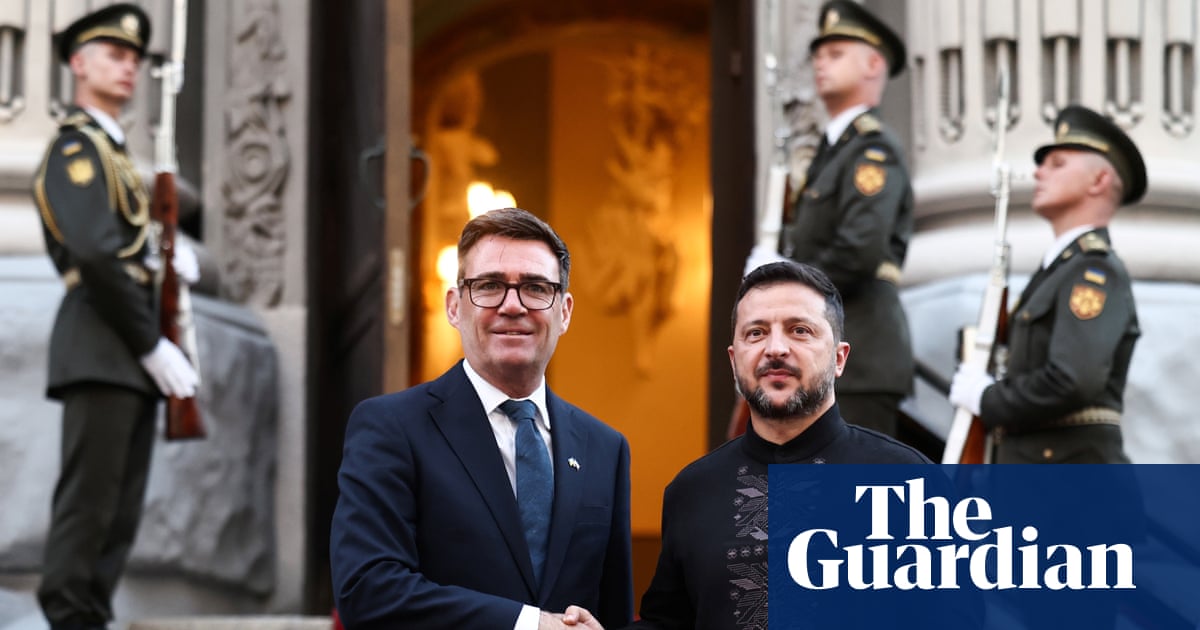
During his first official visit to Kyiv as prime minister, Burnham met with President Volodymyr Zelenskyy to reaffirm Britain’s commitment to Ukrainian sovereignty. The two leaders emphasized that there would be no alteration in the UK’s steadfast support for Kyiv. Burnham also co-chaired a meeting of the coalition of the willing, where he stressed the importance of unity among member nations. He noted that the group is actively working to access existing missile stocks and encourage other allies to do the same, framing the supply issue as complex but ultimately solvable through multilateral negotiation.
A key development from the Kyiv talks was a new agreement regarding intelligence sharing. The UK Ministry of Defence, in collaboration with selected British firms, will gain access to Ukraine’s ‘Avengers’ AI database. This repository contains extensive battlefield data that officials have described as invaluable for understanding modern combat dynamics. The partnership aims to help British security agencies learn from Ukraine’s frontline experience and develop advanced AI-powered solutions for national defense challenges. In return, the UK has agreed to allow defense contractor MBDA to release classified information regarding components for the long-range Scalp missile, further deepening military cooperation.
Despite these diplomatic and technical advancements, tensions with Moscow have escalated. Andrei Fedorov, a former Russian deputy foreign minister and Kremlin adviser, suggested that British industrial sites involved in drone production for Ukraine could become targets. He stated that while he could not rule out semi-military actions, any such moves might come from unknown sources rather than official state actors. Fedorov hinted at potential technical reactions, including cyberattacks or sabotage against factories, warning that Russia might eventually respond visibly to the UK’s increased support for Kyiv.
The British government has maintained a calm stance regarding these threats, focusing instead on the strength of international unity. A spokesperson for No 10 described the conversations in Kyiv as honest and productive, noting that leaders agreed on the necessity of stepping up support before winter sets in. The administration emphasized that the coalition remains committed to ensuring Ukraine has the tools needed to defend itself against what they termed barbaric attacks. Burnham expressed confidence that the missile shortage is fixable, though he acknowledged that the solution would require layered negotiations involving multiple stakeholders.
The upcoming visit to New York represents a critical juncture in transatlantic defense coordination. With US supplies diverted elsewhere and European stocks dwindling, the pressure is on Washington to reconsider its allocation of air defense systems. Burnham’s efforts will likely focus on demonstrating the strategic importance of maintaining Ukraine’s defensive perimeter not just for Kyiv, but for broader regional stability. The outcome of these discussions could determine whether Ukraine receives the reinforcements necessary to withstand continued aerial assaults.
As diplomatic channels remain open, the situation on the ground continues to deteriorate without immediate relief. The combination of reduced missile availability and intensified Russian strikes creates a precarious environment for Ukrainian civilians and military personnel alike. The UK’s dual strategy of providing direct support while leveraging data-sharing agreements aims to sustain long-term resilience. However, the effectiveness of this approach will depend heavily on whether other nations, particularly the United States, are willing to adjust their current defense priorities.
Observers note that the interplay between diplomatic lobbying and technological cooperation defines the current phase of Western support for Ukraine. By integrating AI-driven insights from the battlefield with traditional military aid, Britain seeks to offer a more comprehensive package than simple hardware transfers. This approach may appeal to US policymakers who are cautious about direct involvement but interested in innovative defense solutions. The success of Burnham’s mission will hinge on his ability to align these interests with the urgent needs of Kyiv.
In the coming weeks, attention will shift from Kyiv to New York as global leaders gather to address multiple crises. The fate of Ukraine’s air defense capabilities may well be decided in those corridors of power. For now, the UK remains positioned as a key advocate for sustained support, balancing immediate humanitarian concerns with long-term strategic objectives. The resolution of the missile shortage remains uncertain, but the commitment to finding a path forward appears firm among coalition partners.
Sources behind this briefing
Go to the original reporting
- The Guardian World↗Burnham plans trip to New York as Ukraine pleads for US-made missiles

