The short version
- Andy Burnham identifies the last forty years of economic policy as a series of missteps that culminated in Brexit-related growth suppression.
- The government has established three core priorities focused on reducing living costs, regenerating communities, and increasing public oversight of essential utilities.
- Keir Starmer will vacate his parliamentary seat to focus on international affairs, triggering a by-election likely to be contested by the Green Party.
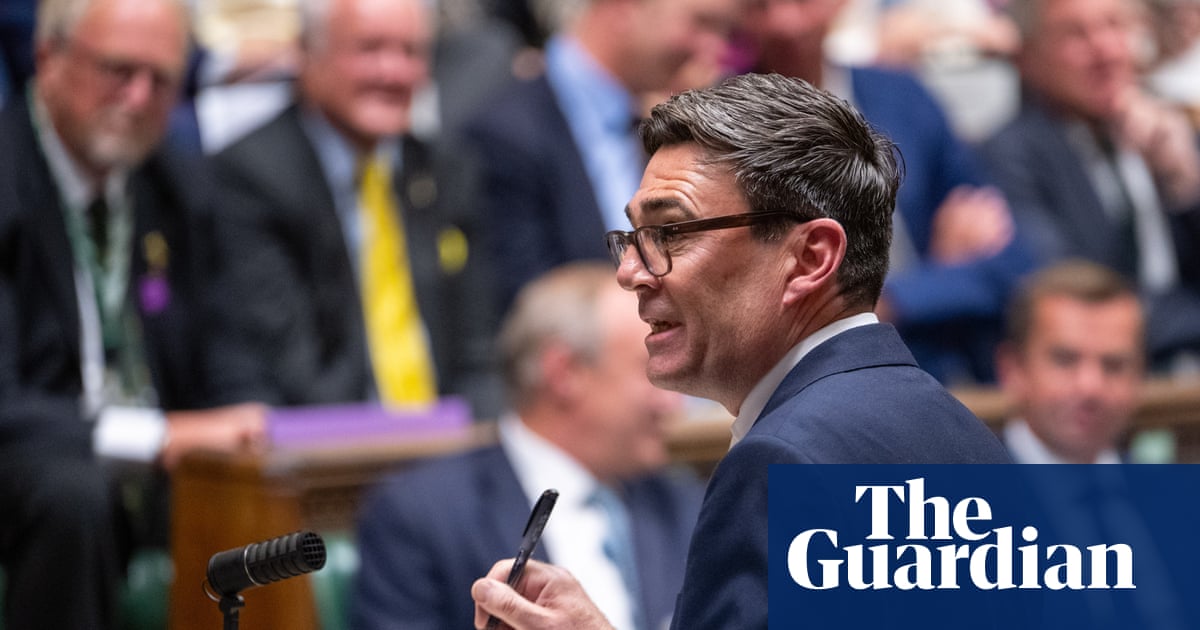
Andy Burnham delivered his first statement to the House of Commons as prime minister, framing his administration’s agenda around a need for brutal honesty regarding the nation’s recent economic trajectory. Speaking roughly six weeks after assuming office, he argued that Britain has suffered from a prolonged period of low growth and stalled regeneration due to policy decisions made over the last four decades. He characterized this era as a sequence of wrong turns that began with the centralization of political power and the privatization of economic assets in the 1980s, followed by austerity measures that weakened local government capacity.
The prime minister explicitly linked these historical trends to the decision to leave the European Union, suggesting that Brexit compounded existing structural weaknesses. Citing analysis from Bank of England data regarding thousands of British firms, he noted that the economy has absorbed a significant negative impact estimated at six percent since the referendum. He described the current state of affairs as one where communities have been deprived of agency and control, leading to a drift that requires immediate correction through substantial change rather than incremental adjustments.
To operationalize this vision, Burnham informed his cabinet of three primary objectives for the coming term. The first involves reducing the cost of essential goods and services, specifically targeting childcare expenses and mortgage burdens. The second focuses on the physical and economic regeneration of neglected communities. The third aims to restore greater public control over critical infrastructure sectors, including water, housing, and energy. Louise Haigh, his deputy, has been assigned to lead taskforces dedicated to each of these areas, with ministers instructed to pursue these goals with relentless focus.
The address also touched on defense spending and electoral reform, signaling potential shifts in long-standing government positions. Burnham hinted at a commitment to raising defense expenditure to three percent of GDP by 2030, noting that his choice of John Healey as chancellor was influenced by the latter’s stance on military funding. Additionally, he opened the possibility of revisiting electoral reform in the next Labour manifesto, suggesting that while consensus is currently lacking in Parliament, a mandate for change could emerge during the upcoming election cycle.
On environmental policy, the prime minister adopted a pragmatic approach to energy supply. While confirming his attendance at the Cop31 climate summit in Turkey and reiterating support for green energy initiatives, he acknowledged the necessity of maintaining existing fossil fuel production during the transition. He indicated that approving projects such as the Jackdaw gas field would not contradict broader climate goals, arguing that political binaries between green and traditional energy sources are counterproductive to ensuring reliable supply.
The timing of Burnham’s speech coincided with a significant development in his predecessor’s career. Keir Starmer announced he would stand down as the Member of Parliament for Holborn and St Pancras, despite previous indications he intended to serve until the next general election. Starmer stated he wishes to concentrate on international affairs, including defense, security, trade, and technology. This departure triggers a by-election in a seat traditionally held by Labour, which political observers suggest may present an early challenge for Burnham’s government, particularly given the Green Party’s strong performance in London constituencies.
Conservative leader Kemi Badenoch responded sharply to Burnham’s historical analysis, criticizing his focus on policies from the 1980s as outdated. She argued that attributing current problems to Margaret Thatcher and neoliberalism of four decades ago demonstrated a failure to engage with contemporary realities. Badenoch asserted that the new prime minister would ultimately be judged not on retrospective critiques but on his ability to deliver tangible results for voters in the present day.
Burnham paid tribute to Starmer, acknowledging that his predecessor had created a platform for fixing Britain’s issues. He emphasized that the government intends to use this foundation to restore ownership and control to local communities, arguing that such empowerment is essential for generating sustainable growth. The speech concluded with a call for optimism, asserting that the next decade could surpass the last if the country confronts its past mistakes directly and implements decisive policy changes.
The immediate political landscape now shifts toward managing the by-election in Starmer’s former constituency while establishing the new government’s operational rhythm. With Haigh leading key taskforces and Healey managing fiscal policy, the administration faces the dual challenge of delivering on cost-of-living promises while navigating complex debates over energy security and electoral reform. The coming months will likely test whether Burnham’s rhetoric of substantial change can translate into measurable improvements in public services and economic stability.
Sources behind this briefing
Go to the original reporting
- The Guardian World↗Burnham promises to bring optimism and ‘substantial change’ in first Commons speech as PM
- BBC News↗Watch: Key moments from Andy Burnham's first Commons speech as PM

