The short version
- Andy Burnham will make his inaugural overseas visit as prime minister to Kyiv, coinciding with Ukraine's independence day celebrations.
- The trip occurs against a backdrop of intensified Russian strikes on Ukrainian infrastructure and Moscow's threats regarding British military aid.
- Burnham plans to announce new measures allowing the declassification of technical data for long-range missiles used by Ukrainian forces.
Prime Minister Andy Burnham is preparing to depart for Kyiv this Monday, marking his first official visit abroad since assuming office in July. The timing of the trip is significant, as it aligns with Ukraine’s thirty-fifth anniversary of independence. Burnham intends to use the occasion to personally reaffirm the United Kingdom’s commitment to Kyiv, emphasizing that British support remains steadfast despite recent escalations in the conflict. This visit serves as a critical moment for the new administration to demonstrate continuity in foreign policy while establishing its own diplomatic tone on the global stage.
The prime minister will chair the initial meeting of the 'coalition of the willing,' a group established by his predecessor, Sir Keir Starmer, alongside French leadership. This forum was created to coordinate international support for Ukraine more effectively. By leading this gathering, Burnham signals that the UK continues to play a central role in organizing allied efforts. He will also participate in independence day events and accept an award on behalf of the British public, recognizing the nation's contributions to Ukraine’s defense. These activities are designed to strengthen bilateral ties and honor the resilience of the Ukrainian people during ongoing hostilities.
The visit comes at a time of heightened volatility in the region. In recent weeks, Russia has intensified its aerial bombardment of Ukrainian cities, including a devastating strike on a shopping center that resulted in at least sixteen fatalities. These attacks have drawn widespread condemnation and underscored the urgent need for sustained international assistance. Burnham has stated that the UK stands firmly behind Ukraine, asserting that British security is intrinsically linked to Ukrainian stability. He emphasized that the friendship between the two nations will endure long after the current conflict concludes, aiming to reassure Kyiv of London’s long-term dedication.
Tensions have further escalated following Moscow’s warnings about the use of British drones in Ukrainian operations against Russian infrastructure. Kyiv has recently increased long-range strikes on targets within Russia, including oil refineries and logistics hubs for major retailers. The Russian embassy in London accused Britain of deliberately escalating the crisis, suggesting that deeper involvement would lead to severe consequences for the UK. In response, Burnham rejected these threats, maintaining that providing defensive capabilities to Ukraine is a consistent British policy position held by previous administrations. He insisted that the UK will not waver in its support until a just and lasting peace is achieved.
A key component of Burnham’s agenda involves military technology sharing. He is expected to announce that the government has authorized defense contractor MBDA to declassify information regarding UK components used in the French-made Scalp missile system. This weapon, similar to the British Storm Shadow, relies on shared Anglo-French technology. By releasing this data, the UK aims to facilitate local assembly lines for these missiles within Ukraine, potentially enhancing Kyiv’s ability to maintain and repair its arsenal independently. President Emmanuel Macron has reportedly been exploring similar initiatives, indicating a coordinated approach between London and Paris to bolster Ukrainian defensive capabilities.
Diplomatic relations between the UK and Russia appear to be cooling further. Russia recently confirmed that its ambassador to the United Kingdom, Andrei Kelin, had left his post in London. While the Kremlin has not yet named a successor, Russian officials stated that this departure does not signal an intention to downgrade diplomatic ties. However, the absence of an ambassador complicates direct communication channels between the two governments. This development adds another layer of complexity to Burnham’s visit, as he navigates a landscape where traditional diplomatic protocols are increasingly strained by the ongoing war.
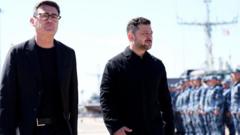
Volodymyr Zelensky was the first foreign leader to meet with Burnham at Downing Street shortly after the latter took office. That initial encounter set the stage for this upcoming trip, highlighting the priority placed on the UK-Ukraine relationship. Burnham’s statements ahead of the visit reflect a determination to project strength and unity. He described the UK as a reliable partner that will remain present during Ukraine’s most challenging moments. This rhetoric is intended to counter any perceptions of wavering support amidst domestic political transitions in London.
The broader implications of this visit extend beyond immediate military aid. By reinforcing alliances and coordinating with European partners, Burnham seeks to ensure that the international response to Russian aggression remains robust and unified. The declassification of missile technology details represents a tangible step toward empowering Ukraine’s defense industry. Meanwhile, the continued presence of UK leadership in Kyiv sends a clear message to Moscow about the limits of its military campaign. As the conflict enters another phase, these diplomatic maneuvers will likely shape the trajectory of Western support for years to come.
Observers will be watching closely to see how Burnham balances rhetorical commitments with practical outcomes. The success of this trip may hinge on whether the announced measures translate into immediate benefits for Ukrainian forces. Additionally, the reaction from Moscow could influence future diplomatic engagements between the UK and Russia. With no replacement ambassador in place, direct dialogue remains limited, increasing the importance of multilateral forums like the coalition meeting. Burnham’s ability to navigate these challenges will test his leadership on the international stage.
Ultimately, this visit underscores the enduring nature of the UK-Ukraine partnership. Despite political changes in London and escalating threats from Moscow, British support for Kyiv remains a cornerstone of foreign policy. The combination of high-level diplomacy, military cooperation, and public solidarity aims to fortify Ukraine’s position against continued aggression. As Burnham prepares to meet with Zelensky and other allies, the focus will be on sustaining momentum in the fight for Ukrainian sovereignty and regional stability.
Sources behind this briefing
Go to the original reporting
- BBC News↗Burnham to visit Kyiv on first foreign trip and reaffirm UK support for Ukraine

