The short version
- Andy Taeger and James Purcell have started playing The Campaign for North Africa, a game designed by Richard Berg that simulates the 1940-1943 desert war with extreme granularity.
- The pair estimate the full game will take between twenty and thirty years to complete, based on an eighteen-month practice run consisting of only six turns.
- To maintain momentum and public accountability, they are documenting their journey via a weekly podcast and livestreaming the initial sessions.
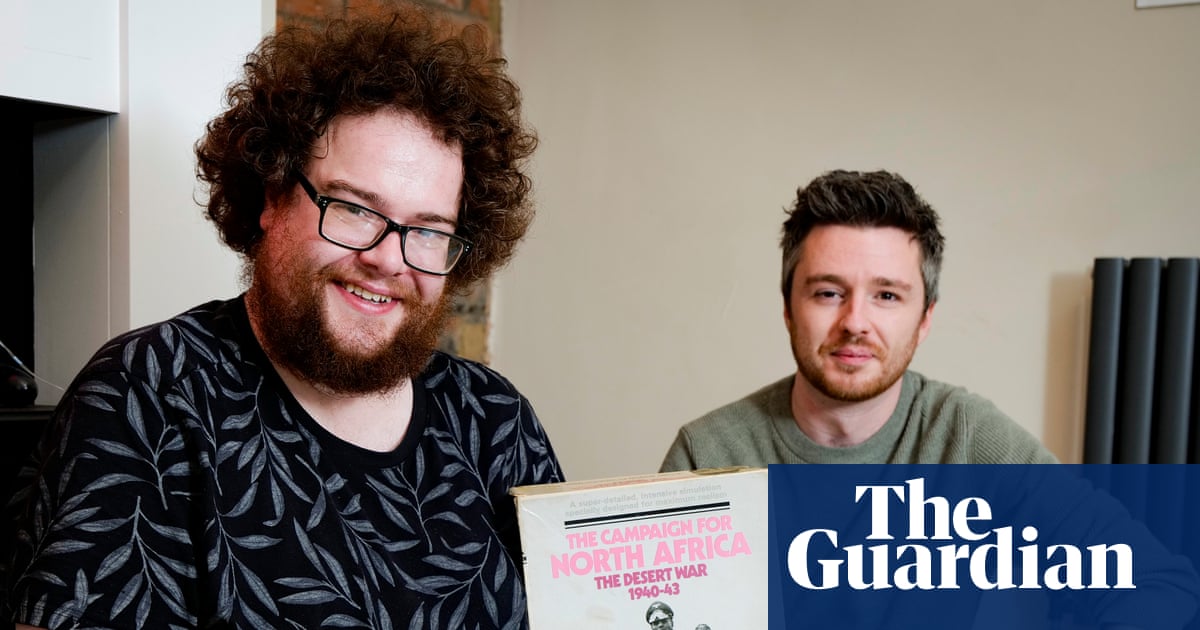
Two friends from Newcastle, England, have officially begun what they anticipate will be a multi-decade endeavor to complete The Campaign for North Africa, widely regarded as the most intricate board game ever produced. Andy Taeger, a thirty-year-old software developer, and James Purcell, a twenty-nine-year-old mental health worker, aim to become the first individuals known to finish the 1979 title designed by Richard Berg. Their attempt marks a significant milestone in hobbyist gaming culture, transforming a theoretical challenge into a documented, long-term project that tests the limits of human patience and strategic engagement.
The scope of the undertaking is staggering. Based on an initial practice session involving just six turns, which consumed approximately eighteen months of their time, the duo projects that completing the full simulation will require between twenty and thirty years. They have accepted this timeline as a necessary condition for participation. The game simulates the North African theater of World War II with such exhaustive detail that it has acquired legendary status among enthusiasts. Finishing it is considered a holy grail within board gaming communities, a feat previously unachieved due to the sheer volume of rules and components involved.
The physical setup alone reflects the complexity of the task. The game includes a ten-foot map, which the players have divided into five separate picture frames for manageability. They are also working with 1,600 individual pieces, which they plan to magnetize to prevent loss or displacement during play. Notably, they have not yet prepared all components; Purcell revealed that the German units remain unpunched from their cardboard sheets because those forces will not enter the simulation for approximately five years. This phased approach to component preparation underscores the granular pacing of the game.
Mechanically, the simulation demands rigorous tracking of numerous variables beyond standard troop movements. Players must monitor aircraft operations, truck convoys, land units, supply dumps, water consumption, and fuel evaporation rates. The rulebooks, numbering seven in total, contain dense regulations that govern every aspect of military logistics. One famous example is the so-called pasta rule, which allegedly requires Italian forces to account for additional water usage to boil their rations. While some players view such details as humorous jabs at the hobbyist community, others interpret them as evidence of Berg’s extensive historical research and commitment to realism.
Taeger and Purcell met roughly a decade ago through a mutual friend and bonded over shared interests in tabletop role-playing games and trading card competitions. Their decision to tackle this specific title emerged after another acquaintance mentioned it, sparking two weeks of intense contemplation before they committed to purchasing the game for nearly £1,000 on eBay. Recognizing the high risk of abandonment given the time investment, they established a weekly podcast titled War With a Mate to chronicle their preparation and progress. This public documentation serves as a accountability mechanism, ensuring that neither player can quietly withdraw from the project without facing social consequences.
The pair has already produced ninety-nine episodes covering their preparatory phase, with episode one hundred marking the official start of the actual game. They livestreamed the initial session from a friend’s home before moving to Taeger’s apartment for regular play. Purcell will command the Axis forces, while Taeger leads the Commonwealth troops. Despite the historical accuracy of the simulation, which might suggest an inevitable Allied victory, both players believe that superior decision-making can alter the campaign’s outcome. They remain open to the possibility of a draw or even a loss, viewing any definitive result as preferable to an inconclusive stalemate.
Community reaction to their endeavor has been largely supportive, with many fellow gamers expressing gratitude that someone is undertaking the challenge on their behalf. The players have not faced significant criticism for attempting such a time-consuming project, contrary to expectations that some might view it as frivolous. Their determination is tempered by caution; both emphasize the need for careful play to avoid errors that could require years of correction. As they embark on this twenty-to-thirty-year journey, they balance serious strategic analysis with an awareness of the absurdity of their situation, fully committed to seeing the simulation through to its conclusion.
Sources behind this briefing
Go to the original reporting
- The Guardian US↗‘We’re looking at a 30-year run’: UK pair aim to complete world’s most complex board game