The short version
- Andy Green achieved a new land speed record for hydrogen-powered vehicles, reaching an average of 406 mph at Utah's Bonneville Salt Flats.
- The feat marks a significant increase from the previous official record set in 2004, which stood at just over 185 mph.
- Green, known for breaking the sound barrier on land in 1997, utilized a vehicle developed by JCB to demonstrate the potential of hydrogen internal combustion engines.
A new benchmark for alternative fuel performance was established this week when British driver Andy Green set a world land speed record using a hydrogen-powered vehicle. The achievement took place at the Bonneville Salt Flats in Utah, where Green piloted a specialized car to an average speed of 406 miles per hour across two measured runs. This milestone represents the fastest speed ever recorded for a vehicle powered by hydrogen internal combustion engines, signaling a notable advancement in the application of clean energy technologies to high-performance engineering.
The record-breaking run more than doubled the previous official title held since 2004, which stood at approximately 185.5 miles per hour. The vehicle used for this attempt, known as the JCB Hydromax, is equipped with two hydrogen internal combustion engines that generate a combined power output of 1,600 brake horsepower. This substantial increase in speed and power demonstrates the evolving capabilities of hydrogen propulsion systems, moving beyond earlier experimental limits to achieve performance levels previously associated with conventional fossil fuels or jet propulsion.
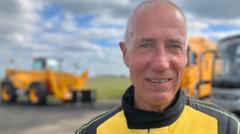
Green, a retired Royal Air Force pilot now aged 64, brings a distinguished history of land speed records to this latest endeavor. He is widely recognized for his 1997 achievement in driving the jet-powered ThrustSSC across Nevada's Black Rock Desert at 763 miles per hour, making him the first and only person to break the sound barrier on land. Additionally, two decades ago, he set a world record for diesel vehicles with the JCB Dieselmax, reaching speeds exceeding 350 miles per hour. His return to the salt flats underscores a continued commitment to pushing the boundaries of automotive engineering.
The development of the Hydromax was spearheaded by JCB, a British manufacturing company that has previously collaborated with Green on record-breaking attempts. The vehicle was unveiled at the company's global headquarters in May, following earlier testing phases. During trials at RAF Wittering in Cambridgeshire, the car reached speeds of 208 miles per hour, providing engineers with critical data to refine the design before the final attempt at Bonneville. This iterative process highlights the rigorous preparation required to ensure safety and performance at such extreme velocities.
The decision to pursue this record was influenced by personal encouragement as well as professional opportunity. Green has acknowledged that his wife played a crucial role in persuading him to accept the challenge after he received an invitation from JCB chairman Lord Anthony Bamford. This personal dynamic adds a human element to the technical achievement, illustrating how individual support can facilitate ambitious engineering projects. The collaboration between Green and JCB reflects a long-standing partnership aimed at showcasing British engineering prowess through innovative fuel technologies.
Lord Anthony Bamford emphasized the significance of this achievement in the context of previous efforts. He noted that twenty years prior, the team demonstrated the capabilities of diesel power at Bonneville with the Dieselmax. The current success with hydrogen engines represents a similar milestone for alternative fuels, reinforcing the company's commitment to sustainable innovation. By replicating the success of past records with a different energy source, JCB aims to validate hydrogen as a viable option for high-performance applications.
The broader implications of this record extend beyond the specific speed achieved. As global attention shifts toward reducing carbon emissions and exploring alternative energy sources, demonstrations of hydrogen's potential in demanding environments like land speed racing can influence public perception and industry investment. The ability to achieve such high speeds with hydrogen internal combustion engines suggests that these technologies may have applications beyond traditional automotive uses, potentially impacting sectors that require powerful and clean propulsion systems.
Looking ahead, this record sets a new standard for future attempts in the category of hydrogen-powered vehicles. Engineers and drivers will likely aim to surpass Green's 406-mile-per-hour mark, driving further innovation in engine design and fuel efficiency. The success at Bonneville also serves as a testament to the enduring appeal of land speed records as a platform for technological experimentation. As interest in sustainable energy grows, such achievements may become increasingly important in illustrating the practical capabilities of alternative fuels.
The event has drawn attention from media outlets and engineering communities alike, highlighting the intersection of historical achievement and modern sustainability goals. Green's journey from breaking the sound barrier with jet power to setting records with diesel and now hydrogen illustrates a career dedicated to exploring the limits of automotive technology. Each record not only honors past accomplishments but also paves the way for future advancements in clean energy solutions.
As the dust settles on this latest record, the focus remains on the technical details and the broader message of innovation. The JCB Hydromax's success at Bonneville provides a tangible example of how alternative fuels can compete with traditional power sources in terms of performance. This achievement may encourage further research and development in hydrogen technology, contributing to the ongoing transition toward more sustainable energy systems in various industries.
Sources behind this briefing
Go to the original reporting
- BBC News↗British driver who broke sound barrier sets new speed record

