The short version
- Provincial authorities declared a state of emergency after the Bald Range wildfire rapidly expanded, trapping residents and destroying property in communities along Okanagan Lake.
- More than 20,000 people were ordered to flee Summerland and Peachland as firefighting resources were diverted from containment efforts to conduct life-saving evacuations.
- Officials describe current fire conditions as explosive due to drought and wind, warning that similar rapid outbreaks could threaten other regions across the province.
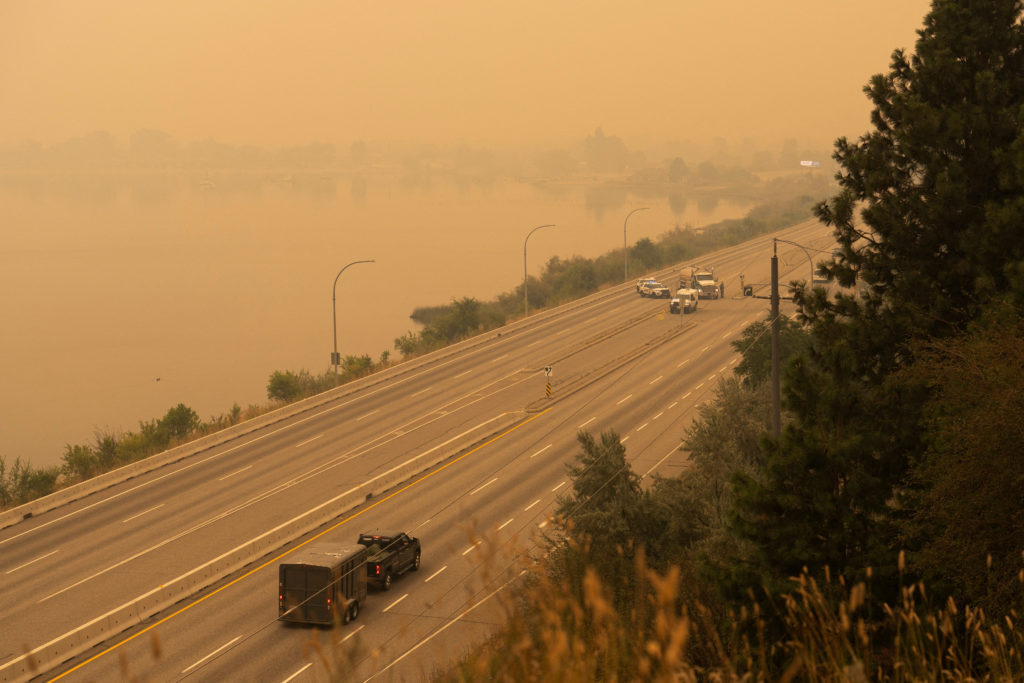
British Columbia has officially declared a state of emergency following the sudden escalation of a wildfire that forced more than 20,000 residents to abandon their homes in western Canada. The declaration, announced by Premier David Eby on Saturday, comes as over 100 separate fires burn across the province, with nearly half remaining out of control due to hot temperatures, strong winds, and prolonged drought conditions. The emergency status grants provincial authorities expanded powers to manage the crisis, including the ability to restrict travel routes and secure lodging for displaced individuals in areas where normal accommodations are unavailable.
The immediate catalyst for the emergency declaration was the Bald Range wildfire, which emerged on Friday evening and grew with alarming speed. Within hours of its initial report, the fire had expanded to approximately 50 square kilometers, overwhelming the small community of Faulder before advancing roughly 15 kilometers toward Summerland. This rapid progression caught many residents off guard, leading to mandatory evacuations for the entire population of Summerland, estimated at 12,000 people, as well as about 8,000 individuals in and around the nearby town of Peachland. The sheer velocity of the blaze has left officials struggling to assess the full extent of property damage, with no confirmed count of destroyed homes available as of early Saturday.
Rescue operations have become a primary focus for emergency crews, who found themselves diverting resources from fire suppression to saving lives. Cliff Chapman, director of wildfire operations for the BC Wildfire Service, noted that helicopters originally tasked with battling flames were redirected to extract residents who could no longer escape by road. He emphasized that inter-agency cooperation was critical in preventing a more severe loss of life, though search-and-rescue teams continued to comb behind fire lines to ensure no one remained trapped. The situation underscored the vulnerability of communities situated in fire-prone landscapes when weather conditions turn volatile.
Local emergency officials described the event as unprecedented in its speed and intensity. Erick Thompson, an official with the Regional District of Okanagan-Similkameen, characterized the wildfire as one of the fastest-growing he had ever encountered. The situation deteriorated so quickly that Thompson was forced to abandon his post at the emergency operations center to evacuate his own family, documenting the chaotic traffic conditions from his vehicle as he headed south. His experience mirrored that of many residents who found themselves racing against time, with social media videos capturing scenes of homes engulfed in flames while people fled along roads flanked by fire on both sides.
For homeowners like Kerry Gold and Mike Elsinga, the decision to leave was a difficult balance between protecting their property and ensuring their safety. The couple, who had recently relocated from Vancouver, packed essential items and prepared carriers for their pets before fleeing around 12:30 a.m. after observing flames spreading beyond nearby mountains. They also planned to assist a disabled friend in escaping the danger zone. Elsinga expressed the common dilemma faced by many residents: the desire to stay and defend one’s home versus the urgent need to avoid being caught in the path of destruction.
The provincial government is now grappling with the broader implications of this disaster, which fits into a pattern of increasingly destructive wildfire seasons in Canada. In recent years, mass evacuations have become more frequent, and smoke from these fires has repeatedly drifted across large portions of both Canada and the United States, affecting air quality and public health far beyond the immediate burn zones. Scientists have linked these trends to climate change, which creates the dry, hot conditions that fuel such rapid fire growth. The current crisis highlights the growing challenges faced by emergency managers in regions where traditional firefighting methods may be insufficient against explosive weather-driven blazes.
As the immediate threat to Summerland and Peachland subsides for those who have evacuated, attention turns to the long-term recovery and the risk of further outbreaks. Chapman warned that other communities could face similar threats given the current atmospheric conditions across British Columbia. The state of emergency will likely remain in effect as authorities work to contain the remaining fires and support displaced families. The incident serves as a stark reminder of the fragility of life in fire-prone areas and the critical importance of rapid response capabilities when nature turns hostile.
In the coming days, officials will need to provide clearer information on the number of homes lost and the timeline for residents to return. The psychological impact on those who fled with little warning cannot be understated, as many are left waiting for news about loved ones and uncertain about their future housing situations. The province’s ability to manage this crisis will be tested not only by the physical demands of firefighting but also by the logistical challenges of caring for thousands of displaced people in a region already strained by extreme weather.
Sources behind this briefing
Go to the original reporting
- PBS NewsHour↗Wildfires force 20,000 to flee as British Columbia declares state of emergency
- The Guardian US↗‘Explosive’ wildfire forces 20,000 people to flee as British Columbia declares state of emergency

