The short version
- A short power cut at a Manchester operations center caused significant delays across the North West due to signaling failures.
- Critics argue that centralizing control into fewer hubs increases systemic risk if a single location experiences technical issues.
- Network Rail faces scrutiny over maintenance standards and funding pressures amid plans for broader industry restructuring.
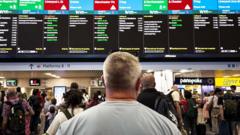
A brief electrical failure at a key railway operations center in Manchester has triggered widespread disruption across the rail network, prompting an investigation into how such a minor incident could produce outsized consequences. The power outage lasted only ninety seconds before being resolved, yet it caused significant chaos for commuters and raised serious questions about the reliability of modern rail infrastructure. Network Rail, the publicly owned body responsible for maintaining Britain’s tracks, signals, and stations, has apologized to customers and launched an inquiry into the response protocols that failed to prevent the cascading effects.
The incident originated at the Manchester Rail Operating Centre, a facility opened in 2014 that manages crucial controls for large parts of the North West. Although the center is equipped with backup power supplies designed to ensure continuity during outages, this secondary system did not activate as quickly as expected. The delay allowed the primary failure to impact signaling systems, which function similarly to traffic lights for trains. As a result, services were forced to halt while engineers worked to reboot the affected technology.
Restoring normal operations proved difficult because the power fluctuation caused damage to specific components within the signaling control systems. Replacing these parts required time and technical expertise, prolonging the disruption well beyond the initial ninety-second window. The geographic concentration of control functions meant that when Manchester’s hub went offline, trains across a wide area were left out of position, creating a ripple effect that extended far beyond the immediate vicinity of the failure.
This event has intensified debate over the strategic shift toward centralized rail management. Network Rail has moved away from hundreds of older, localized signal boxes in favor of twelve high-tech Rail Operating Centres across Great Britain. While this consolidation aims to modernize control and improve efficiency, experts warn it introduces new risks. Christian Wolmar, a rail writer, noted that centralizing signaling and communications into a small number of locations means a single point of failure can disable a substantial portion of the network.
The incident has also drawn attention to broader concerns regarding resource allocation and staffing levels at Network Rail. Gareth Dennis, a rail engineer and writer, suggested that the outage raises fundamental questions about whether staff are adequately resourced to perform essential checks on critical systems like backup power supplies. These concerns come at a time when passengers have already experienced years of poor performance, industrial action, and rising ticket prices, further eroding confidence in the system’s reliability.
Financial pressures compound these operational challenges. Network Rail operates under five-year funding settlements approved by the government, with the current period running from 2024 to 2029. The latest settlement includes £44.1 billion, representing a £3 billion increase over the previous cycle. However, former chief executive Andrew Haines acknowledged that rising costs driven by inflation and an increase in extreme weather events have placed severe strain on the budget. He emphasized that funding would need to stretch further than ever before to maintain infrastructure standards.
Looking ahead, the government’s rail policy focuses on nationalizing passenger operators that remain under private control and integrating them with infrastructure management under a new entity called Great British Railways. Network Rail is expected to be abolished as a separate organization in this transition. Joint management teams have already been established in some regions, such as the South West, to prepare for this structural change. The question of how much taxpayer money should support both passenger services and infrastructure investment remains a significant political and economic challenge.
While there is no direct link between this specific power failure and other recent issues like speed restrictions during extreme heat, the timing is unlikely to reassure travelers. The incident underscores the fragility of a system that relies heavily on centralized digital controls while facing budgetary constraints. As Network Rail works to build additional resilience into its signaling systems, the broader industry must address whether the current model of consolidation offers sufficient protection against future disruptions.
Sources behind this briefing
Go to the original reporting
- BBC News↗How a 90-second power outage sparked chaos for rail commuters

