The short version
- Over 300 Boston Dynamics employees signed a petition opposing the sale of modified robot dogs to US Immigration and Customs Enforcement.
- Company executives defended the deal, stating the robots are designed for safety inspections and non-lethal observation in hazardous environments.
- The controversy highlights tensions between the firm's South Korean parent company and US immigration enforcement practices following recent high-profile raids.
A significant internal dispute has emerged at Boston Dynamics, with more than 300 employees signing a petition urging company leadership to cancel a contract involving the sale of robotic units to US Immigration and Customs Enforcement. The workforce, which totals approximately 1,400 people, expressed deep concern over the partnership, with half of the signatories choosing to remain anonymous. The petition was delivered to executives in early September and subsequently shared with major media outlets, including The Boston Globe and WBUR public radio.
The core of the disagreement centers on a $1.3 million contract awarded by the Department of Homeland Security on September 25. This agreement designates Radeco, a Connecticut-based firm, to supply modified versions of Boston Dynamics’ quadruped robots to ICE. The employees argue that proceeding with this transaction poses an unacceptable reputational and ethical risk to the company, noting that many staff members have faced questioning from friends and family regarding their association with such government operations.
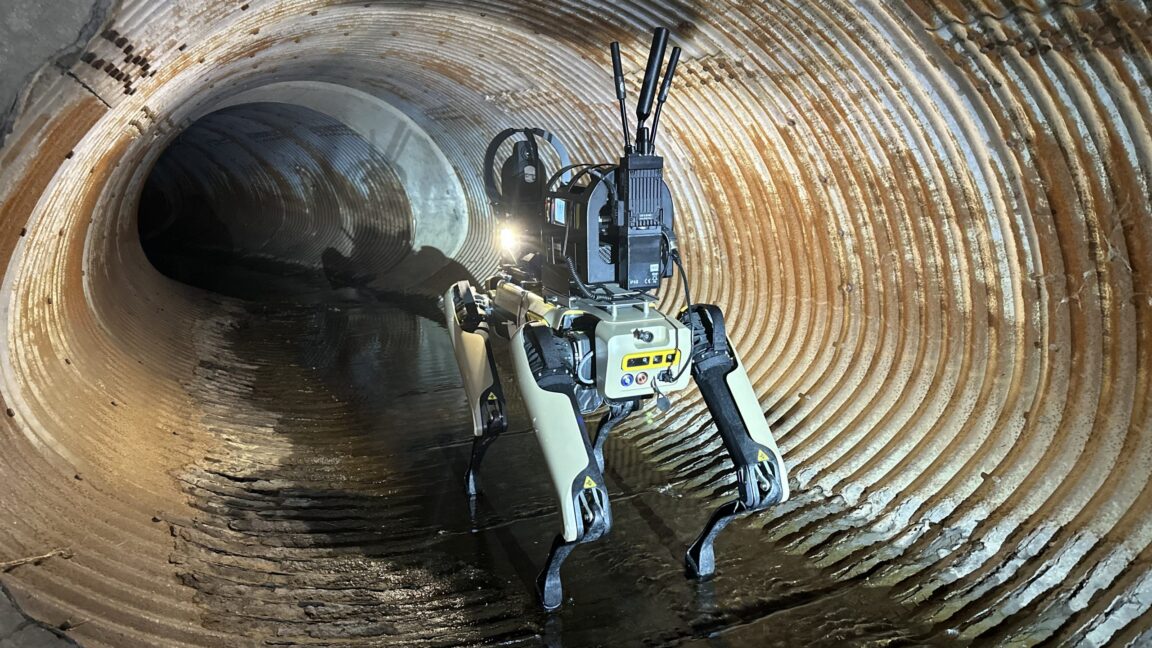
Under the terms of the contract, four Spot robots are being modified by Radeco into a platform known as Cerberus. These units are equipped with advanced sensors, including oxygen detectors for confined spaces, high-zoom cameras, 360-degree vision systems, and infrared thermal imaging. The robots also feature optional robotic arms capable of manipulating objects and opening doors. According to the contract documentation, these machines are intended to detect radiation, toxic gas leaks, and explosive threats in urban or disaster settings.
Boston Dynamics leadership has stood firm on the deal, emphasizing that the technology is strictly non-lethal. A company spokesperson stated that the robots are tools designed to keep personnel out of harm’s way, asserting that if the technology can enhance safety, it should be deployed regardless of political implications. The firm highlighted that the primary user within ICE is the Homeland Security Investigations unit, which focuses on combating transnational criminal organizations rather than general immigration enforcement.
However, critics point to the historical and recent activities of the Homeland Security Investigations unit as a source of contention. During the first term of President Donald Trump, this unit was frequently involved in workplace raids and the deportation of undocumented workers, operations that were later halted under Secretary Alejandro Mayorkas. With the start of Trump’s second term in January 2025, executive orders redefined the unit’s mission, diverting thousands of agents back toward immigration enforcement and deportations.
The employee petition specifically references a major raid conducted on September 4, 2025, at the Hyundai Motor Group Metaplant America facility in Georgia. This operation resulted in the detention of 475 workers, primarily from South Korea. The incident sparked significant outrage in South Korea and led to political questioning of business investments in the United States. Since Hyundai acquired Boston Dynamics in June 2021, this overlap has created a complex dynamic for employees who feel their work is being utilized by an agency that targets communities including their own colleagues.
The petitioners argue that all elements of ICE contribute to fear within immigrant communities, making it difficult for staff to take pride in their work when it supports such operations. They describe themselves as innovators who typically enjoy showcasing their technological achievements but feel compelled to act due to the perceived brutality of the agency receiving their technology. The letter warns that the risk to Boston Dynamics’ brand and moral standing is too great to ignore.
As the standoff continues, the situation underscores broader challenges facing technology companies navigating government contracts in polarized political environments. While executives maintain that the robots serve a protective function for first responders and investigators in dangerous tunnels and industrial sites, employees remain unconvinced that these benefits outweigh the potential harm caused by association with aggressive immigration enforcement tactics. The outcome of this internal pressure may influence future corporate policies regarding government partnerships.
The contract specifies that the Cerberus robots will operate with minimal human intervention, executing repeatable autonomous missions in complex environments. This level of automation has raised additional concerns among staff about the potential for misuse or escalation in sensitive situations. Despite these worries, Boston Dynamics has not indicated any willingness to renegotiate or cancel the agreement, leaving the employee petition as a formal expression of dissent rather than an immediate operational change.
Observers note that this conflict reflects a growing divide within the tech sector over the role of automation in law enforcement and national security. As companies like Boston Dynamics expand their capabilities, questions about accountability and ethical deployment become increasingly urgent. The resolution of this dispute could set a precedent for how other firms handle similar requests from government agencies with controversial mandates.
Sources behind this briefing
Go to the original reporting
- Ars Technica↗Boston Dynamics employees want to block sale of robot dogs to ICE

