The short version
- Customs and Border Protection started erecting steel bollards in west Texas this week, marking a resumption of physical barrier construction after a recent pause.
- The agency faces significant hurdles because it lacks contiguous land access, with many local property owners joining coalitions to contest federal eminent domain claims.
- Critics argue the project threatens historic rock art and natural landscapes in areas that historically account for a minimal share of unauthorized border crossings.
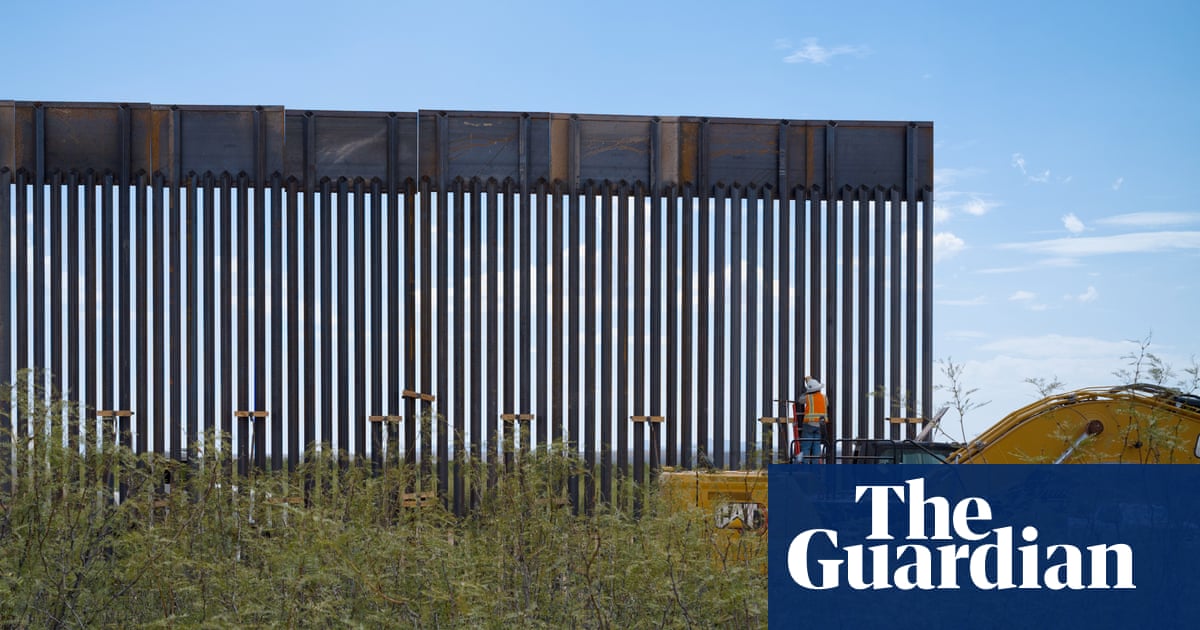
Federal immigration authorities have recommenced physical construction of a border barrier in west Texas, initiating the installation of steel fencing in Hudspeth County on September 15. This development marks a shift from a temporary halt imposed last month by Customs and Border Protection Commissioner Rodney Scott, who paused work after public outrage erupted over images of heavy machinery operating near protected lands. The agency confirmed via email that the first sections of the barrier were being erected, though officials did not issue a prior public announcement regarding the specific start date or location.
The current effort focuses on erecting thirty-foot steel bollards, a design intended to serve as part of a broader security infrastructure often described by officials as a smart wall. This system combines physical barriers with vehicle obstacles, patrol roads, and advanced detection sensors. However, the immediate visual reality on the ground appears fragmented. Photographs obtained by local opposition groups show isolated segments of fencing standing alone in the landscape, structures that critics note can be easily circumvented by walking around either end.
The disjointed nature of the construction stems from a complex web of property rights and legal disputes. Customs and Border Protection has been actively negotiating with landowners to secure permission for the barrier, offering financial incentives to avoid lengthy eminent domain proceedings. Despite these efforts, the agency has failed to secure contiguous access across the region. An estimated four hundred landowners hold title to properties along the Rio Grande in the target area, and more than half of them have aligned with a local coalition dedicated to resisting federal acquisition of their land.
Clara Bensen, communications director for the No Big Bend Wall coalition, characterized the current strategy as disjointed and reactive. She suggested that federal agents are proceeding with limited permissions simply to maintain momentum, even though a continuous barrier remains unfeasible under current conditions. The result is a patchwork of authorized zones interspersed with private property where construction cannot legally proceed, leaving the overall security architecture incomplete and potentially ineffective.
The push for expansion in this specific region has drawn sharp criticism from lawmakers across the political spectrum, particularly regarding plans to extend infrastructure into Big Bend National Park. The park is widely regarded as a premier wilderness destination in Texas, and the prospect of introducing roads and fencing has sparked intense bipartisan opposition. Advocacy groups, including Keep Big Bend Wild, are organizing trips to Washington to urge legislators to protect the park from what they describe as unnecessary environmental damage.
Proponents of the wall point to a substantial appropriation of forty-six billion dollars included in last year’s spending legislation, which was earmarked for border barrier expansion. This funding has enabled Customs and Border Protection to pursue aggressive timelines despite local resistance. However, the geographic rationale for building in this area is contested by data showing that the Big Bend region historically accounts for less than two percent of all apprehensions for illegal crossings. Unauthorized entry attempts in this sector have declined further since the current administration intensified broader border enforcement measures.
Beyond the national park, the proposed infrastructure threatens several other protected areas, including Big Bend Ranch State Park and the Amistad National Recreation Area. Environmental advocates warn that construction activities, particularly blasting, could irreparably damage ancient rock art murals located in the river valley. These cultural artifacts are considered significant historical resources, and their potential destruction adds a layer of urgency to the opposition’s arguments.
Local landowners express concerns that extend beyond environmental preservation. Many fear that the presence of towering steel barriers will diminish property values, obstruct traditional access to the river, and disrupt agricultural operations such as grazing. The combination of economic anxiety, cultural preservation, and environmental protection has created a unified front against the project, challenging the federal government’s ability to implement its vision of a continuous border barrier in this rugged terrain.
Sources behind this briefing
Go to the original reporting
- The Guardian US Politics↗Trump administration pushes on with construction of controversial Big Bend border wall