The short version
- Construction of a border barrier in Big Bend National Park has been temporarily suspended while Customs and Border Protection officials conduct a personal evaluation of the site.
- The project faces significant opposition from environmental advocates and lawmakers who argue that the rugged terrain already deters migration and that construction damages pristine ecosystems.
- Despite the pause, agency leadership maintains a timeline to complete the initial layer of the wall by the end of next year, utilizing funds from a recent congressional spending package.
The Trump administration has temporarily suspended construction activities for a border barrier project within Big Bend National Park in Texas. Customs and Border Protection (CBP) announced the halt on Monday, citing the need for agency leadership to conduct a direct, on-the-ground assessment of the site. Rodney Scott, the head of CBP, stated that all building operations would cease while he visits the area to evaluate the project personally. This decision marks a brief interruption in an aggressive push to expand border infrastructure across the southern United States.
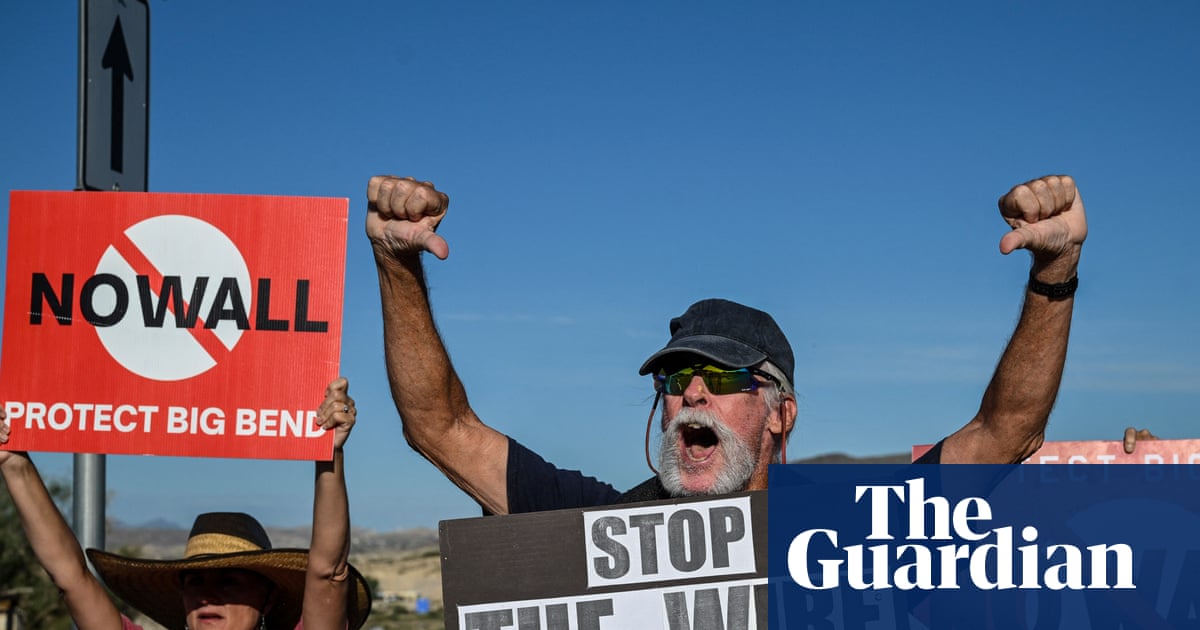
The pause comes after video footage surfaced earlier this month showing heavy machinery operating within the park’s boundaries. The images revealed bulldozers clearing paths through the Chihuahuan desert, sparking immediate backlash from environmental groups and local residents. Critics expressed alarm that construction was proceeding without prior public announcement or adequate notice. The visual evidence of earth-moving equipment in such a protected area intensified scrutiny of how federal agencies are executing border security mandates in ecologically sensitive zones.
Big Bend National Park is the largest and most visited national park in Texas, covering approximately 800,000 acres of remote desert terrain. Environmental advocates argue that the construction threatens the pristine nature of the landscape. Laiken Jordahl, a public lands advocate with the Center for Biological Diversity, highlighted concerns about new roads being cut through beloved sections of the park. The opposition is not limited to environmentalists; it includes bipartisan criticism from lawmakers who view the project as unnecessary and damaging to natural heritage.
The funding for this expansion stems from a $46.5 billion appropriation included in a major spending bill signed into law by President Trump in July 2025. Congress approved these funds to support border wall construction stretching from the Pacific Ocean to the Gulf of Mexico. Since then, the administration has accelerated efforts to build barriers, often waiving regulatory requirements to speed up progress. However, the push has encountered resistance in Texas, particularly regarding projects that intersect with or near protected state and national parks.
Political reaction to the construction has been mixed but increasingly critical. While many Texas Republicans have remained silent on the issue, outgoing Senator John Cornyn took a public stance against the project. In a letter to Homeland Security Secretary Markwayne Mullin, Cornyn urged an immediate halt to construction. He argued that the park’s steep riverbank cliffs and isolated geography already serve as effective deterrents against illegal migration. His intervention underscores growing unease among some conservative lawmakers about the environmental cost of border enforcement measures.
Despite the current suspension, CBP leadership has not abandoned the project entirely. Scott indicated that the agency still expects to complete the first layer of the wall by the end of next year. The pause appears to be a procedural step rather than a cancellation, allowing officials to reassess the scope and impact of the construction before proceeding. This approach reflects a broader strategy of balancing rapid infrastructure deployment with occasional adjustments in response to public and political pressure.
The controversy highlights the tension between national security objectives and environmental preservation. Proponents of the wall argue that comprehensive border control is essential for national safety, while opponents emphasize the irreversible damage to natural habitats. The rugged terrain of Big Bend has long been considered a natural barrier, leading some critics to question the necessity of additional physical structures in this specific location. As the evaluation continues, stakeholders await clarity on whether construction will resume and under what conditions.
This incident is part of a larger pattern of regulatory waivers and expedited timelines used by the administration to advance border infrastructure projects. The use of emergency powers and streamlined processes has allowed for rapid progress but also generated legal and ethical challenges. The pause in Big Bend may signal a momentary recalibration, but it does not indicate a fundamental shift in policy direction. Observers will watch closely to see how the agency balances its mandate with mounting criticism from diverse sectors.
The outcome of Scott’s evaluation could influence future decisions regarding border construction in other protected areas. If the agency determines that the current approach is unsustainable or overly damaging, it may adjust its methods elsewhere. Conversely, if the project resumes without significant changes, it could embolden further expansion efforts despite opposition. The situation remains fluid, with no final resolution yet in sight for this contentious chapter in border policy.
As the debate continues, the focus remains on the intersection of security, environment, and governance. The Big Bend case exemplifies the complexities of implementing large-scale infrastructure projects in sensitive ecosystems. Stakeholders across the political spectrum are watching to see how the administration navigates these competing priorities. The coming weeks will likely reveal whether this pause leads to meaningful dialogue or merely a temporary delay in an otherwise relentless construction campaign.
Sources behind this briefing
Go to the original reporting
- The Guardian US Politics↗Trump administration pauses border construction in Big Bend national park
- PBS NewsHour↗Trump administration pauses border construction project in Big Bend National Park